
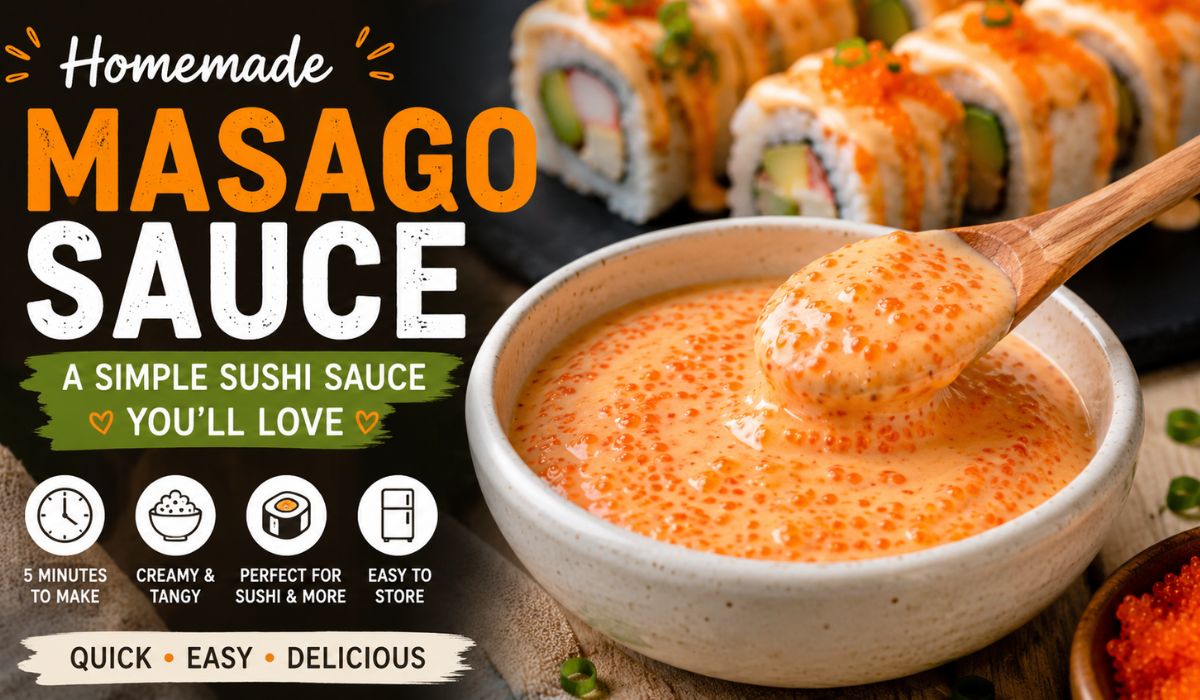
Masago Sauce is one of those simple condiments that can instantly transform an ordinary meal into something that feels restaurant-quality. If you enjoy sushi, poke bowls, seafood dishes, or Japanese-inspired recipes, this creamy and flavorful sauce deserves a place in your kitchen. It combines the richness of mayonnaise with the unique texture and ocean-fresh flavor of masago, creating a versatile sauce that works as a dip, drizzle, spread, or topping.
In recent years, Masago Sauce has become increasingly popular outside of sushi restaurants. Home cooks appreciate how easy it is to prepare and how well it complements a wide variety of dishes. Whether you are making sushi rolls, onigiri, seafood bowls, or creative fusion recipes, this sauce adds flavor, texture, and visual appeal. In this guide, you will learn everything you need to know about Masago Sauce, from its ingredients and flavor profile to preparation tips, storage methods, nutritional value, and the best ways to enjoy it.
Quick Bio About Masago Sauce
| Fact | Information |
|---|---|
| Name | Masago Sauce |
| Main Ingredient | Masago (Capelin Roe) |
| Cuisine | Japanese-Inspired |
| Texture | Creamy With Crunchy Roe |
| Flavor | Rich, Tangy, Briny |
| Preparation Time | About 5 Minutes |
| Cooking Required | No |
| Common Base | Japanese Mayonnaise |
| Popular Use | Sushi Topping |
| Seafood Flavor | Mild |
| Color | Usually Orange |
| Best Served | Chilled |
| Storage | Refrigerated |
| Shelf Life | 2–3 Days |
| Spicy Version Available | Yes |
| Gluten-Free Option | Possible |
| Common Additions | Sriracha, Lemon Juice |
| Alternative Roe | Tobiko |
| Difficulty Level | Beginner-Friendly |
| Popular In | Sushi Restaurants Worldwide |
What Is Masago Sauce?
Masago Sauce is a creamy seafood-based condiment made with masago, which is the roe of the capelin fish. Masago is widely used in Japanese cuisine and is often seen on sushi rolls because of its bright color, delicate crunch, and mild salty flavor.
The sauce combines masago with mayonnaise and other flavor-enhancing ingredients such as lemon juice, rice vinegar, soy sauce, sesame oil, or spicy sauces. The result is a smooth, creamy sauce with tiny bursts of texture from the fish roe. Unlike plain mayonnaise-based sauces, Masago Sauce offers a subtle seafood taste that makes it especially suitable for sushi and seafood dishes.
Its popularity comes from its ability to balance richness, acidity, and umami. This combination allows it to enhance food without overpowering the main ingredients.
Understanding Masago
To appreciate Masago Sauce fully, it helps to understand masago itself. Masago comes from capelin, a small fish found in cold northern oceans. The roe consists of tiny eggs that are naturally pale yellow but are often colored orange, red, green, or black for culinary presentation.
Compared to tobiko, which comes from flying fish, masago is smaller, softer, and more affordable. Its flavor is mild and slightly salty, making it an excellent ingredient for sauces and toppings. The tiny eggs create a gentle crunch that adds interest to every bite.
Because of its subtle taste and attractive appearance, masago has become a staple ingredient in sushi restaurants around the world.
What Does Masago Sauce Taste Like?
One reason people love Masago Sauce is its balanced flavor profile. The sauce is creamy and rich thanks to the mayonnaise base. At the same time, the masago contributes a light brininess that reflects its seafood origins.
Many recipes also include citrus juice or vinegar, which adds brightness and helps balance the richness. If spicy ingredients such as sriracha are included, the sauce develops a pleasant kick that complements sushi and seafood particularly well.
The texture is another standout feature. While the sauce itself is smooth, the tiny fish roe create delicate pops and a subtle crunch that make each bite more enjoyable.
Why Homemade Masago Sauce Is Worth Making
Making Masago Sauce at home offers several advantages. First, it allows you to control the ingredients and flavor balance. You can adjust the level of spice, acidity, creaminess, and saltiness according to your personal preferences.
Second, homemade sauce is often fresher than pre-made alternatives. Fresh ingredients produce a brighter and more vibrant flavor. Since the recipe takes only a few minutes to prepare, there is little reason to rely on store-bought versions.
Another benefit is versatility. Once you learn the basic recipe, you can create multiple variations tailored to different dishes. This flexibility makes homemade Masago Sauce a valuable addition to your recipe collection.
Ingredients Needed For Masago Sauce
Most Homemade Masago Sauce recipes use only a handful of ingredients. Japanese mayonnaise is typically the foundation because it provides a richer and smoother texture than standard mayonnaise. Masago adds texture and seafood flavor, while lemon juice or rice vinegar contributes freshness.
Some recipes include sriracha for heat, soy sauce for umami, or sesame oil for a nutty aroma. Garlic and wasabi are also popular additions for those who enjoy bolder flavors.
The beauty of this sauce lies in its simplicity. Even with just four ingredients, it can deliver impressive flavor and versatility.
How To Make Masago Sauce
Making Masago Sauce is remarkably simple. Start by placing Japanese mayonnaise in a mixing bowl. Add masago and your preferred flavoring ingredients, such as lemon juice and sriracha.
Mix gently until everything is evenly combined. Be careful not to overmix, as excessive stirring can break down the delicate texture of the roe. Once blended, taste the sauce and adjust the seasoning if needed.
The finished sauce can be served immediately or chilled for a short period to allow the flavors to meld together. The entire process usually takes less than five minutes.
Tips For The Best Results
The quality of your ingredients plays a significant role in the final flavor. Fresh masago provides the best texture and taste, while Japanese mayonnaise contributes a rich and authentic flavor profile.
Balance is equally important. Too much mayonnaise can overpower the seafood notes, while excessive acidity may mask the natural flavor of the masago. A balanced approach creates a sauce that is flavorful without being overwhelming.
It is also helpful to chill the sauce briefly before serving. This allows the flavors to blend together and creates a more cohesive taste.
Delicious Ways To Use Masago Sauce
Masago Sauce shines in a wide range of dishes. Sushi rolls are perhaps the most obvious choice. A drizzle over California rolls, spicy tuna rolls, or dragon rolls adds flavor and visual appeal.
Poke bowls also benefit from the sauce. The creamy texture contrasts beautifully with fresh fish, rice, and vegetables. Onigiri, sushi burritos, and rice bowls become more flavorful with a spoonful of Masago Sauce.
Seafood dishes such as grilled shrimp, salmon, crab, and scallops pair exceptionally well with it. The sauce can even be used as a sandwich spread or dipping sauce for tempura and appetizers.
Popular Masago Sauce Variations
One of the best things about Masago Sauce is how customizable it is. A spicy version can be created by increasing the amount of sriracha or adding chili garlic sauce. This variation pairs perfectly with sushi and seafood.
A citrus version uses yuzu, lemon, or lime juice for a fresher and brighter flavor. Garlic lovers can incorporate roasted garlic or garlic aioli for added depth.
For those who enjoy Japanese flavors, a wasabi variation delivers a pleasant heat that complements fish dishes beautifully. Korean-inspired versions often include gochujang for sweetness and spice.
Masago Sauce Compared To Other Sushi Sauces
Many people compare Masago Sauce with Spicy Mayo because both are creamy and commonly served with sushi. The key difference is that Masago Sauce contains fish roe, giving it additional texture and a subtle seafood flavor.
Compared with Yum Yum Sauce, Masago Sauce has a more ocean-inspired taste and less sweetness. Eel Sauce is completely different, offering a thick, sweet, and savory glaze rather than a creamy texture.
These distinctions make Masago Sauce unique among popular sushi condiments.
Nutritional Value Of Masago Sauce
Masago contains several nutrients, including protein, omega-3 fatty acids, vitamin B12, and selenium. These nutrients support overall health and contribute to the ingredient’s nutritional appeal.
However, Masago Sauce should still be enjoyed in moderation. The mayonnaise base increases calories and fat content, while masago naturally contains sodium and cholesterol. Individuals with seafood allergies should avoid masago and related products.
When consumed as part of a balanced diet, Masago Sauce can be an enjoyable addition to many meals.
How To Store Masago Sauce
Proper storage is important for maintaining freshness and food safety. Masago Sauce should always be stored in an airtight container in the refrigerator.
For best quality, use the sauce within two to three days. Because the sauce contains seafood and mayonnaise, it should not be left at room temperature for extended periods.
While masago itself can be frozen for longer storage, freezing the prepared sauce is generally not recommended because the mayonnaise may separate and affect the texture.
Common Mistakes To Avoid
A common mistake is using too much mayonnaise, which can overwhelm the flavor of the masago. Another issue is adding excessive lemon juice or vinegar, making the sauce overly acidic.
Using old or improperly stored masago can negatively affect both flavor and food safety. It is also important not to overmix the ingredients, as this can damage the delicate texture of the roe.
Paying attention to these details helps ensure consistently delicious results.
Final Thoughts
Homemade Masago Sauce is proof that a simple recipe can make a big impact. With its creamy texture, subtle seafood flavor, and satisfying crunch, it adds excitement to sushi, seafood, rice bowls, and countless other dishes. The recipe is quick, beginner-friendly, and highly customizable, making it suitable for home cooks of all skill levels.
Whether you prefer a classic version, a spicy variation, or a citrus-infused twist, Masago Sauce offers a delicious way to elevate everyday meals. Once you try making this simple sushi sauce at home, you may find yourself reaching for it whenever you want to add extra flavor, texture, and restaurant-quality appeal to your favorite foods.
Frequently Asked Questions About Masago Sauce
Is Masago Sauce Spicy?
Masago Sauce is not naturally spicy. However, many recipes include sriracha or other chili-based ingredients, which add heat. The spice level can easily be adjusted to suit individual preferences.
Can I Make Masago Sauce Without Sriracha?
Yes. Sriracha is completely optional. You can omit it for a milder sauce or replace it with another seasoning that better matches your taste.
Can Tobiko Replace Masago?
Yes. Tobiko is a popular substitute because it has a similar appearance and flavor. Tobiko eggs are slightly larger and crunchier, creating a different texture.
Is Masago Sauce Gluten-Free?
It can be gluten-free depending on the ingredients used. If soy sauce is included, choose a gluten-free version to ensure the sauce remains suitable for those avoiding gluten.
What Foods Pair Best With Masago Sauce?
Sushi rolls, poke bowls, onigiri, grilled seafood, rice bowls, sashimi salads, and tempura are among the best foods to serve with Masago Sauce.
How Long Does Masago Sauce Last?
When stored properly in the refrigerator, Homemade Masago Sauce typically remains fresh for two to three days.
Can I Prepare Masago Sauce Ahead Of Time?
Yes. Many people prepare it several hours in advance. Chilling the sauce before serving often improves flavor by allowing the ingredients to blend together.
Is Masago Sauce Healthy?
Masago contains beneficial nutrients, including omega-3 fatty acids and protein. However, because the sauce also contains mayonnaise and sodium, moderation is recommended.
Recommended For You: What Is Sushi Masago? A Beginner’s Guide To This Popular Sushi Topping