
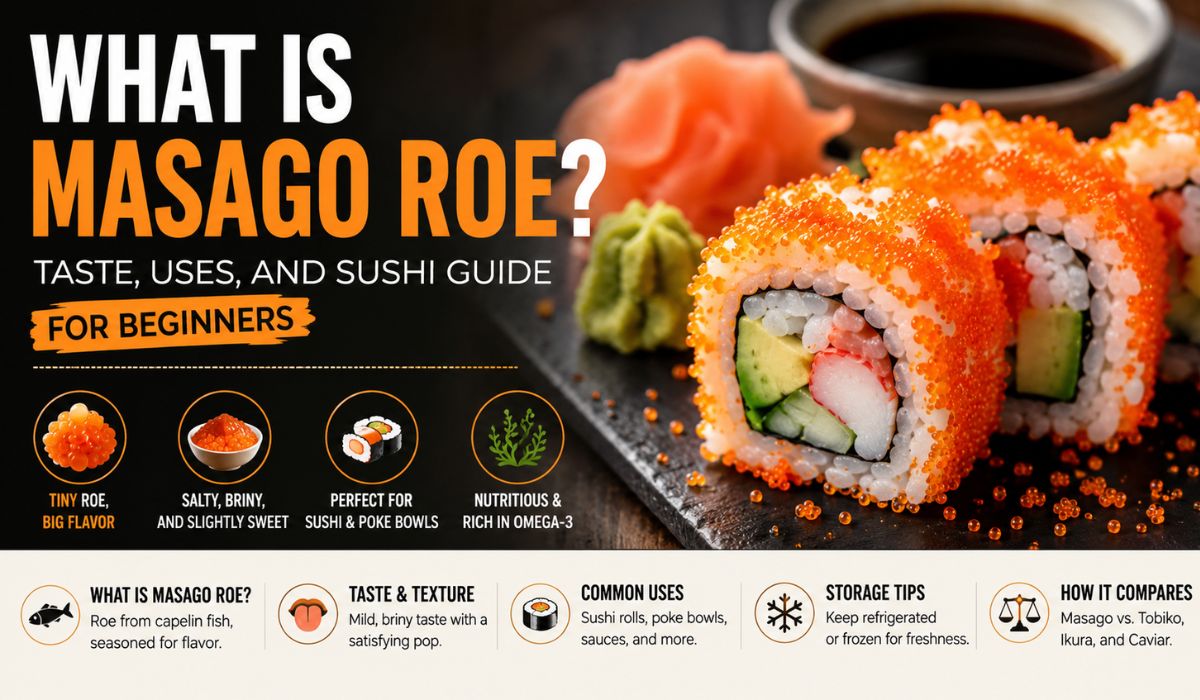
If you have ever ordered sushi at a Japanese restaurant, there is a good chance you have already seen Masago Roe without realizing it. Those tiny bright orange fish eggs often sprinkled over sushi rolls or poke bowls are one of the most recognizable ingredients in modern sushi culture. Although small in size, Masago Roe adds flavor, texture, color, and a classic sushi-bar appearance that many people instantly recognize.
Masago Roe is popular because it is affordable, flavorful, and versatile. Sushi chefs use it to make rolls look more vibrant and taste more complete. Home cooks enjoy it because it adds a salty seafood touch without requiring complicated preparation. In recent years, Masago Roe has also become common in poke bowls, seafood sauces, sushi bakes, and fusion dishes.
For beginners, Masago Roe can feel a little confusing because it is often compared with Tobiko, Ikura, and even Caviar. Many people wonder what it tastes like, whether it is healthy, and why it is so commonly used in sushi restaurants. This guide explains everything you need to know in a clear and simple way, from flavor and nutrition to storage and sushi uses.
Quick Bio Information About Masago Roe
Origin
Capelin Fish Roe
Scientific Name Of Capelin
Mallotus Villosus
Cuisine Type
Japanese Cuisine
Common Color
Bright Orange
Natural Color
Pale Yellow To Light Orange
Texture
Tiny Crunchy Pop
Flavor
Salty And Briny
Main Use
Sushi Rolls
Popular In
Sushi Bars And Poke Shops
Common Pairings
Rice, Salmon, Tuna, Avocado
Nutrition Highlight
Omega-3 Fatty Acids
Common Alternative
Tobiko Roe
Larger Roe Comparison
Ikura
Storage Method
Refrigerated Or Frozen
Typical Form
Cured And Seasoned
Popular Sauce
Masago Mayo
Common Sushi Roll
California Roll
Seafood Category
Fish Roe
What Is Masago Roe?
Masago Roe is the roe, or eggs, of capelin fish. Capelin are small cold-water fish found in the North Atlantic, Arctic, and North Pacific oceans. Their scientific name is Mallotus Villosus, and they are part of the smelt family. The eggs harvested from capelin are cleaned, seasoned, and commonly used in Japanese cuisine.
The eggs themselves are very tiny, usually smaller than Tobiko Roe. Masago Roe naturally has a pale yellow color, but most commercial versions are dyed bright orange to create the classic sushi appearance many customers expect. Some varieties are also flavored with ingredients like wasabi, squid ink, yuzu, or chili seasoning.
In sushi restaurants, Masago Roe is valued because it improves presentation while adding texture and a mild seafood flavor. Unlike larger roe products, Masago does not overpower a dish. Instead, it supports other ingredients and helps balance flavors inside sushi rolls and seafood bowls.
What Does Masago Roe Taste Like?
Masago Roe has a salty, slightly sweet, and briny flavor with a clean seafood finish. Its taste is mild compared with stronger fish roe like Ikura or traditional Caviar. This lighter flavor is one reason many beginners enjoy it, especially when trying sushi for the first time.
Texture is one of the most important parts of the Masago experience. Each tiny egg creates a light crunchy pop when eaten. The texture pairs especially well with soft sushi rice, creamy avocado, spicy mayo, salmon, tuna, cucumber, and imitation crab.
Masago Roe also adds umami, which is the savory flavor often associated with seafood, soy sauce, mushrooms, and aged foods. Umami helps sushi taste richer and more satisfying without becoming too heavy. Because Masago Roe is mild, it blends easily into many different dishes while still adding personality to every bite.
Why Is Masago Roe Bright Orange?
Many people assume Masago Roe is naturally bright orange, but that is not always true. Fresh capelin roe is usually pale yellow or light orange. Commercial sushi products are often colored to create a more attractive and recognizable appearance.
Bright orange Masago Roe has become part of the visual identity of sushi in many countries. Restaurants use it because it creates contrast against white rice, green avocado, dark seaweed, and pink seafood. This makes sushi rolls look fresher and more appealing in photos and on menus.
Different colors also create different flavor experiences. Black Masago may contain squid ink, green Masago is often flavored with wasabi, and red Masago may include chili seasoning. These flavored varieties help restaurants create unique specialty rolls while keeping ingredient costs manageable.
Masago Roe Vs Tobiko
Masago Roe and Tobiko are often confused because they are both used as sushi toppings. However, they come from different fish and have different textures and flavors.
Masago Roe comes from capelin fish, while Tobiko comes from flying fish. Tobiko eggs are larger and have a firmer crunch. Masago Roe is smaller, softer, and more delicate. Tobiko also tends to have a stronger smoky or salty flavor.
Price is another major difference. Tobiko is generally more expensive, which is why many restaurants use Masago Roe as a cost-effective alternative. From a visual perspective, the two can look similar, especially when used on sushi rolls. For casual sushi dining, many customers cannot easily tell the difference.
Restaurants often reserve Tobiko for premium sushi rolls while using Masago Roe on everyday menu items. This helps control food costs while still maintaining an attractive presentation.
Masago Roe Vs Ikura And Caviar
Masago Roe belongs to a larger family of seafood roe products often used in Japanese and fine-dining cuisine. Beginners commonly compare it with Ikura and Caviar.
Ikura is salmon roe. The eggs are much larger than Masago Roe and have a rich, buttery flavor with a strong ocean taste. When eaten, Ikura creates a large burst of liquid inside the mouth. Because of its size and luxurious texture, Ikura is often served as a featured ingredient rather than a garnish.
Caviar traditionally refers to roe from sturgeon fish. It is associated with luxury dining and fine cuisine. Caviar usually has a softer texture and a more refined flavor profile than Masago Roe. It is also significantly more expensive.
Masago Roe is more affordable, lighter, and easier to use across many menu items. That practicality is one reason it became so popular in American sushi restaurants and modern seafood concepts.
How Sushi Restaurants Use Masago Roe
Masago Roe is most commonly used in sushi rolls, but its versatility goes far beyond that. Sushi chefs use it both inside and outside rolls to add crunch, color, and flavor.
California Rolls often feature Masago Roe on the outside because it creates an attractive orange coating around the rice. Spicy Tuna Rolls, Dragon Rolls, Shrimp Tempura Rolls, and Salmon Rolls may also include Masago for texture and visual appeal.
Many sushi restaurants mix Masago Roe into spicy mayo sauces or seafood salads. The eggs add subtle crunch while also improving presentation. In poke bowls, Masago Roe works especially well with tuna, salmon, cucumber, seaweed salad, avocado, and rice.
Because only a small amount is needed, Masago Roe helps restaurants create premium-looking dishes without dramatically increasing ingredient costs.
Popular Dishes Made With Masago Roe
Although sushi remains the most common use, Masago Roe appears in many modern seafood dishes. Poke bowls are one of the biggest examples. A bowl topped with Masago immediately looks more colorful and complete.
Masago Roe is also used in Sushi Bake dishes, crispy rice appetizers, seafood pasta, crab salad, and seafood tacos. Some restaurants even use it on oysters or cold seafood platters.
Fusion cuisine has helped Masago Roe become more mainstream. Chefs now combine it with spicy sauces, creamy dressings, tempura flakes, and grilled seafood to create unique dishes that blend Japanese and Western flavors.
This flexibility makes Masago Roe valuable not only for sushi bars but also for seafood restaurants, poke shops, and modern casual dining concepts.
Is Masago Roe Healthy?
Masago Roe can be a nutritious seafood ingredient when eaten in moderation. It contains protein, omega-3 fatty acids, selenium, and vitamin B12. Omega-3 fats are especially important because they support heart health and brain function.
Masago Roe is relatively low in calories compared with many creamy toppings and sauces. This makes it a flavorful way to add texture and seafood flavor without significantly increasing calorie intake.
However, sodium content is important to consider. Because Masago Roe is cured and seasoned, it can contain a considerable amount of salt. People watching their sodium intake should enjoy it in smaller portions.
Like other seafood products, Masago Roe may also trigger allergies in individuals sensitive to fish or seafood. Pregnant individuals are often advised to speak with healthcare professionals before consuming raw or cured seafood products.
Is Masago Roe Raw Or Cooked?
One of the most common beginner questions is whether Masago Roe is raw. In most cases, Masago Roe is cured and seasoned rather than fully cooked. The curing process helps preserve the eggs while enhancing flavor and texture.
Restaurants typically purchase Masago Roe frozen and thaw it under refrigeration before service. Because it is handled as a seafood ingredient, proper storage and temperature control are very important.
Food safety experts generally recommend keeping seafood products refrigerated at 41°F or below to reduce the risk of bacterial growth. Sushi restaurants also follow careful handling procedures to avoid contamination during preparation and service.
How To Store Masago Roe Properly
Masago Roe should always be refrigerated because it is a perishable seafood product. Most commercial products arrive frozen, which helps extend shelf life during transport and storage.
Once thawed or opened, Masago Roe should be kept cold in sealed containers and protected from cross-contamination. Clean utensils should always be used when portioning the product.
Restaurants often keep small working containers in refrigerated prep stations while storing backup inventory inside walk-in coolers or commercial refrigerators. This helps maintain freshness during busy service periods.
At home, Masago Roe should be stored in the coldest part of the refrigerator and consumed within the timeframe recommended on the packaging. Refreezing thawed roe repeatedly can reduce quality and affect texture.
Why Masago Roe Is So Popular
Masago Roe became popular because it improves sushi in several ways at once. It adds crunch, saltiness, visual contrast, and a professional sushi-bar appearance. Customers instantly recognize the bright orange topping, even if they do not know its name.
For restaurants, Masago Roe is also practical. Compared with premium roe like Tobiko or Caviar, it is more affordable and easier to use across multiple menu items. A single ingredient can support sushi rolls, poke bowls, sauces, seafood salads, and appetizers.
Presentation also plays a major role. In today’s restaurant industry, visually appealing food performs better on social media, delivery apps, and restaurant menus. Masago Roe helps dishes photograph well while increasing perceived value.
How Masago Roe Improves Sushi Presentation
Visual presentation is one reason Masago Roe became so important in modern sushi culture. The bright orange eggs create strong color contrast that makes sushi rolls look fresher and more attractive.
Texture also improves the overall eating experience. Soft ingredients like rice, avocado, cream cheese, and seafood benefit from the tiny crunchy pop that Masago Roe provides. This contrast keeps sushi from feeling too soft or heavy.
Many chefs consider Masago Roe a finishing ingredient rather than a primary ingredient. Even a small amount can make a dish appear more premium and professionally prepared.
Modern Trends And New Uses For Masago Roe
In 2026, Masago Roe continues to appear in creative modern dishes beyond traditional sushi. Sushi bake recipes have become especially popular online, often using Masago mixed into creamy seafood toppings.
Chefs are also experimenting with flavored Masago varieties in fusion cuisine. Wasabi Masago, spicy Masago, and citrus-flavored versions are now used in tacos, rice bowls, seafood sliders, and gourmet appetizers.
Home cooks have also embraced Masago Roe because it is easy to use and instantly upgrades presentation. Even a simple rice bowl can look restaurant-quality with a small spoonful of Masago added on top.
Final Thoughts
Masago Roe may be small, but it plays a huge role in modern sushi and seafood cuisine. Its salty flavor, delicate crunch, and bright appearance help transform simple dishes into colorful restaurant-style meals.
For beginners, Masago Roe is one of the easiest and most approachable sushi ingredients to try. It offers the classic seafood taste people expect from sushi without the strong intensity of larger roe products like Ikura or Caviar.
Whether used on California Rolls, Poke Bowls, Seafood Salads, or Spicy Mayo sauces, Masago Roe continues to be one of the most versatile and recognizable ingredients in Japanese-inspired cuisine. Its balance of flavor, texture, affordability, and visual appeal explains why it remains so popular in sushi restaurants around the world.
FAQs About Masago Roe
Is Masago Roe The Same As Tobiko?
No. Masago Roe comes from capelin fish, while Tobiko comes from flying fish. Tobiko eggs are larger and crunchier, while Masago Roe is smaller and softer with a milder flavor.
Can You Eat Masago Roe By Itself?
Yes. Some people enjoy eating Masago Roe alone or with rice and crackers. However, it is most commonly used as a topping or garnish in sushi and seafood dishes.
Why Is Masago Roe Orange?
Masago Roe is often dyed bright orange to improve presentation and create the classic sushi appearance many customers recognize. Natural Masago is usually lighter in color.
Is Masago Roe Healthy?
Masago Roe contains protein, omega-3 fatty acids, vitamin B12, and selenium. It can be part of a balanced diet when enjoyed in moderation, although it may contain high sodium levels.
Does Masago Roe Need Refrigeration?
Yes. Masago Roe is a perishable seafood product and should always be stored refrigerated or frozen to maintain freshness and food safety.
What Sushi Rolls Usually Contain Masago Roe?
California Rolls, Spicy Tuna Rolls, Dragon Rolls, and Shrimp Tempura Rolls commonly contain Masago Roe either inside the roll or on the outside as a topping.
Is Masago Roe Expensive?
Masago Roe is generally more affordable than Tobiko, Ikura, and Caviar. This makes it popular with sushi restaurants that want attractive presentation without very high ingredient costs.
Is Masago Roe Safe During Pregnancy?
Pregnant individuals are often advised to consult healthcare professionals before eating raw or cured seafood products, including Masago Roe.
Recommended For You: Masago Sashimi Guide: Flavor, Nutrition, And Popular Uses