
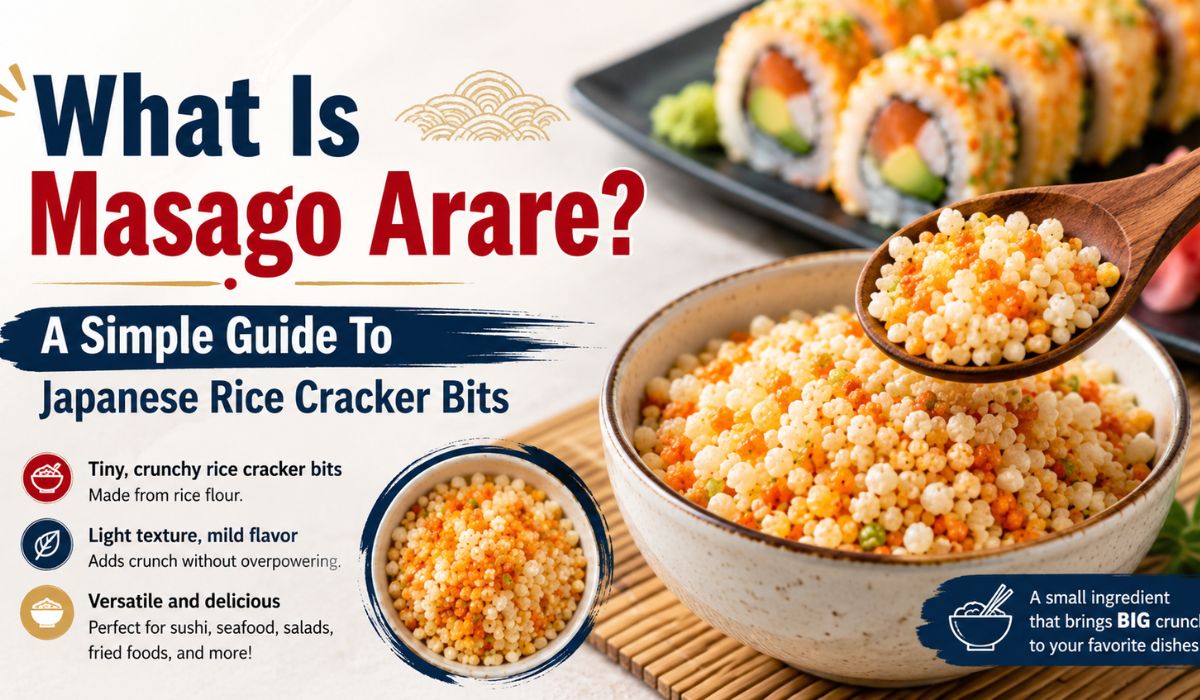
Masago Arare is one of those small ingredients that can completely change the texture and presentation of a dish. These tiny Japanese rice cracker bits may look simple at first glance, but they are widely used in sushi restaurants, seafood dishes, rice bowls, and modern fusion cooking because of their light crunch and attractive appearance. In recent years, Masago Arare has become increasingly popular outside Japan as more people explore Japanese cuisine and creative home cooking.
Unlike traditional crackers eaten as snacks, Masago Arare is mainly used as a topping, garnish, or crispy coating ingredient. It adds texture without overpowering the flavors of a dish, which makes it especially useful in sushi and seafood recipes. Many people first notice it on sushi rolls or spicy tuna dishes, where the crunchy texture contrasts beautifully with soft rice and creamy sauces.
This guide explains everything you need to know about Masago Arare, including what it is made from, how it tastes, how chefs use it, and why it has become such a popular ingredient in modern cooking. Whether you are a sushi fan, a curious food lover, or someone looking for new ingredients to try at home, Masago Arare is worth discovering.
Quick Bio Information About Masago Arare
| Information | Details |
|---|---|
| Food Name | Masago Arare |
| Cuisine Origin | Japanese Cuisine |
| Main Ingredient | Rice Flour |
| Texture | Crispy And Crunchy |
| Flavor | Mild And Lightly Savory |
| Common Use | Sushi And Seafood Garnish |
| Shape | Tiny Round Pellets |
| Traditional Purpose | Rice Cracker Snack |
| Modern Purpose | Culinary Topping |
| Popular In | Sushi Restaurants |
| Colors Available | White, Orange, Green, Mixed |
| Cooking Style | Baked Or Toasted |
| Gluten-Free Status | Depends On Ingredients |
| Common Pairing | Sushi Rolls |
| Used In Fusion Cuisine | Yes |
| Shelf Stability | Long Shelf Life |
| Storage Method | Airtight Container |
| Texture Benefit | Adds Crunch |
| Best Added | Before Serving |
| Growing Popularity | International Sushi Cuisine |
What Is Masago Arare?
Masago Arare is a tiny Japanese rice cracker product made mainly from rice flour or glutinous rice. The word “Arare” comes from the Japanese word for hailstones, which describes the ingredient’s small round shape. These crunchy rice cracker bits are commonly used as toppings or coatings in Japanese cuisine and fusion dishes.
Although the name includes the word “Masago,” Masago Arare is not fish roe itself. Traditional Masago refers to capelin fish eggs often used in sushi. Masago Arare, however, is a rice-based crunchy garnish designed to add texture and visual appeal to food.
One reason this ingredient has become popular is its versatility. It can be used in both traditional and modern recipes without changing the main flavor of the dish. Instead, it improves texture and presentation, making meals feel more interesting and restaurant-quality.
The Origin Of Arare In Japanese Cuisine
Arare has a long history in Japanese food culture. Traditional Japanese arare snacks have been enjoyed for centuries and are usually made from glutinous rice shaped into small pieces before being baked or toasted. These crackers were originally eaten as snacks during tea time or festivals.
Over time, chefs began using miniature arare pieces as garnishes and crispy coatings in cooking. This led to the development of products like Masago Arare, which are specifically designed for culinary use rather than simple snacking.
Japanese cuisine often focuses heavily on texture balance. Soft foods such as sushi rice, raw fish, tofu, and noodles become more enjoyable when paired with crispy ingredients. Masago Arare fits perfectly into this culinary philosophy because it adds crunch without overwhelming delicate flavors.
What Masago Arare Is Made From
Most Masago Arare products are made using rice flour, glutinous rice flour, starch, and seasonings. Some versions may also contain soy sauce powder, seaweed flavoring, or natural food coloring depending on the intended use.
The rice mixture is shaped into tiny round pellets before being baked or toasted until crisp. The result is a delicate crunchy texture that stays light rather than heavy. Some manufacturers create colorful versions for sushi presentation, including white, orange, green, yellow, and mixed rainbow varieties.
Because it is rice-based, Masago Arare has a neutral flavor profile that works with many foods. It does not dominate a dish the way strong spices or sauces might. Instead, it quietly improves the eating experience by adding crispness and visual contrast.
What Does Masago Arare Taste Like?
Masago Arare has a mild flavor with subtle toasted rice notes. The taste is usually light and neutral, although some flavored varieties may contain salty or savory seasonings. Its biggest strength is not intense flavor but texture.
When eaten, it provides a delicate crunch that complements soft foods. This makes it especially effective in sushi rolls, poke bowls, creamy seafood dishes, and fried foods. The contrast between crunchy rice cracker bits and smooth ingredients creates a more satisfying bite.
Because the flavor is gentle, Masago Arare can be used in many dishes without overpowering them. This versatility is one reason chefs appreciate it in both traditional Japanese cooking and modern fusion cuisine.
Masago Arare Vs Masago
Many people confuse Masago Arare with regular Masago because the names sound similar. However, the two ingredients are completely different.
Masago refers to the roe of capelin fish. These tiny orange fish eggs are commonly used in sushi and seafood dishes. They have a slightly salty seafood flavor and a soft popping texture.
Masago Arare, on the other hand, is made from rice flour and contains no fish eggs. It is crunchy rather than soft and is used mainly for texture and presentation.
Understanding this difference is important for readers searching for sushi ingredients online. While both ingredients may appear together in Japanese cuisine, they serve completely different purposes in cooking.
Why Sushi Chefs Use Masago Arare
Sushi chefs value Masago Arare because it improves both appearance and texture. Sushi often contains soft ingredients such as rice, avocado, seafood, and sauces. Adding crunchy rice cracker bits creates contrast that makes the dish more exciting to eat.
Masago Arare is commonly used on:
- Sushi rolls
- Spicy tuna rolls
- Tempura rolls
- Crispy seafood appetizers
- Poke bowls
Some sushi restaurants coat the outside of rolls with colorful arare to make them visually attractive. Others sprinkle it on top of sauces or seafood dishes to create a crisp finish.
Texture is extremely important in Japanese cuisine, and Masago Arare helps achieve that balance beautifully.
Popular Ways To Use Masago Arare At Home
Home cooks can use Masago Arare in many creative ways. One of the easiest methods is sprinkling it over sushi rolls or rice bowls just before serving. This instantly adds restaurant-style crunch.
It also works well as a coating ingredient for fried chicken, shrimp, fish, or tofu. Some people mix it with breadcrumbs or panko to create a lighter crispy crust.
Masago Arare can even be added to salads, ramen bowls, creamy pasta dishes, and fusion appetizers. Because it stays crunchy longer than many toppings, it is useful for dishes that need texture contrast.
Creative cooks often use it in sushi tacos, seafood sliders, spicy tuna nachos, and Japanese-inspired finger foods.
Different Colors And Varieties
One interesting feature of Masago Arare is the variety of colors available. White versions are the most traditional, but many suppliers also produce orange, green, yellow, and mixed-color blends.
Restaurants use colorful versions to improve presentation and make dishes look more visually appealing. Brightly colored arare can make sushi platters look modern and vibrant without changing the core flavor.
Some products are flavored with seaweed, soy sauce, sesame, or mild seasonings. Others remain completely plain so chefs can pair them with many dishes.
This variety has helped Masago Arare become popular in fusion cuisine where presentation is especially important.
Is Masago Arare Healthy?
Masago Arare is generally considered a light garnish ingredient rather than a heavy processed snack. Since it is rice-based, it is relatively low in fat compared to fried snack foods.
However, nutritional value depends on the product and portion size. Some flavored varieties may contain added sodium or seasoning powders. While it is usually used in small amounts, people following low-sodium diets should still check ingredient labels carefully.
Some products are gluten-free, but not all versions qualify. Certain brands use soy sauce flavoring or wheat-based ingredients, so readers with allergies should always review packaging information before buying.
Because Masago Arare is mainly used as a topping rather than a large meal component, it can fit easily into balanced eating habits when used in moderation.
How To Store Masago Arare Properly
Proper storage is important because moisture can quickly ruin the crisp texture. Masago Arare should always be stored in an airtight container in a cool and dry place.
Humidity is the biggest enemy of crunchy rice cracker bits. If left open, they may become soft and lose their signature crispness. Many sushi chefs add arare to dishes at the very last moment to preserve maximum crunch.
Most unopened products have a long shelf life, which makes them convenient for home kitchens. Once opened, keeping the container tightly sealed helps maintain freshness for longer periods.
Where To Buy Masago Arare
Masago Arare is now easier to find than ever before. Japanese supermarkets and Asian grocery stores usually carry several varieties in the sushi ingredient section.
Online food retailers also sell many options, including colorful blends designed specifically for sushi presentation. Some restaurant supply stores offer larger packages for commercial kitchens and sushi bars.
When shopping, readers should look for:
- Fresh appearance
- Crisp texture
- Minimal broken pieces
- Clear ingredient labels
- Proper sealing
Higher-quality products usually maintain crunch better and provide more consistent texture.
Cooking Tips For Better Results
One of the best ways to use Masago Arare is adding it shortly before serving. This prevents moisture from softening the rice cracker bits and keeps the dish crispy.
Pairing crunchy arare with creamy ingredients works especially well. Sushi rolls with spicy mayo, avocado, cream cheese, or seafood become more balanced when crispy texture is added.
Masago Arare also works beautifully with fried foods because it reinforces crunch without feeling heavy. Some chefs combine it with tempura flakes or panko breadcrumbs for extra texture layers.
Experimenting with fusion dishes can also produce exciting results. Because the ingredient has a mild flavor, it adapts well to both Japanese and Western recipes.
Common Mistakes To Avoid
One common mistake is adding Masago Arare too early. Sauces and steam can soften the rice cracker bits quickly, reducing their crisp texture.
Another mistake is overusing it. Since its purpose is texture enhancement, a small amount is usually enough. Too much can distract from the main flavors of a dish.
Some beginners also confuse it with fish roe and expect a seafood flavor. Understanding that it is rice-based helps avoid disappointment and improves recipe planning.
Improper storage is another issue. Exposure to air and humidity can ruin even high-quality arare within a short time.
Why Masago Arare Continues To Grow In Popularity
Masago Arare has become increasingly popular because modern diners enjoy foods with contrasting textures. Crunchy toppings have become a major trend in restaurants around the world, especially in sushi, poke, and fusion cuisine.
Social media food culture has also helped increase interest in colorful garnishes and visually attractive dishes. Masago Arare gives chefs an easy way to improve presentation while also enhancing texture.
At the same time, more people are experimenting with Japanese ingredients at home. As home cooks become more adventurous, specialty ingredients like Masago Arare are moving beyond restaurant kitchens and into everyday cooking.
Its versatility, long shelf life, and easy use make it an appealing ingredient for beginners and experienced cooks alike.
Final Thoughts
Masago Arare may be small, but it plays a surprisingly important role in modern Japanese and fusion cuisine. These tiny rice cracker bits add crunch, color, and texture to dishes without overpowering delicate flavors. From sushi rolls and seafood dishes to fried chicken and creative appetizers, Masago Arare offers countless possibilities in the kitchen.
One reason it continues to grow in popularity is its balance of simplicity and versatility. It is easy to use, visually attractive, and suitable for both restaurant-quality presentation and home cooking. Whether you enjoy traditional Japanese cuisine or modern fusion recipes, Masago Arare can instantly improve texture and create a more satisfying eating experience.
As interest in Japanese ingredients continues to expand in 2026, Masago Arare remains one of the easiest and most enjoyable ways to add professional-style crunch to everyday meals.
FAQs About Masago Arare
Is Masago Arare The Same As Fish Eggs?
No, Masago Arare is not fish roe. It is a rice-based crunchy topping made from rice flour or glutinous rice. Regular Masago refers to capelin fish eggs commonly used in sushi.
What Foods Pair Best With Masago Arare?
Masago Arare pairs especially well with sushi rolls, seafood dishes, poke bowls, fried chicken, salads, noodles, and creamy sauces. It works best in dishes that benefit from added crunch.
Is Masago Arare Gluten-Free?
Some products are gluten-free, but others may contain soy sauce powder or wheat-based seasonings. Always check the ingredient label carefully before purchasing.
Does Masago Arare Need Refrigeration?
Most unopened products do not require refrigeration. They should be stored in a cool, dry place. After opening, keeping them in an airtight container helps preserve crispness.
Why Do Sushi Restaurants Use Masago Arare?
Sushi chefs use it to improve texture and presentation. The crunchy rice cracker bits create contrast against soft sushi rice and seafood while making dishes more visually appealing.
Can Masago Arare Be Used In Non-Japanese Dishes?
Yes, many chefs use Masago Arare in fusion cuisine. It works well in tacos, seafood sliders, crispy salads, pasta dishes, and modern appetizers.
How Long Does Masago Arare Stay Fresh?
When stored properly in an airtight container away from moisture, it can remain fresh for several months. Humidity is the main factor that reduces crispness.
Can You Cook With Masago Arare?
Yes, it can be used in coatings for fried foods or added as a topping after cooking. However, adding it at the end usually provides the best crunchy texture.
Recommended For You: Arare Masago Explained: What It Is And How To Use It In Cooking