
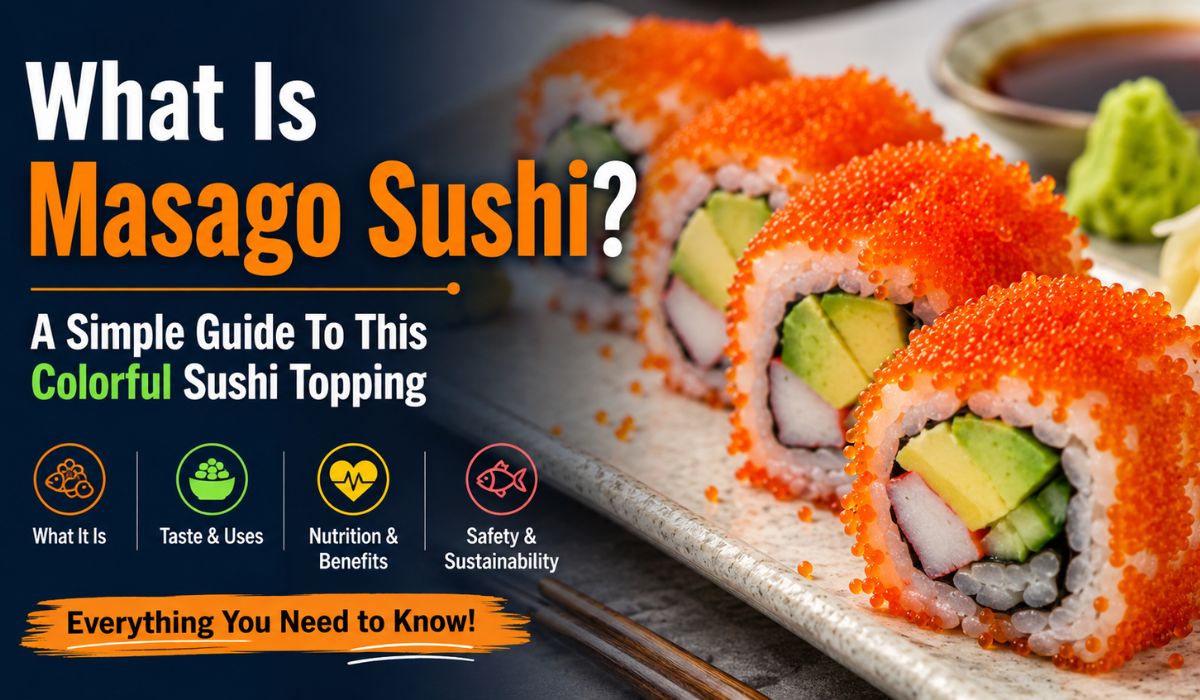
Introduction To Masago Sushi
Masago Sushi is one of those colorful sushi toppings that immediately catches the eye before you even take a bite. Those tiny orange grains scattered on sushi rolls often make people curious about what they are and why they are used so widely in Japanese and fusion cuisine. Even though Masago Sushi looks simple, it carries a long culinary history and an important role in sushi culture.
In this guide, we will explore everything about Masago Sushi in a clear and easy way. You will learn what it is, where it comes from, how it tastes, why chefs use it, and how it compares to other sushi roe like Tobiko and Ikura. We will also look at nutrition, health benefits, safety, and sustainability concerns. By the end, you will understand exactly why Masago Sushi has become such a popular ingredient around the world.
What Is Masago Sushi
Masago Sushi refers to sushi dishes that include Masago, which is the roe or eggs of the capelin fish. These tiny eggs are used as a topping, filling, or garnish in sushi rolls. Masago adds color, texture, and a mild seafood flavor that blends well with rice, seaweed, and sauces.
Capelin fish are small forage fish found in cold ocean waters. Because they are abundant and easy to harvest, their eggs are commonly used in sushi preparation. Masago is often lightly processed and sometimes colored to make it visually appealing in modern sushi presentations.
Where Masago Comes From
Masago comes from the capelin fish, a small fish that lives in the cold waters of the North Atlantic, North Pacific, and Arctic regions. These fish are an important part of the ocean ecosystem because they serve as food for larger species like whales, seabirds, and seals.
The roe is collected from female capelin during the spawning season. Harvesting is done before the eggs are released naturally, which allows producers to use them in food products. Once collected, the eggs are cleaned, salted, and sometimes flavored or dyed depending on their intended use.
This process makes Masago Sushi a widely available and affordable seafood ingredient compared to other luxury fish roes.
What Masago Looks Like In Sushi
Masago Sushi is easily recognizable because of its bright and attractive appearance. In its natural state, Masago is pale yellow, but in sushi dishes, it is often dyed orange, red, green, or even black for visual appeal.
The eggs are extremely small, much smaller than other fish roe, giving them a smooth and grainy texture when used in sushi. When placed on sushi rolls, Masago creates a vibrant coating that enhances presentation and makes the dish more visually exciting.
This is one of the main reasons chefs use Masago Sushi in modern sushi restaurants, especially in fusion-style dishes.
What Masago Sushi Tastes Like
Masago Sushi has a mild yet enjoyable seafood flavor. It is not overpowering, which makes it suitable for people who prefer light tastes. The flavor is slightly salty with subtle sweetness and a hint of ocean freshness.
Unlike larger fish roe, Masago does not create a strong popping sensation when eaten. Instead, it offers a smooth and delicate texture that blends into sushi rice and sauces. This makes it ideal for sushi rolls that combine multiple flavors.
Because of its mild profile, Masago is often mixed with spicy mayo, wasabi, or soy-based sauces to enhance its taste.
Masago Sushi Vs Other Fish Roe
Masago Sushi is often compared with Tobiko and Ikura because all three are used in sushi dishes, but they are quite different in taste and texture.
Tobiko, which comes from flying fish, is larger, crunchier, and more expensive. It provides a stronger popping texture compared to Masago. Ikura, which comes from salmon, is much larger and has a juicy burst when eaten, offering a richer and more intense flavor.
Masago, on the other hand, is the smallest and mildest of the three. It is also the most affordable, which makes it a common substitute for Tobiko in many sushi restaurants.
Each type of roe brings a different experience, but Masago Sushi is preferred when chefs want a subtle flavor and smooth texture.
Why Masago Is Used In Sushi Rolls
Masago Sushi is used in many dishes not only for flavor but also for presentation and texture. Its bright color makes sushi rolls more appealing and visually striking. In modern sushi culture, appearance is just as important as taste, and Masago helps achieve that balance.
It also adds a slight crunch that enhances the eating experience. In many rolls, Masago is placed on the outside or mixed inside to create layers of texture.
Chefs also use Masago because it absorbs sauces well, allowing it to blend with spicy mayo, soy glaze, or creamy fillings. This versatility makes it a key ingredient in both traditional and modern sushi creations.
Nutrition Facts Of Masago Sushi
Masago Sushi is considered a nutrient-rich ingredient despite its small size. It is low in calories and contains a good amount of protein, healthy fats, and essential vitamins.
A small serving provides omega-3 fatty acids, which support heart health and brain function. It also contains Vitamin B12, which helps with energy production and nervous system health. Minerals like selenium, magnesium, and phosphorus contribute to immune support and bone strength.
Because Masago is eaten in small amounts as a topping, it adds nutrition without significantly increasing calorie intake.
Health Benefits Of Masago Sushi
Masago Sushi offers several health benefits when consumed in moderation. The omega-3 fatty acids found in fish roe support cardiovascular health and may help reduce inflammation in the body.
The high Vitamin B12 content supports energy levels and brain function, making it a beneficial addition for overall wellness. Selenium found in Masago helps strengthen the immune system and protects cells from damage.
Magnesium content may also contribute to better mood regulation and healthy blood pressure levels. However, these benefits are most effective when Masago is part of a balanced diet.
Possible Risks And Side Effects
Although Masago Sushi is generally safe, there are a few concerns to keep in mind. The most common issue is its high sodium content, which can be a concern for people monitoring salt intake.
Another important factor is allergies. Since Masago is fish roe, it can trigger allergic reactions in individuals sensitive to seafood or eggs. In rare cases, people may experience discomfort even if they do not have a known seafood allergy.
Mercury levels in Masago are relatively low compared to larger fish because capelin is small and low in the food chain. However, moderation is still recommended.
How Masago Sushi Is Used In Popular Dishes
Masago Sushi is extremely versatile and appears in many popular dishes. It is commonly used in California rolls, spicy tuna rolls, and other sushi variations.
It is also a popular topping for poke bowls, where it adds color and flavor contrast to rice, vegetables, and seafood. In fusion cuisine, Masago is sometimes mixed into creamy sauces or used as a garnish for noodles and appetizers.
Its ability to blend with both Asian and Western flavors makes it a favorite in modern restaurants.
Is Masago Sushi Safe To Eat
Masago Sushi is generally safe to eat when prepared properly. It is commonly served raw in sushi, but it goes through cleaning and salting processes that make it suitable for consumption.
The main safety concerns involve allergies and excessive sodium intake rather than food safety itself. Most people can enjoy Masago Sushi without any issues as long as it is eaten in moderation.
Pregnant individuals or those with specific dietary restrictions should consult dietary guidelines before consuming it regularly.
Sustainability And Environmental Concerns
Masago Sushi also raises sustainability discussions. Capelin fish populations are important for marine ecosystems because they are a key food source for larger sea animals.
In some regions, concerns have been raised about overfishing and environmental pressure on capelin populations. Because Masago production relies heavily on harvesting female fish during spawning, some environmental groups suggest careful monitoring of fishing practices.
Sustainable sourcing is becoming increasingly important in the seafood industry, and responsible producers aim to reduce environmental impact.
How To Enjoy Masago Sushi Like A Pro
Masago Sushi can be enjoyed in many simple yet delicious ways. It pairs well with creamy textures like avocado and spicy sauces such as mayo-based dressings. It also complements fresh seafood rolls and rice-based dishes.
For beginners, starting with California rolls or poke bowls is a great way to experience Masago without overwhelming flavors. Over time, you can explore more creative combinations in fusion sushi dishes.
The key is to enjoy it in small amounts, as its flavor is meant to enhance, not dominate, the dish.
Conclusion On Masago Sushi
Masago Sushi is more than just a colorful topping. It is a unique ingredient that brings flavor, texture, and visual appeal to modern sushi dishes. From its origins in capelin fish to its use in global cuisine, Masago has become a staple in both traditional and fusion food culture.
While it offers nutritional benefits and culinary versatility, it is also important to consume it responsibly and be aware of dietary considerations like sodium content and allergies. With balanced consumption, Masago Sushi can be a delicious and enjoyable part of a varied diet.
Whether you are new to sushi or already a fan, understanding Masago helps you appreciate the small but important details that make sushi such a rich and evolving cuisine.
FAQs About Masago Sushi
What Is Masago Sushi Made Of
Masago Sushi is made from the roe or eggs of the capelin fish. These tiny eggs are processed and used as a topping or filling in sushi dishes.
Does Masago Sushi Taste Fishy
Masago Sushi has a mild seafood flavor with slight saltiness. It is not strongly fishy and is often balanced with sauces and other ingredients.
Is Masago Sushi The Same As Tobiko
No, Masago is smaller, softer, and less expensive than Tobiko. Tobiko also has a stronger crunch and is often considered higher in quality.
Is Masago Sushi Healthy
Yes, Masago Sushi contains omega-3 fatty acids, vitamins, and minerals. However, it should be eaten in moderation due to its sodium content.
Can Pregnant People Eat Masago Sushi
In many cases, yes, but only in moderation. It is important to follow medical advice because it is a raw seafood product.
Why Is Masago Sushi So Cheap
Masago is more affordable because capelin fish are abundant and smaller compared to fish used for other types of roe like Tobiko or Ikura.
Is Masago Sushi Safe To Eat Raw
Yes, it is commonly eaten raw in sushi and is considered safe when properly prepared and stored.
What Is The Main Use Of Masago In Sushi
Masago is mainly used for decoration, flavor enhancement, and adding texture to sushi rolls and bowls.
Recommended For You: What Is Masago? A Complete Guide To This Popular Sushi Roe