
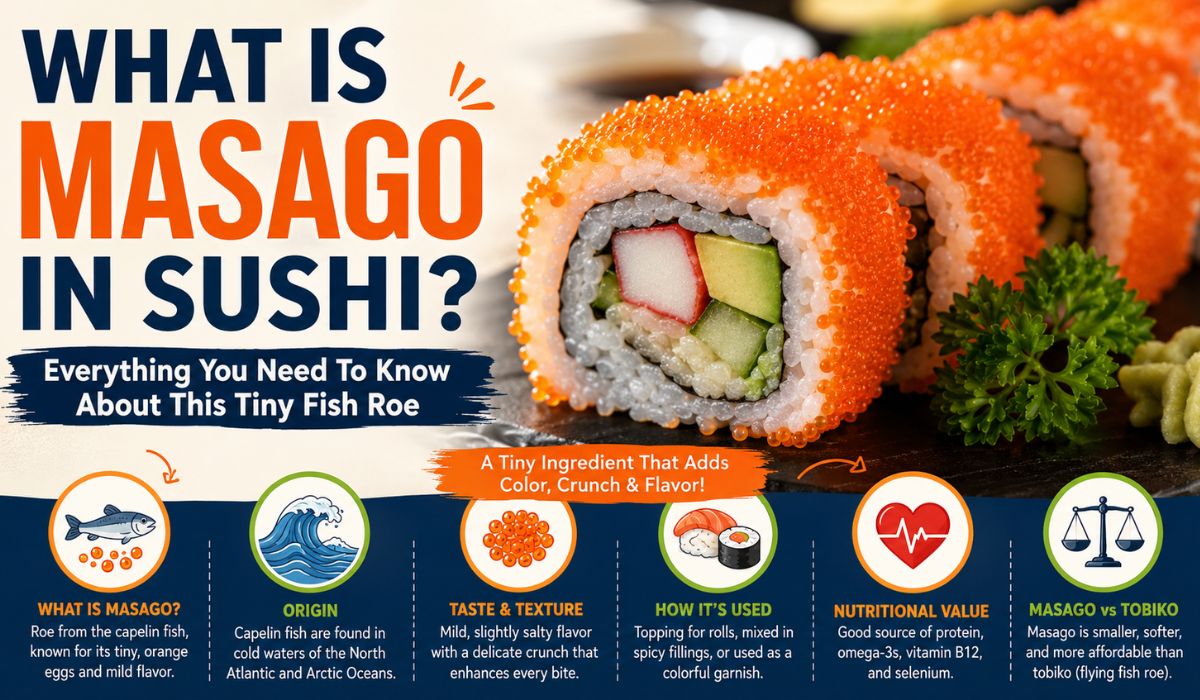
If you enjoy sushi, you have probably noticed tiny bright orange eggs sprinkled on top of rolls or tucked inside specialty creations. These small eggs are called Masago, and they are one of the most common fish roe ingredients used in sushi restaurants around the world.
Despite its popularity, many people still ask: What Is Masago In Sushi? Is it healthy? Does it taste fishy? How is it different from Tobiko or Salmon Roe?
Masago may be small, but it plays a surprisingly important role in Japanese-inspired cuisine. It adds color, texture, flavor, and visual appeal to many sushi dishes. Whether you are a sushi beginner or a longtime fan, understanding Masago can help you appreciate your favorite rolls even more.
This complete guide explores everything you need to know about Masago In Sushi, including its origins, taste, nutrition, culinary uses, health benefits, and how it compares to other types of fish roe.
Quick Bio About Masago In Sushi
| Fact | Information |
|---|---|
| Ingredient Name | Masago |
| Food Type | Fish Roe |
| Source Fish | Capelin |
| Scientific Name | Mallotus Villosus |
| Origin | Cold Northern Oceans |
| Natural Color | Pale Yellow |
| Common Color | Bright Orange |
| Texture | Delicate Crunch |
| Flavor | Mild And Salty |
| Japanese Cuisine Use | Sushi And Seafood Dishes |
| Typical Serving Style | Topping Or Garnish |
| Protein Content | Moderate |
| Omega-3 Content | Present |
| Vitamin B12 | Rich Source |
| Selenium | Contains Useful Amounts |
| Calories | Relatively Low |
| Preparation Method | Salt-Cured |
| Common Substitute | Tobiko |
| Popular Sushi Use | California And Specialty Rolls |
| Suitable For Seafood Allergies | No |
What Is Masago In Sushi?
Masago is the roe, or eggs, of the Capelin fish. Capelin is a small forage fish that lives in cold waters throughout the North Atlantic, North Pacific, and Arctic regions. The fish belongs to the smelt family and is known for producing large quantities of tiny eggs.
In sushi, Masago is valued for its delicate crunch, mild seafood flavor, and vibrant appearance. The eggs are extremely small, usually less than one millimeter in diameter, making them much smaller than Salmon Roe and slightly smaller than Flying Fish Roe.
Although the eggs are naturally pale yellow, they are often dyed bright orange before being sold to restaurants. Some varieties are also colored black, green, or red to create unique presentations.
Because Masago is affordable, attractive, and versatile, it has become one of the most widely used sushi toppings in the world.
Where Does Masago Come From?
The story of Masago begins with the Capelin fish. These small fish travel in massive schools through cold northern waters and play an important role in marine ecosystems. They serve as food for larger fish, whales, seabirds, and seals.
During spawning season, Capelin produce large amounts of roe. The roe is carefully harvested, cleaned, cured with salt, and prepared for commercial use. Once processed, it is packaged and distributed to seafood suppliers and sushi restaurants worldwide.
The popularity of Masago increased because it offered sushi chefs an affordable alternative to more expensive fish roe. While traditional Japanese cuisine often uses several types of roe, Masago became especially popular outside Japan because it delivers appealing texture and color without significantly increasing food costs.
Today, Masago can be found in sushi restaurants across North America, Europe, Asia, and many other regions.
Why Is Masago Usually Bright Orange?
Many sushi lovers assume that Masago naturally has its famous orange color. In reality, fresh Capelin Roe is usually pale yellow or light beige.
Food manufacturers often add coloring to improve visual appeal. Bright orange Masago creates a striking contrast against white rice, green avocado, black seaweed, and pink seafood. This colorful appearance helps make sushi look more attractive and appetizing.
Modern sushi chefs also use different colored varieties for creative presentations. Green Masago may be flavored with Wasabi, while black Masago is sometimes colored with squid ink. Red versions are often used for decorative purposes.
The color does not significantly change the flavor, but it can dramatically affect how a sushi dish looks and feels to diners.
What Does Masago Taste Like?
One reason Masago remains so popular is its balanced flavor profile. It delivers a pleasant seafood taste without overpowering the other ingredients in a sushi roll.
Masago tastes mildly salty with subtle ocean flavors. Some people describe it as slightly sweet, while others notice a gentle briny quality similar to fresh seafood. Unlike stronger fish roe varieties, Masago rarely tastes intensely fishy.
Its texture is equally important. Each tiny egg provides a delicate pop and gentle crunch. When combined with creamy ingredients such as avocado, spicy mayo, or crab, the contrast creates a more enjoyable eating experience.
This combination of flavor and texture allows Masago to complement a wide variety of sushi ingredients without dominating them.
How Is Masago Used In Sushi?
Masago is one of the most versatile ingredients found in modern sushi preparation. Chefs use it in many different ways depending on the style of dish they are creating.
One of the most common uses is as a topping for sushi rolls. A thin layer of bright orange Masago immediately makes a roll look more colorful and premium. It is frequently used on California Rolls, Alaska Rolls, Dragon Rolls, Rainbow Rolls, and Spicy Tuna Rolls.
Masago is also mixed directly into fillings. Many spicy seafood mixtures contain Masago because it adds texture and subtle flavor. In hand rolls, it often appears alongside crab, shrimp, tuna, or salmon.
Outside traditional sushi, Masago can be added to poke bowls, seafood salads, rice bowls, sauces, and even certain pasta dishes inspired by Japanese cuisine.
Masago Vs Tobiko
Masago and Tobiko are often confused because they look similar at first glance. However, there are several important differences.
Tobiko comes from Flying Fish, while Masago comes from Capelin. Tobiko eggs are slightly larger, making them easier to identify when viewed side by side.
Texture is another major difference. Tobiko delivers a firmer crunch and more noticeable popping sensation. Masago is softer and more delicate.
Flavor also varies. Tobiko often has a slightly smoky and richer taste, while Masago remains milder and more subtle.
Price is perhaps the biggest practical distinction. Tobiko is generally more expensive, which is why many restaurants use Masago as a cost-effective alternative. Both ingredients are excellent sushi toppings, but Tobiko is usually considered the more premium option.
Masago Vs Tobiko Vs Ikura
Understanding the differences between the three most popular sushi roes helps diners make informed choices.
Masago is the smallest of the group and comes from Capelin. It offers mild flavor and a delicate crunch.
Tobiko comes from Flying Fish and provides larger eggs with a firmer texture and slightly stronger taste.
Ikura, which is Salmon Roe, is dramatically different. Its eggs are much larger and burst in the mouth when eaten. Ikura delivers a rich, briny flavor that many seafood enthusiasts love.
These three roe varieties serve different culinary purposes. Masago works best when chefs want subtle texture and color. Tobiko provides stronger crunch and visual appeal. Ikura creates a luxurious seafood experience and often appears as the centerpiece of a dish rather than a garnish.
Is Masago Raw?
One of the most common questions about Masago In Sushi concerns whether it is raw.
Technically, Masago is usually served uncooked, but it is not completely raw in the same sense as freshly sliced sashimi. Before reaching restaurants, the roe is typically cured with salt and sometimes additional seasonings.
This curing process helps preserve freshness, improve flavor, and reduce spoilage. The result is a product that maintains its natural texture while remaining safe for consumption when properly handled and stored.
As with all seafood products, quality matters. Reputable restaurants purchase Masago from trusted suppliers that follow strict food safety standards.
Is Masago Healthy?
Many people are surprised to learn that Masago is more than just a colorful sushi topping. Despite its tiny size, it contains several nutrients that can contribute to a balanced diet.
Masago is naturally rich in protein, which helps support muscle maintenance and overall body function. It also contains Omega-3 Fatty Acids, a type of healthy fat associated with heart, brain, and eye health. While the amount of Omega-3s in a typical serving is not as high as in fatty fish such as salmon, it still contributes beneficial nutrients.
Another advantage of Masago is its Vitamin B12 content. This vitamin plays an important role in nerve function, red blood cell production, and energy metabolism. Masago also contains Selenium, a mineral that supports immune function and helps protect cells from oxidative stress.
Because Masago is usually consumed in small amounts, it is relatively low in calories. However, it can contain a noticeable amount of sodium due to the curing process. For most healthy adults, enjoying Masago as part of a balanced diet is generally not a concern, but individuals following low-sodium diets may want to consume it in moderation.
Masago Nutrition Facts
Although nutritional values can vary depending on processing methods and serving sizes, Masago offers a concentrated source of nutrients in a small package.
A typical serving contains protein, healthy fats, Vitamin B12, Selenium, and other trace minerals commonly found in seafood. It also provides small amounts of Vitamin D and other micronutrients that support overall health.
One reason nutrition experts appreciate fish roe is that it contains nutrients designed to support the development of fish embryos. As a result, roe naturally contains compounds that are nutritionally dense compared to many other seafood products.
Since Masago is commonly used as a garnish rather than a main ingredient, it is best viewed as a nutrient-rich addition that enhances a meal rather than serving as a primary source of nutrition.
Different Types Of Masago You May Encounter
Many people assume all Masago looks and tastes the same. In reality, there are several varieties available in sushi restaurants and seafood markets.
Traditional Orange Masago is the most common version. It is often used on sushi rolls and as a garnish for seafood dishes.
Green Masago frequently contains Wasabi flavoring, adding a mild spicy kick. This variety is popular in modern sushi presentations where both color and flavor are important.
Black Masago is typically colored using squid ink or other food-safe ingredients. It creates dramatic visual contrast and is often used in premium sushi presentations.
Red Masago provides another colorful option and is commonly used to enhance the appearance of specialty rolls.
Some manufacturers also produce flavored Masago with ingredients such as chili, garlic, or citrus seasonings. These variations allow chefs to customize flavor profiles while maintaining the familiar texture of Capelin Roe.
Can You Eat Masago During Pregnancy?
Questions about pregnancy and seafood are common, and Masago is no exception.
Because Masago is usually cured rather than fully cooked, recommendations can vary depending on local health authorities and individual medical circumstances. Some healthcare professionals advise caution when consuming uncooked or minimally processed seafood products during pregnancy.
Food safety is especially important during this time because pregnant women face a higher risk of complications from foodborne illnesses. The quality of the seafood source, handling procedures, and storage conditions all influence safety.
Anyone who is pregnant or planning a pregnancy should consult a qualified healthcare provider for personalized guidance regarding fish roe and other seafood products. Medical professionals can provide recommendations based on current health guidelines and individual needs.
Who Should Avoid Masago?
While Masago is safe and enjoyable for most people, it may not be suitable for everyone.
Individuals with fish or seafood allergies should avoid Masago because it comes directly from fish. Even small amounts can trigger allergic reactions in sensitive individuals.
People who must limit sodium intake may also want to be mindful of consumption. Since Masago is cured with salt, sodium levels can be higher than many people expect from such a small ingredient.
Some commercial products contain food coloring, preservatives, or additional flavorings. Anyone with sensitivities to specific additives should review ingredient labels carefully before consumption.
For most healthy adults, however, Masago can be enjoyed as part of a varied and balanced diet without concern.
How Masago Is Harvested And Processed
The journey from ocean to sushi plate involves several important steps that help ensure quality and safety.
Capelin are harvested during spawning seasons when their roe is fully developed. The roe sacs are carefully removed and processed to separate the tiny eggs.
The eggs are then cleaned to remove impurities before being cured with salt. This curing stage enhances flavor while extending shelf life. Depending on the manufacturer, additional seasonings, colorings, or flavor enhancers may be added.
After processing, Masago is packaged under controlled conditions and stored at cold temperatures to maintain freshness. Restaurants typically keep Masago refrigerated until it is used in sushi preparation.
Modern seafood processing standards help ensure that commercially available Masago remains safe, consistent, and visually appealing.
How To Store Masago Properly
Proper storage plays a major role in maintaining the quality of Masago.
Unopened packages should remain refrigerated or frozen according to the manufacturer’s instructions. Once opened, Masago should be kept in an airtight container and refrigerated promptly.
Exposure to air can affect both flavor and texture over time. Refrigeration helps preserve freshness, while freezing can extend shelf life for longer periods.
When thawing frozen Masago, gradual thawing in the refrigerator is generally preferred. Repeated freezing and thawing may negatively affect texture and quality.
As with all seafood products, freshness should always be evaluated before consumption. Any unusual odor, discoloration, or signs of spoilage should be treated as a reason to discard the product.
Why Chefs Love Using Masago In Sushi
From a culinary perspective, Masago offers several advantages that explain its widespread popularity.
Its small size allows chefs to distribute it evenly across dishes without overwhelming other ingredients. The bright color immediately enhances presentation, making rolls appear more vibrant and appealing.
The subtle crunch creates texture contrast that elevates the overall eating experience. In sushi, texture is just as important as flavor, and Masago contributes significantly in this area.
Another reason chefs appreciate Masago is its versatility. It pairs well with seafood, vegetables, rice, sauces, and even fusion dishes. Whether used as a garnish or mixed into fillings, it consistently adds value without dominating the flavor profile.
Because it remains relatively affordable compared to some premium roe varieties, Masago also helps restaurants create visually impressive dishes while maintaining reasonable menu prices.
The Growing Popularity Of Masago Beyond Sushi
Although Masago is most closely associated with sushi, its use has expanded significantly in recent years.
Modern chefs incorporate Masago into poke bowls, seafood pasta, rice dishes, appetizers, and fusion cuisine. The ingredient’s attractive appearance and unique texture make it appealing across a variety of culinary styles.
Social media has also contributed to its popularity. Colorful dishes featuring bright orange fish roe often attract attention online, encouraging more diners to try ingredients such as Masago.
As global interest in Japanese-inspired cuisine continues to grow in 2026, Masago remains one of the most recognizable and widely used seafood garnishes in restaurants around the world.
Conclusion
Masago may be tiny, but it plays a major role in the world of sushi. Derived from the roe of the Capelin fish, this colorful ingredient adds visual appeal, delicate crunch, and mild seafood flavor to countless dishes.
Understanding What Is Masago In Sushi helps diners appreciate more than just its appearance. From its origins in cold northern oceans to its place in modern sushi restaurants, Masago has earned its reputation as one of the most versatile fish roe ingredients available.
Whether you encounter it on a California Roll, mixed into a spicy seafood filling, or decorating a specialty sushi creation, Masago contributes texture, flavor, and character to the dining experience. Its nutritional value, affordability, and versatility have helped make it a favorite among chefs and sushi lovers alike.
The next time you see those tiny orange eggs on your sushi, you’ll know exactly what they are, where they come from, and why they have become such an important part of modern sushi culture.
FAQs About Masago In Sushi
What Is Masago In Sushi Made From?
Masago is made from the roe, or eggs, of the Capelin fish. Capelin are small cold-water fish found in northern oceans. Their eggs are harvested, cleaned, cured, and prepared for use in sushi and other seafood dishes.
Is Masago The Same As Tobiko?
No. Although they look similar, Masago comes from Capelin, while Tobiko comes from Flying Fish. Tobiko eggs are larger, crunchier, and generally more expensive than Masago.
Does Masago Taste Fishy?
Masago usually has a mild seafood flavor rather than a strong fishy taste. Most people describe it as slightly salty, lightly briny, and pleasantly subtle.
Is Masago Healthy?
Masago contains protein, Omega-3 Fatty Acids, Vitamin B12, Selenium, and other nutrients. Because it is consumed in small portions, it can be a nutritious addition to a balanced diet.
Why Is Masago Orange?
Natural Capelin Roe is usually pale yellow. Manufacturers often add coloring to create the bright orange appearance commonly seen in sushi restaurants.
Is Masago Cooked Or Raw?
Masago is generally uncooked but cured with salt and seasonings. This curing process helps preserve the roe and enhance its flavor before it is served.
What Sushi Rolls Usually Contain Masago?
Masago commonly appears on California Rolls, Alaska Rolls, Dragon Rolls, Spicy Tuna Rolls, Rainbow Rolls, and many specialty sushi creations. It may be used as a topping, garnish, or ingredient within fillings.
Can You Eat Masago By Itself?
Yes. Although most people encounter Masago in sushi, it can also be enjoyed on rice, crackers, seafood salads, poke bowls, and other dishes where its flavor and texture can shine.
Recommended For You: Tobiko Vs Masago: Key Differences Between These Popular Sushi Fish Eggs