
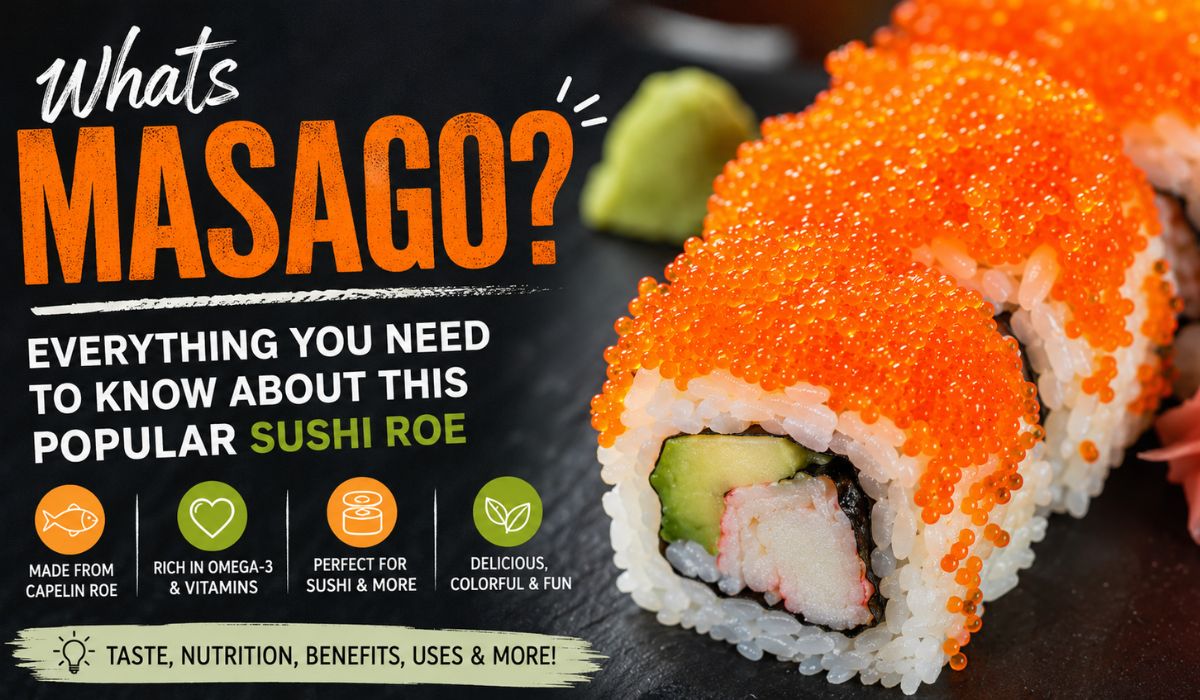
Whats Masago is one of those small ingredients that often surprises people once they learn what it actually is. You may have seen it sitting on top of sushi rolls as tiny orange beads that add color, texture, and flavor. These small pearls are more than just decoration. Masago has a long connection to Japanese cuisine, marine ecosystems, and modern food culture. In this article, we will explore everything about Masago in a simple and easy way, including what it is, where it comes from, how it is used, and why it has become so popular around the world.
Quick Bio Information About Masago
Box 1 Masago Is The Roe Of Capelin Fish Found In Cold Ocean Waters
Box 2 Capelin Fish Live In The North Atlantic And Arctic Oceans
Box 3 Masago Eggs Are Extremely Small Compared To Other Fish Roe
Box 4 Natural Masago Color Is Pale Yellow Or Cream
Box 5 Masago Is Often Colored For Sushi Presentation Purposes
Box 6 Masago Has A Mild And Slightly Salty Flavor
Box 7 It Is Commonly Used In Sushi Rolls And Rice Bowls
Box 8 Masago Contains Protein That Supports Body Functions
Box 9 It Is A Source Of Omega 3 Fatty Acids For Heart Health
Box 10 Masago Provides Vitamin B12 Important For Energy Production
Box 11 It Contains Vitamin D That Supports Bone Health
Box 12 Masago Is Low In Calories But Nutrient Dense
Box 13 Capelin Fish Are Important For Marine Food Chains
Box 14 Masago Is Often Compared With Tobiko And Ikura
Box 15 Tobiko Is Larger And Crunchier Than Masago
Box 16 Ikura Comes From Salmon And Has Larger Eggs
Box 17 Masago Is Usually Salted For Preservation And Taste
Box 18 It Should Be Stored In Refrigeration After Opening
Box 19 Excess Consumption May Increase Sodium Intake
Box 20 Sustainable Fishing Practices Are Important For Capelin Populations
What Is Masago
Masago is the roe, or eggs, of the capelin fish. Capelin is a small fish that belongs to the smelt family and lives in cold ocean waters. In simple words, Masago is fish eggs that are harvested and used as a food ingredient, especially in sushi dishes. The eggs are extremely small, smaller than many other types of fish roe, which gives Masago its unique smooth yet slightly crunchy texture. It is often lightly salted and sometimes colored to make it visually appealing in food presentation.
Where Does Masago Come From
Masago comes from capelin fish found in cold waters of the North Atlantic and Arctic Oceans. These regions include areas near Iceland, Greenland, Norway, and parts of Canada. Capelin are not large fish, but they are extremely important in the ocean ecosystem. They serve as a food source for many marine animals such as cod, whales, seabirds, and seals. Because of their abundance and ecological importance, capelin fishing is carefully managed in many regions to maintain balance in marine life.
Capelin Fish Overview
The capelin fish is small, usually growing only about the length of a finger. Despite its size, it plays a big role in nature. It belongs to a group of fish known as forage fish, which means they are eaten by larger species in the ocean food chain. Female capelin produce thousands of eggs during spawning season, which is why Masago production is possible on a large scale. These fish live in schools and migrate seasonally, often moving closer to shore to reproduce in large numbers.
Harvesting And Processing Of Masago
Masago is collected from female capelin fish before they release their eggs into the ocean. After harvesting, the roe is carefully cleaned and processed to make it safe and suitable for food use. The eggs are usually salted to preserve freshness and enhance flavor. In many cases, Masago is also lightly colored using food-safe ingredients to create bright shades like orange, green, or red. This coloring is mainly done for visual appeal in sushi and restaurant dishes.
Taste Texture And Appearance Of Masago
Masago has a mild, slightly salty taste that blends easily with other ingredients. It does not have a strong fishy flavor, which makes it appealing even to people who are not used to seafood. The texture is one of its most interesting features. Each tiny egg gives a light pop when eaten, creating a gentle crunch. Naturally, Masago is pale yellow or light cream in color, but it is often dyed to enhance its appearance in sushi presentation.
Masago In Japanese Cuisine And Sushi Culture
Masago is widely used in Japanese cuisine, especially in sushi preparation. It is commonly added on top of sushi rolls or mixed into fillings to enhance both flavor and appearance. Popular sushi rolls such as California rolls and spicy rolls often use Masago for its color and texture. Beyond sushi, it is also used in rice bowls, seafood salads, and modern fusion dishes. Its versatility makes it a favorite ingredient in restaurants worldwide.
Nutritional Value Of Masago
Masago is considered a nutrient-rich food even though it is usually eaten in small amounts. It contains protein, omega-3 fatty acids, vitamin B12, vitamin D, selenium, and magnesium. These nutrients support different functions in the human body, including energy production, brain health, and immune support. While Masago is not eaten in large quantities, even small servings can contribute useful nutrients to a balanced diet.
Health Benefits Of Masago
Masago offers several potential health benefits when consumed in moderation. The omega-3 fatty acids found in Masago may support heart health and help reduce inflammation in the body. Vitamin B12 plays an important role in nerve function and energy levels, while vitamin D supports bone health and calcium absorption. Because Masago is low in calories but nutrient-dense, it can be a good addition to a balanced diet when eaten responsibly.
Masago Vs Tobiko Vs Ikura
Masago is often compared with Tobiko and Ikura, which are also types of fish roe. Masago comes from capelin fish and is the smallest among the three. Tobiko comes from flying fish and has a slightly larger and crunchier texture. Ikura comes from salmon and is much larger, with a juicy burst when eaten. In terms of taste, Masago is the mildest, while Ikura has the strongest flavor. These differences make each type of roe unique in sushi cuisine.
Downsides And Concerns About Masago
Although Masago has many benefits, there are also some concerns to consider. One major issue is sodium content, as Masago is often salted during processing. This can make it less suitable for people who need to limit salt intake. Another concern is sustainability, as capelin fishing must be managed carefully to avoid overharvesting. Some people may also experience allergic reactions since Masago is a seafood product.
Safety And Who Should Be Careful
Masago is generally safe for most people when eaten in moderation. However, individuals with seafood allergies should avoid it completely. People with high blood pressure may also need to limit their intake due to sodium levels. Pregnant individuals are often advised to consult a healthcare professional before consuming fish roe. As with many seafood products, freshness and proper storage are important for safety.
Storage And Freshness Tips
Masago should always be stored properly to maintain its quality. It is usually kept in the refrigerator and should be consumed within a short period after opening. Freezing is also an option for longer storage, but it must be thawed carefully before use. Keeping Masago sealed tightly helps preserve its flavor and texture. Proper storage ensures that it remains safe and enjoyable to eat.
Sustainability And Eco Friendly Alternatives
Sustainability is an important topic when it comes to Masago. Because capelin are a key part of the ocean food chain, responsible fishing practices are essential. Overharvesting can affect other marine species that depend on capelin as a food source. As a result, some companies now offer plant-based or vegan alternatives to fish roe. These alternatives aim to provide similar texture and appearance while reducing environmental impact.
Final Thoughts On Masago
Masago is a small but fascinating ingredient that plays a big role in sushi and modern cuisine. It combines visual appeal, mild flavor, and useful nutrients in a simple form. While it offers health benefits and culinary versatility, it is also important to consider sustainability and dietary balance. Understanding Masago helps you appreciate not just its taste, but also its place in the ocean ecosystem and global food culture.
Frequently Asked Questions About Masago
What Is Masago Made Of
Masago is made from the eggs of the capelin fish. These eggs are harvested, cleaned, and lightly salted before being used in food, especially sushi dishes.
Does Masago Taste Fishy
Masago does not have a strong fishy taste. It has a mild, slightly salty flavor with a light crunchy texture that blends well with other ingredients.
Is Masago Raw Or Cooked
Masago is not cooked in the traditional sense. It is usually processed with salt for preservation, but it is safe to eat directly as part of prepared dishes like sushi.
Is Masago Healthy To Eat
Masago can be healthy in moderation because it contains protein, omega-3 fatty acids, vitamin B12, and vitamin D. However, it should be eaten in balanced amounts due to sodium content.
What Is The Difference Between Masago And Tobiko
Masago comes from capelin fish and has smaller eggs and a milder taste. Tobiko comes from flying fish and has larger, crunchier eggs with a stronger flavor.
Can Pregnant Women Eat Masago
Pregnant individuals may need to be cautious with Masago due to sodium content and general seafood guidelines. It is best to consult a healthcare professional before consuming it.
Why Is Masago Colored
Masago is often colored to improve its appearance in sushi dishes. Natural eggs are pale, so food coloring is added to make them more visually appealing.
Is Masago The Same As Caviar
Masago is not true caviar. Caviar traditionally comes from sturgeon fish, while Masago comes from capelin fish, making them different in origin and quality classification.
Recommended For You: Masago Vs Tobiko: What’s The Difference Between These Popular Sushi Roes?