
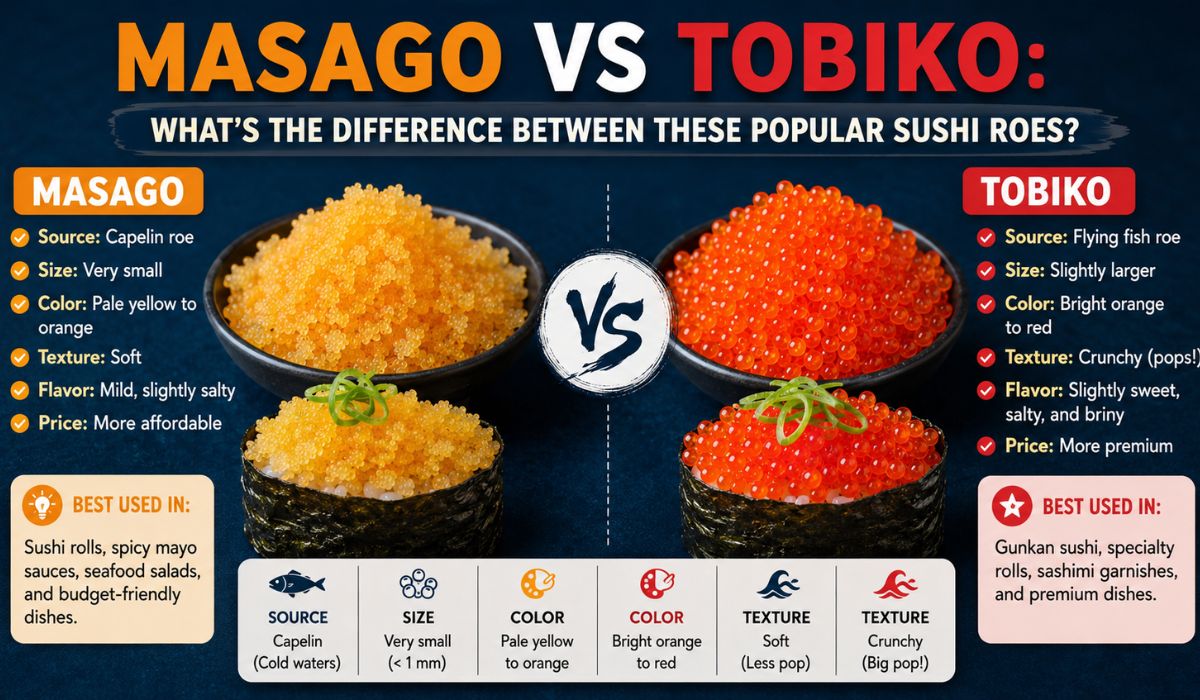
If you enjoy sushi, chances are you have seen tiny colorful fish eggs decorating rolls, rice bowls, and other Japanese dishes. These small pearls of flavor add texture, color, and a distinctive seafood taste that many sushi lovers enjoy. Among the most common types are Masago and Tobiko. At first glance, they look very similar, which leads many people to wonder about the real differences between them.
The comparison of Masago Vs Tobiko has become increasingly popular as Japanese cuisine continues to grow around the world. While both are fish roe commonly used in sushi, they differ in their source, appearance, flavor, texture, nutrition, and price. Understanding these differences can help you choose the right roe for your favorite dishes and appreciate Japanese cuisine on a deeper level.
In this guide, we will explore everything you need to know about Masago Vs Tobiko. From where they come from to how they taste, how they are used, and which one may be better for your needs, this article covers it all in an easy-to-understand way.
Quick Bio Information
| Fact | Masago | Tobiko |
|---|---|---|
| Source Fish | Capelin | Flying Fish |
| Roe Type | Fish Roe | Fish Roe |
| Origin | Cold Northern Oceans | Tropical And Subtropical Oceans |
| Average Size | Very Small | Slightly Larger |
| Natural Color | Pale Yellow | Bright Orange |
| Common Color Variations | Orange | Orange, Green, Black, Red |
| Texture | Soft | Crunchy |
| Flavor | Mild And Salty | Sweet And Salty |
| Price Level | Lower | Higher |
| Sushi Use | Very Common | Premium Sushi |
| Popularity | Worldwide | Worldwide |
| Omega-3 Content | Present | Present |
| Protein Content | High | High |
| Shelf Life | Refrigerated | Refrigerated |
| Cooking Use | Garnish And Sauces | Garnish And Toppings |
| Restaurant Preference | Budget-Friendly | Premium Choice |
| Visual Appeal | Moderate | High |
| Availability | Widely Available | Less Common |
| Traditional Japanese Use | Yes | Yes |
| Best Known Feature | Affordability | Crunchy Texture |
What Is Masago?
Masago is the roe of the capelin fish, a small fish that belongs to the smelt family. Capelin are commonly found in the cold waters of the North Atlantic, North Pacific, and Arctic Oceans. The eggs are harvested, cleaned, salted, and prepared for culinary use.
Masago eggs are very small, typically measuring less than one millimeter in diameter. They naturally have a pale yellow color, although many commercial products are dyed orange to make them more visually appealing and similar in appearance to Tobiko.
One reason Masago is so popular is its affordability. Compared to many other types of fish roe, it is relatively inexpensive, making it a common ingredient in sushi restaurants worldwide. Chefs often use it as a topping for sushi rolls, seafood salads, and spicy sauces because it provides attractive color and mild seafood flavor without significantly increasing food costs.
What Is Tobiko?
Tobiko is the roe of flying fish, a unique species known for its ability to glide above the ocean’s surface. Flying fish roe has long been valued in Japanese cuisine for its beautiful appearance and distinctive texture.
Tobiko eggs are noticeably larger than Masago eggs. They are naturally bright orange-red and have a shiny appearance that makes sushi dishes look more vibrant and luxurious. While they are still small compared to larger fish roe such as salmon roe, their size makes them easier to see and enjoy.
One of Tobiko’s defining characteristics is its crunchy texture. When bitten, the eggs create a satisfying pop that many sushi enthusiasts love. Tobiko is also considered more premium than Masago due to its texture, flavor profile, and higher cost. As a result, it is often featured in specialty sushi rolls and upscale Japanese restaurants.
Origin And Source Fish
One of the biggest differences in the Masago Vs Tobiko comparison is the fish that produce the roe. Masago comes from capelin fish, while Tobiko comes from flying fish. Although both species live in marine environments, they belong to different families and inhabit different regions of the world’s oceans.
Capelin are relatively abundant fish found in colder waters. Their widespread populations help keep Masago affordable and accessible. Flying fish, on the other hand, are harvested in smaller quantities for roe production, which contributes to Tobiko’s higher market value.
Understanding the source fish helps explain many of the differences consumers notice, including egg size, texture, flavor, and price.
Size, Appearance, And Color
Visual appearance is often the first clue when trying to distinguish between Masago and Tobiko. While both are small fish eggs used as sushi toppings, Tobiko is generally larger and more vibrant.
Masago eggs are tiny and delicate. Their natural color ranges from pale yellow to light orange. Because their appearance can be somewhat muted, manufacturers often add coloring to create a brighter orange shade.
Tobiko naturally possesses a brilliant orange-red color that stands out immediately. The eggs are larger and more reflective, creating a premium visual effect that enhances sushi presentations. This visual appeal is one reason Tobiko remains a favorite among sushi chefs.
Texture And Mouthfeel
Texture is perhaps the most noticeable difference once you actually eat the roe. Masago has a softer texture that blends easily into dishes. The eggs provide a gentle pop but do not create the dramatic crunch associated with Tobiko.
Tobiko delivers a much firmer bite. Its eggs maintain their structure well and produce a distinctive crunch when chewed. This texture adds an extra sensory experience to sushi rolls and makes Tobiko especially popular among sushi enthusiasts seeking contrast and excitement in every bite.
Many chefs specifically choose Tobiko because its texture remains noticeable even when combined with rice, seafood, sauces, and vegetables.
Flavor Profile
The flavor difference between Masago and Tobiko is subtle but important. Masago offers a mild seafood taste with gentle saltiness. Some people notice a slight bitterness, although this varies depending on preparation methods and seasoning.
Tobiko tends to have a cleaner, brighter flavor. It is often described as slightly sweet, pleasantly salty, and more complex than Masago. The flavor pairs exceptionally well with fresh fish, avocado, cucumber, and other common sushi ingredients.
Because of its stronger taste and texture, Tobiko often stands out more prominently in dishes. Masago, meanwhile, tends to complement other ingredients without overpowering them.
Nutrition And Health Benefits
From a nutritional perspective, both Masago and Tobiko offer several valuable nutrients. Fish roe is naturally rich in protein, making it a concentrated source of amino acids needed for muscle maintenance and overall health.
Both varieties also contain omega-3 fatty acids, which support heart health, brain function, and healthy inflammation levels. In addition, fish roe provides important nutrients such as Vitamin B12, selenium, phosphorus, and vitamin D.
However, because fish roe is often cured with salt, sodium levels can be relatively high. Individuals monitoring their sodium intake should enjoy these ingredients in moderation. Like many seafood products, fish roe also contains cholesterol, although current nutrition research suggests that dietary cholesterol affects individuals differently.
Price And Availability
When discussing Masago Vs Tobiko, price is often a deciding factor. Masago is generally less expensive due to the abundance of capelin fish and the larger global supply of roe. This affordability has made it a staple ingredient in sushi restaurants worldwide.
Tobiko usually costs more because flying fish roe is less abundant and more highly valued for its texture and appearance. Restaurants often reserve Tobiko for premium menu items or specialty sushi rolls.
For home cooks, Masago is often easier to find in grocery stores and Asian markets, while Tobiko may require visiting specialty seafood retailers or ordering online.
Common Sushi Dishes That Use Masago
Masago appears in a wide variety of sushi dishes because of its affordability, versatility, and mild flavor. Many sushi restaurants use Masago as a topping for California rolls, spicy tuna rolls, and seafood rolls. The tiny eggs add color and a subtle ocean taste without overwhelming the other ingredients.
Masago is also frequently mixed into spicy mayonnaise-based sauces. These sauces are often used on baked sushi rolls, seafood appetizers, and fusion dishes. Because the eggs are so small, they blend smoothly into sauces while still contributing texture and visual appeal.
Outside of sushi, Masago may be added to rice bowls, seafood salads, noodles, and even modern fusion dishes. Its ability to complement a wide range of ingredients makes it one of the most widely used fish roes in Japanese-inspired cuisine.
Common Sushi Dishes That Use Tobiko
Tobiko is often chosen when chefs want to make a dish stand out. Its bright color and crunchy texture make it an attractive finishing ingredient for specialty sushi rolls. Dragon rolls, rainbow rolls, and chef-inspired creations frequently feature Tobiko as a topping.
One of the most traditional uses of Tobiko is in gunkan sushi. In this preparation, sushi rice is wrapped with nori seaweed to create a small vessel that holds the roe. The result is a simple yet flavorful sushi item that highlights the unique qualities of Tobiko.
Tobiko is also used as a garnish for sashimi platters and premium seafood dishes. Because it maintains its texture well, it adds contrast to soft ingredients such as tuna, salmon, and avocado. This combination of appearance, flavor, and texture helps explain why Tobiko remains a favorite among sushi chefs worldwide.
Colored Tobiko And Its Unique Varieties
One of the most interesting features of Tobiko is its ability to absorb different flavors and colors. While natural Tobiko is orange-red, several colorful varieties have become popular in Japanese cuisine.
Green Tobiko is commonly flavored with wasabi. It delivers a mild spicy kick that pairs well with sushi and seafood. Black Tobiko is usually colored and flavored with squid ink, which adds a rich, slightly briny taste. Red Tobiko may be flavored with chili or other seasonings to provide additional heat and color.
Some chefs also use yellow Tobiko flavored with citrus ingredients such as yuzu. These variations allow restaurants to create visually striking dishes while offering unique flavor experiences. The colorful appearance of Tobiko has made it a favorite ingredient for creative sushi presentations.
Can Masago Replace Tobiko?
Many people wonder whether Masago can be used instead of Tobiko. The simple answer is yes. In many recipes, Masago serves as an effective substitute for Tobiko, especially when budget is a concern.
Both ingredients provide a salty seafood flavor and attractive appearance. In sushi rolls and mixed dishes, many casual diners may not immediately notice the difference. This is one reason many restaurants use Masago as a cost-effective alternative.
However, texture remains the biggest distinction. Tobiko’s signature crunch is difficult to replicate with Masago. If a recipe depends heavily on that popping texture, Tobiko will usually deliver a better result. For everyday sushi preparation, though, Masago often performs very well and remains a practical option.
Sustainability And Environmental Considerations
As seafood sustainability becomes more important, many consumers want to understand where their food comes from. The sustainability of both Masago and Tobiko depends largely on fishing practices and resource management.
Capelin populations are generally abundant in many regions, but responsible harvesting remains important for maintaining healthy marine ecosystems. Capelin play a significant role as a food source for larger fish, seabirds, and marine mammals.
Flying fish populations also require careful management. Sustainable fisheries focus on harvesting methods that minimize environmental impact while preserving fish populations for future generations. Consumers who want to make environmentally conscious choices can look for seafood suppliers that emphasize responsible sourcing and transparency.
In 2026, sustainability information is becoming more available, allowing consumers to make informed decisions when purchasing fish roe and other seafood products.
How To Store And Serve Fish Roe
Proper storage is essential for preserving the quality and safety of both Masago and Tobiko. Fish roe should always be kept refrigerated and stored according to the manufacturer’s instructions.
Once opened, roe is best consumed within a few days to maintain freshness. Exposure to air can gradually affect texture and flavor, so keeping the container tightly sealed is important. Many products can also be frozen, although freezing may slightly alter texture after thawing.
When serving fish roe, chilled temperatures generally provide the best flavor and texture. Most chefs add Masago or Tobiko just before serving to preserve their freshness and visual appeal. Careful handling helps ensure that the roe remains vibrant, flavorful, and enjoyable.
Masago Vs Tobiko: Which One Should You Choose?
Choosing between Masago and Tobiko ultimately depends on your personal preferences and intended use. If affordability, accessibility, and mild flavor are your priorities, Masago is an excellent choice. It works well in sushi rolls, sauces, salads, and a variety of seafood dishes.
If you value texture, visual appeal, and a more premium experience, Tobiko is often worth the additional cost. Its crunchy bite, vibrant color, and slightly sweeter flavor create a more distinctive sushi experience.
Many sushi lovers enjoy both varieties for different reasons. Some prefer Masago for everyday meals and Tobiko for special occasions. Rather than viewing one as better than the other, it is often more useful to appreciate the unique qualities that each brings to Japanese cuisine.
Final Thoughts
The comparison of Masago Vs Tobiko reveals that these two popular sushi roes share many similarities while offering distinctly different experiences. Both add flavor, texture, and visual appeal to Japanese dishes, yet they come from different fish species and possess unique characteristics.
Masago, harvested from capelin, is smaller, softer, and more affordable. Tobiko, harvested from flying fish, is larger, crunchier, and often considered more premium. Their nutritional profiles are similar, with both providing protein, omega-3 fatty acids, and valuable vitamins and minerals.
For sushi enthusiasts, understanding these differences adds a deeper appreciation for the ingredients used in Japanese cuisine. Whether you prefer the subtle simplicity of Masago or the satisfying crunch of Tobiko, both roes offer delicious ways to enhance your favorite sushi dishes. The next time you order sushi, you will be able to recognize exactly what is on your plate and understand why each roe creates a unique dining experience.
FAQs About Masago Vs Tobiko
Is Masago The Same As Tobiko?
No. Masago and Tobiko are different types of fish roe. Masago comes from capelin fish, while Tobiko comes from flying fish. They differ in size, texture, flavor, appearance, and price, even though they are often used in similar dishes.
Which Is Healthier, Masago Or Tobiko?
Both are nutritious foods that provide protein, omega-3 fatty acids, Vitamin B12, selenium, and other nutrients. Their nutritional values are fairly similar, so neither has a major health advantage over the other. The healthier choice often depends on portion size and overall dietary needs.
Why Is Tobiko More Expensive Than Masago?
Tobiko generally costs more because flying fish roe is less abundant and more highly valued for its texture and appearance. The larger eggs, vibrant color, and distinctive crunch contribute to its premium status in sushi restaurants.
What Does Masago Taste Like?
Masago has a mild seafood flavor with a slightly salty profile. Some people notice subtle bitterness, while others describe it as delicate and lightly briny. Its flavor tends to blend easily with other ingredients.
What Does Tobiko Taste Like?
Tobiko offers a brighter and slightly sweeter flavor than Masago. It has a clean ocean taste, balanced saltiness, and a satisfying crunch that makes it especially popular in sushi dishes.
Can I Buy Masago And Tobiko At Grocery Stores?
Many Asian grocery stores carry both products, especially in frozen seafood sections. Masago is generally easier to find and often less expensive. Tobiko may be available at specialty seafood markets or online retailers.
Is Tobiko Real Caviar?
No. True caviar comes from sturgeon species. Tobiko is flying fish roe. While both are fish eggs, they come from different fish and are considered separate products in the culinary world.
Which Roe Is Better For Sushi Rolls?
Both work well in sushi rolls, but they create different experiences. Masago provides a softer texture and lower cost, while Tobiko delivers a crunchier bite and more vibrant appearance. The best choice depends on the style of sushi and personal preference.
Recommended For You: What Are Masago Eggs? A Complete Guide To These Tiny Orange Fish Roe