
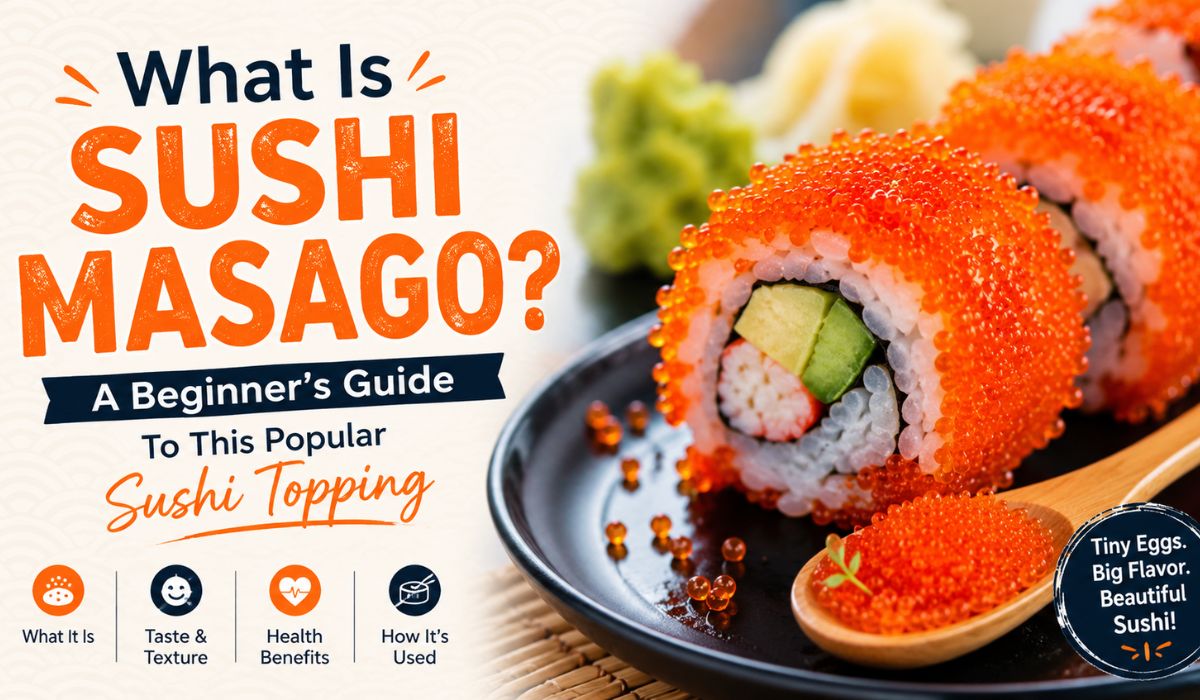
ating sushi rolls, poke bowls, and seafood dishes. This colorful ingredient is known as Sushi Masago, a popular fish roe that adds flavor, texture, and visual appeal to many Japanese-inspired dishes. While it may look similar to other types of fish roe, Sushi Masago has its own unique characteristics that make it a favorite among sushi chefs and seafood lovers around the world.
In this guide, you’ll learn what Sushi Masago is, where it comes from, how it tastes, its nutritional value, and why it has become such a common ingredient in modern sushi cuisine.
Quick Bio About Sushi Masago
| Fact | Information |
|---|---|
| Ingredient Name | Sushi Masago |
| Source | Capelin Fish Roe |
| Origin | Japanese Cuisine |
| Natural Color | Pale Yellow |
| Common Color | Bright Orange |
| Texture | Delicate Crunch |
| Flavor | Mild, Salty, Slightly Sweet |
| Category | Fish Roe |
| Calories | Low |
| Protein | High |
| Omega-3 Content | Present |
| Common Use | Sushi Topping |
| Popular Dish | California Roll |
| Alternative To | Tobiko |
| Served Raw | Usually |
| Mercury Level | Generally Low |
| Storage | Refrigerated Or Frozen |
| Availability | Grocery Stores And Online |
| Cuisine Type | Japanese |
| Popularity | Worldwide |
What Is Sushi Masago?
Sushi Masago is the roe, or eggs, of the capelin fish. Capelin are small forage fish that live in the cold waters of the North Atlantic, North Pacific, and Arctic Oceans. The eggs are harvested from female capelin and processed for use in a variety of seafood dishes.
In Japanese cuisine, Masago is widely used as a garnish, topping, or ingredient in sushi rolls. Because the eggs are small and affordable compared to other fish roe, they have become a popular choice for both restaurants and home cooks.
Where Does Masago Come From?
Masago comes from capelin fish, which belong to the smelt family. These fish play an important role in marine ecosystems and serve as food for larger fish, seabirds, seals, and whales.
After harvesting, the roe is carefully cleaned, salted, and often colored to enhance its appearance. Although natural Masago is pale yellow, most commercial products are bright orange, red, green, or black.
What Does Sushi Masago Look Like?
One of the easiest ways to recognize Sushi Masago is by its vibrant color and tiny size. The eggs are much smaller than many other fish roe varieties and create a delicate layer of texture when added to food.
Orange Masago is the most common variety found in sushi restaurants, while green Masago is often flavored with wasabi and black Masago may contain squid ink for color and additional flavor.
What Does Sushi Masago Taste Like?
Sushi Masago has a mild seafood flavor that is slightly salty and subtly sweet. Unlike some stronger fish products, it does not overpower other ingredients.
The texture is one of its biggest attractions. The tiny eggs create a gentle crunch that complements soft sushi rice, creamy avocado, fresh fish, and crisp vegetables. This combination of flavor and texture is one reason Masago remains a favorite sushi topping.
Why Is Sushi Masago So Popular?
Sushi chefs value Masago because it enhances both presentation and taste. The bright color instantly makes sushi rolls more attractive, while the crunchy texture adds another layer of enjoyment.
Masago is also versatile. It can be used inside sushi rolls, sprinkled on top of rolls, mixed into sauces, or added to poke bowls and seafood salads. Its affordability compared to premium roe varieties also contributes to its widespread popularity.
Common Dishes That Use Sushi Masago
Many popular sushi rolls feature Masago as either a topping or ingredient. California Rolls often include Masago for added texture and color. Spicy Tuna Rolls, Dragon Rolls, and specialty sushi creations frequently use it as well.
Outside traditional sushi, Masago is commonly found in poke bowls, seafood rice bowls, noodle dishes, and spicy seafood sauces. Its ability to blend with many flavors makes it a versatile ingredient.
Sushi Masago Vs Tobiko
Many people confuse Masago with Tobiko because they look similar. However, Tobiko comes from flying fish, while Masago comes from capelin.
Tobiko eggs are larger, crunchier, and usually more expensive. Masago eggs are smaller, softer, and generally less costly. Although their flavors are similar, Tobiko often has a slightly stronger taste and a more pronounced crunch.
Because of its lower price, Masago is frequently used as an alternative to Tobiko in sushi restaurants.
Sushi Masago Vs Caviar
Caviar and Masago are both fish roe, but they are very different products. True caviar comes from sturgeon and is considered a luxury food.
Masago is significantly more affordable and is commonly used in everyday sushi dishes. While caviar offers a richer and more complex flavor profile, Masago provides an accessible way to enjoy fish roe without the premium price tag.
Nutritional Value Of Sushi Masago
Sushi Masago is relatively low in calories while providing several important nutrients. It contains protein, healthy fats, omega-3 fatty acids, Vitamin B12, selenium, phosphorus, and small amounts of Vitamin D.
These nutrients support various aspects of health, including heart function, immune support, energy production, and normal brain function. Because it is nutrient-dense, a small serving can provide meaningful nutritional benefits.
Is Sushi Masago Healthy?
For most people, Sushi Masago can be part of a healthy and balanced diet. Its combination of protein and omega-3 fatty acids makes it a nutritious seafood option.
However, Masago is often high in sodium due to the curing and preservation process. People who monitor their salt intake should enjoy it in moderation. Like many foods, balance is the key to enjoying its benefits.
Is Sushi Masago Safe To Eat?
Sushi Masago is generally safe to eat when purchased from reputable suppliers and handled according to food safety standards. It is commonly served raw in sushi restaurants around the world.
Individuals with fish, seafood, or roe allergies should avoid Masago. Those who are pregnant or have specific dietary concerns should consult healthcare professionals and follow local food safety recommendations regarding raw seafood products.
How To Use Sushi Masago At Home
One of the best things about Sushi Masago is how easy it is to use. Home cooks can add it to homemade sushi rolls, poke bowls, rice bowls, seafood appetizers, and noodle dishes.
It pairs especially well with avocado, cucumber, crab, shrimp, salmon, spicy mayo, and sushi rice. Even a small spoonful can dramatically improve the appearance and texture of a dish.
Sustainability Considerations
As awareness of sustainable seafood continues to grow, many consumers are paying closer attention to how seafood products are sourced. Capelin populations are monitored in several regions, and responsible fisheries help support long-term sustainability.
Choosing Masago from reputable suppliers that follow responsible fishing practices can help consumers make more environmentally conscious choices while still enjoying this popular seafood ingredient.
Final Thoughts
Sushi Masago is one of the most recognizable and enjoyable ingredients found in modern sushi. Its bright color, delicate crunch, and mild flavor make it a favorite addition to sushi rolls, poke bowls, and seafood dishes around the world.
Whether you are trying it for the first time or looking to learn more about the ingredient behind those tiny orange eggs, Sushi Masago offers an interesting combination of flavor, nutrition, and culinary versatility. With its growing popularity and wide range of uses, it remains an essential ingredient in Japanese-inspired cuisine.
FAQs About Sushi Masago
What Is Sushi Masago Made From?
Sushi Masago is made from the roe of capelin fish. These small fish live in cold northern oceans, and their eggs are harvested, processed, and prepared for culinary use.
Does Sushi Masago Taste Fishy?
Masago has a mild seafood flavor that is much less intense than many people expect. It is slightly salty, lightly sweet, and generally considered approachable even for those new to fish roe.
Is Sushi Masago The Same As Tobiko?
No. Masago comes from capelin fish, while Tobiko comes from flying fish. Tobiko eggs are larger and crunchier, while Masago eggs are smaller and softer.
Is Sushi Masago Healthy?
Sushi Masago contains protein, omega-3 fatty acids, Vitamin B12, and several important minerals. It can be a nutritious addition to a balanced diet when consumed in moderation.
Why Is Sushi Masago Different Colors?
Masago is often colored to improve visual appeal. Orange is the most common color, while green, red, and black varieties may be flavored with ingredients such as wasabi or squid ink.
Can You Eat Sushi Masago Raw?
Yes. Masago is commonly served raw in sushi restaurants and is generally safe when sourced and handled according to food safety standards.
Where Can You Buy Sushi Masago?
You can find Sushi Masago in Japanese grocery stores, Asian supermarkets, specialty seafood markets, and online retailers that sell sushi ingredients.
How Long Does Sushi Masago Last?
Fresh Masago should be kept refrigerated and consumed according to package instructions. Unopened frozen Masago can often be stored for several months while maintaining quality.
Recommended For You: Azuma Food Masago Arare: What It Is And How It Enhances Sushi Dishes