
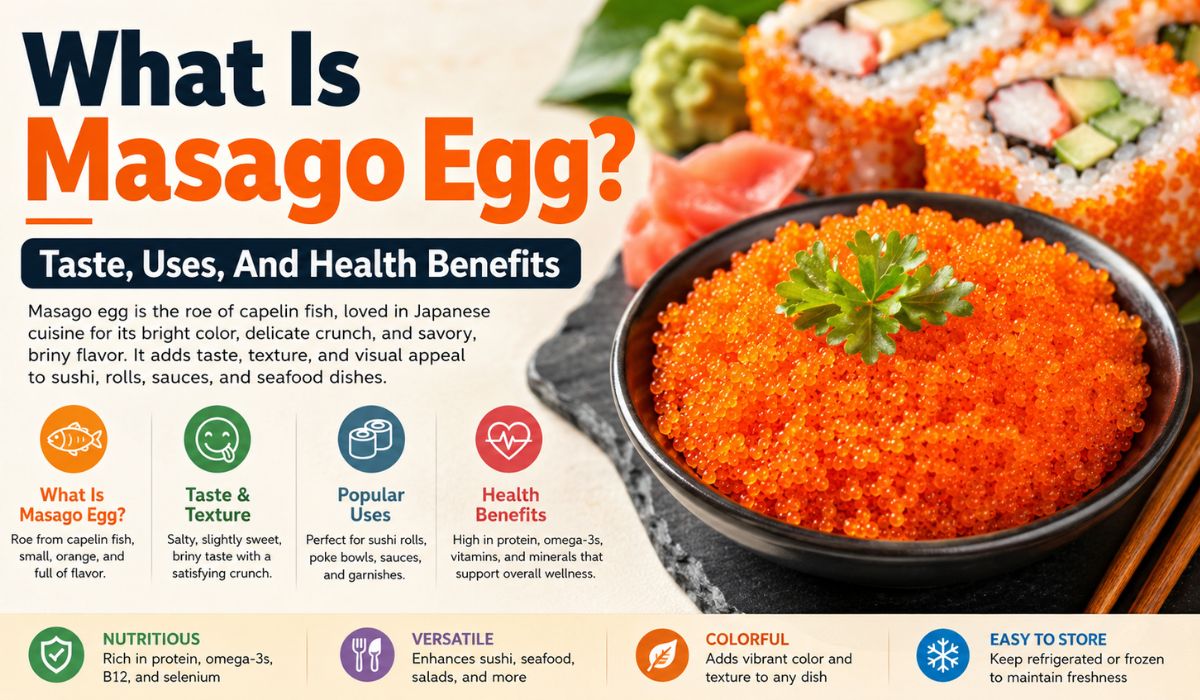
Masago Egg is one of the most recognizable ingredients in modern sushi and Japanese seafood dishes. These tiny orange fish eggs may look simple at first glance, but they add texture, flavor, color, and depth to many popular meals. If you have ever eaten a California Roll, Spicy Tuna Roll, or a colorful sushi bowl, there is a good chance you have already tasted Masago Egg without realizing it.
In Japanese cuisine, Masago Egg is valued for its delicate crunch, salty flavor, and ability to enhance seafood dishes without overpowering them. Over the years, Masago has become increasingly popular outside Japan as sushi culture continues to grow around the world. Restaurants now use it in sushi rolls, sauces, poke bowls, seafood pasta, and fusion recipes that combine Asian and Western flavors.
Many people are curious about what Masago Egg actually is, where it comes from, whether it is healthy, and how it compares to ingredients like Tobiko, Ikura, and Caviar. Understanding these details can help readers appreciate why this small ingredient plays such a big role in seafood cuisine. From its nutritional value to its culinary uses, Masago Egg offers much more than visual appeal.
Quick Bio About Masago Egg
| Fact | Information |
|---|---|
| Main Ingredient | Capelin Fish Roe |
| Cuisine Origin | Japanese Cuisine |
| Texture | Crunchy And Delicate |
| Flavor | Salty, Briny, Mildly Sweet |
| Common Color | Orange |
| Other Colors | Green, Red, Black |
| Main Use | Sushi Topping |
| Popular In | Sushi Rolls And Poke Bowls |
| Protein Content | High |
| Omega-3 Content | Moderate |
| Sodium Level | Relatively High |
| Storage Method | Refrigerated Or Frozen |
| Shelf Life | Several Days Refrigerated |
| Premium Alternative | Tobiko |
| Larger Alternative | Ikura |
| Luxury Comparison | Caviar |
| Common Pairings | Tuna, Salmon, Crab |
| Popular Sauce | Spicy Masago Mayo |
What Is Masago Egg?
Masago Egg refers to the roe, or eggs, of the capelin fish. Capelin are small cold-water fish that live mainly in the North Atlantic and North Pacific Oceans. During spawning season, the roe is carefully harvested, cleaned, salted, and prepared for culinary use. In Japanese cuisine, Masago is commonly served as a garnish, sushi topping, or ingredient in seafood dishes.
The word “Masago” roughly translates to “sand” or “tiny fish eggs” in Japanese, which reflects the small size and delicate texture of the roe. Unlike larger fish eggs such as salmon roe, Masago is tiny and slightly crunchy. Its naturally mild flavor makes it easy to combine with many ingredients.
Masago Egg is especially popular because it is affordable, visually attractive, and versatile. Sushi chefs often use it to add bright color and texture to dishes while keeping costs lower than premium roe like Tobiko or Caviar.
What Does Masago Egg Taste Like?
Masago Egg has a mild seafood flavor that is often described as salty, slightly sweet, briny, and rich in umami. The tiny eggs create a gentle popping sensation when eaten, adding texture as much as flavor. While the taste is noticeable, it is not overpowering, which makes it ideal for sushi rolls and seafood dishes.
One reason Masago is so popular is its balance. It enhances other ingredients instead of dominating them. When paired with sushi rice, avocado, crab, shrimp, salmon, or tuna, Masago brings a subtle ocean flavor that complements the dish naturally.
Its texture is equally important. The eggs are firm enough to provide a delicate crunch while remaining soft enough to blend smoothly into sauces and fillings. This contrast makes sushi more enjoyable and visually appealing at the same time.
What Color Is Masago Egg?
Natural Masago Egg is usually pale orange or golden in color. However, many restaurants and seafood suppliers enhance its appearance using natural or food-safe coloring ingredients. As a result, Masago is often available in bright shades of orange, red, green, and black.
Green Masago is commonly flavored with wasabi, giving it a spicy kick that pairs well with sushi. Black Masago is often colored using squid ink, which creates a dramatic presentation for seafood dishes. Red Masago may include chili seasoning for extra flavor.
These colorful varieties are not just decorative. Different seasonings can slightly change the taste profile, allowing chefs to create unique sushi experiences while improving presentation.
How Masago Egg Is Harvested And Processed
The production of Masago Egg begins during the capelin spawning season, which usually takes place in spring and early summer. Female capelin fish are harvested carefully, and the roe is removed and cleaned thoroughly.
After extraction, the eggs are salted to preserve freshness and enhance flavor. Some producers also add seasonings, soy sauce, or coloring ingredients depending on the final product. The roe is then packaged fresh or frozen for restaurants and seafood suppliers around the world.
Modern seafood processing techniques help maintain quality and food safety standards. Most Masago sold commercially is frozen to preserve freshness during transportation. Once thawed properly, it retains its texture and flavor very well.
Popular Uses Of Masago Egg In Sushi
Masago Egg is widely used in sushi because it adds color, texture, and umami flavor without overpowering the dish. One of the most common uses is as an outer coating for sushi rolls, where the eggs stick to the rice and create a bright decorative layer.
California Rolls often feature Masago on the outside along with imitation crab, avocado, and cucumber. Spicy Tuna Rolls also commonly include Masago to balance the heat of spicy mayo with salty seafood flavor.
Beyond sushi rolls, Masago is frequently used in poke bowls, seafood salads, sushi hand rolls, and rice dishes. Many restaurants also mix it into creamy sauces for sushi toppings or spicy seafood spreads.
In recent years, fusion cuisine has introduced Masago into seafood pasta, deviled eggs, canapés, and even gourmet burgers. Its versatility makes it one of the easiest seafood ingredients to incorporate into modern cooking.
Masago Egg Nutrition Facts
Masago Egg is relatively low in calories while providing several important nutrients. A small serving contains protein, healthy fats, omega-3 fatty acids, vitamin B12, and selenium. These nutrients help support brain health, energy production, and overall wellness.
Protein is one of the main nutritional advantages of Masago. Even small portions can contribute to daily protein intake while adding flavor to meals. Omega-3 fatty acids are also important because they support heart health and may help reduce inflammation.
Masago also contains vitamin B12, which supports nerve function and red blood cell production. Selenium acts as an antioxidant that helps protect cells from damage.
One important consideration is sodium. Because Masago is salted during processing, it can contain a relatively high amount of sodium. People watching their salt intake should enjoy it in moderation.
Is Masago Egg Healthy?
Masago Egg can be part of a balanced diet when eaten in reasonable amounts. Its combination of protein, omega-3 fatty acids, vitamins, and minerals makes it nutritionally valuable compared to many processed toppings and sauces.
The healthy fats found in fish roe may support heart and brain health. Its protein content also helps create satisfying meals without adding large amounts of calories. For seafood lovers, Masago offers a flavorful way to add nutrients to sushi and rice dishes.
However, moderation is important. High sodium levels may not be ideal for people with blood pressure concerns or sodium-sensitive diets. Some commercial varieties may also include artificial coloring or additives.
People with seafood allergies should avoid Masago entirely, as fish roe can trigger allergic reactions in sensitive individuals.
Masago Egg Vs Tobiko
Masago Egg and Tobiko are often confused because they look similar and are both used in sushi. However, they come from different fish species and have noticeable differences in texture, flavor, and price.
Masago comes from capelin fish, while Tobiko comes from flying fish. Tobiko eggs are larger, crunchier, and more visually dramatic. Their flavor is also slightly stronger and sweeter.
Masago is smaller and softer with a milder taste. Because capelin roe is more affordable and widely available, Masago is commonly used in everyday sushi restaurants.
Tobiko is usually considered the more premium option because of its larger size, brighter appearance, and firmer popping texture.
Masago Egg Vs Ikura And Caviar
Ikura refers to salmon roe, while Caviar traditionally refers to sturgeon roe. Compared to Masago, both are larger and more luxurious seafood ingredients.
Ikura eggs are much bigger and contain liquid centers that burst when eaten. Their flavor is richer and more intense than Masago. Ikura is often served on its own in sushi because of its bold taste and premium quality.
Caviar is softer, buttery, and extremely expensive compared to Masago. High-quality caviar can cost hundreds or even thousands of dollars depending on the sturgeon species and production method.
Masago remains popular because it provides seafood flavor and attractive presentation at a much more affordable price point.
How To Store Masago Egg Properly
Proper storage is very important because Masago is a seafood product that can spoil quickly if handled incorrectly. Fresh Masago should always remain refrigerated at cold temperatures below 40°F or 4°C.
Once opened, it should be stored in an airtight container to prevent moisture loss and contamination. Most refrigerated Masago lasts several days after opening, although freshness depends on processing and packaging quality.
Frozen Masago can remain usable for several months if stored properly. Slow thawing inside the refrigerator helps preserve texture better than rapid thawing at room temperature.
If Masago develops a strong unpleasant smell, discoloration, or slimy texture, it should not be eaten.
Can You Eat Masago Egg Raw?
Most commercially sold Masago is technically cured rather than completely raw. The roe is usually salted and processed before packaging, which helps improve food safety and shelf life.
Because Masago is commonly served in sushi restaurants, many people assume it is raw seafood. In reality, it is often lightly cured or seasoned before use. This process reduces bacterial risks while preserving flavor and texture.
Consumers should still buy Masago from trusted suppliers and keep it refrigerated properly. Pregnant individuals and people with weakened immune systems should consult healthcare professionals before eating uncooked seafood products.
Easy Ways To Use Masago Egg At Home
Masago Egg is surprisingly easy to use in home cooking. One of the simplest options is sprinkling it over homemade sushi rolls or rice bowls for extra flavor and texture.
Many people also mix Masago into spicy mayonnaise to create a creamy seafood sauce for sushi, sandwiches, or seafood appetizers. The roe adds both flavor and visual appeal.
Masago works well in seafood pasta dishes, especially creamy sauces with shrimp or crab. Some cooks even use it on crackers, cucumber slices, or deviled eggs for elegant appetizers.
Because the flavor is mild, Masago pairs well with many ingredients without overpowering the dish.
Sustainability And Modern Seafood Trends
As seafood demand continues growing worldwide, sustainability has become an important discussion surrounding fish roe products. Capelin populations naturally fluctuate, so responsible fishing practices are essential for long-term environmental balance.
Many seafood suppliers now emphasize sustainable harvesting and better fishery management practices. Consumers increasingly look for responsibly sourced seafood products, including Masago.
Modern cuisine trends have also expanded Masago beyond traditional Japanese restaurants. Today it appears in fusion dishes, social media food creations, and gourmet seafood recipes across many cultures.
Its affordability, visual appeal, and versatility continue driving its popularity in 2026.
Final Thoughts
Masago Egg may be small, but it plays a major role in modern sushi and seafood cuisine. Its crunchy texture, salty flavor, and bright appearance make it one of the most recognizable fish roe ingredients used around the world today.
From California Rolls to seafood pasta and spicy sauces, Masago adds both flavor and visual appeal to countless dishes. It also provides valuable nutrients like protein, omega-3 fatty acids, vitamin B12, and selenium.
Understanding the differences between Masago, Tobiko, Ikura, and Caviar helps readers appreciate the unique qualities of each type of fish roe. While Masago may not be as luxurious as caviar, it remains one of the most versatile and approachable seafood ingredients available.
For sushi lovers and curious food enthusiasts alike, Masago Egg offers an enjoyable way to explore Japanese cuisine and seafood flavors in a simple, affordable, and delicious form.
FAQs About Masago Egg
What Fish Does Masago Egg Come From?
Masago Egg comes from the capelin fish, a small cold-water fish found mainly in the North Atlantic and North Pacific Oceans.
Is Masago Egg Raw?
Most Masago sold commercially is lightly cured and salted rather than completely raw. It is processed for safety and preservation before being served.
What Does Masago Egg Taste Like?
Masago has a salty, briny, mildly sweet flavor with a delicate crunch and light umami taste.
Is Masago Egg Healthy?
Masago can be healthy in moderation because it contains protein, omega-3 fatty acids, vitamin B12, and selenium. However, it can also be high in sodium.
What Is The Difference Between Masago And Tobiko?
Masago comes from capelin fish and has smaller eggs with a milder flavor. Tobiko comes from flying fish and is larger, crunchier, and more expensive.
Can You Freeze Masago Egg?
Yes, Masago freezes very well. Many commercial products are sold frozen to preserve freshness and texture.
Is Masago Egg Expensive?
Masago is generally affordable compared to premium fish roe like Tobiko, Ikura, or traditional Caviar.
How Long Does Masago Egg Last?
Refrigerated Masago usually lasts several days after opening if stored properly in an airtight container. Frozen Masago can last for several months.
Recommended For You: Masago Fish Eggs Explained: What They Are And Why Sushi Lovers Enjoy Them