
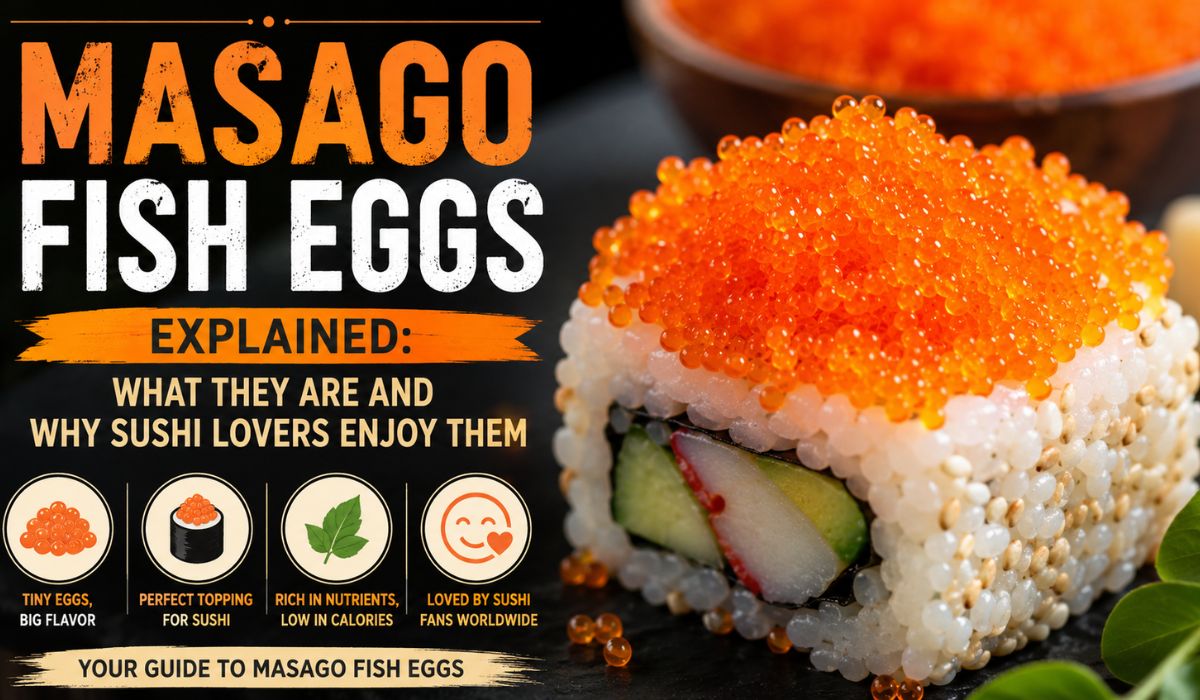
Introduction To Masago Fish Eggs
If you enjoy sushi, there is a good chance you have already eaten Masago Fish Eggs without even realizing it. These tiny orange fish eggs are commonly sprinkled over sushi rolls, mixed into seafood dishes, and used as colorful toppings in Japanese restaurants around the world. Even though masago is small, it adds a surprising amount of flavor, texture, and visual appeal to many dishes.
Masago Fish Eggs are loved because they bring a light crunch, a salty seafood taste, and a bright appearance that instantly makes sushi look more exciting. In modern Japanese cuisine, masago has become one of the most popular fish roe ingredients because it is affordable, versatile, and easy to pair with many foods. Whether you are new to sushi or already a fan of Japanese food, learning about masago can help you better appreciate the dishes you eat.
Quick Bio Information About Masago Fish Eggs
| Topic | Details |
|---|---|
| Japanese Name | Masago |
| Ingredient Type | Fish Roe |
| Fish Source | Capelin Fish |
| Cuisine | Japanese Cuisine |
| Common Color | Orange |
| Natural Color | Pale Yellow |
| Texture | Soft And Tiny Pop |
| Flavor | Mild Salty Seafood Taste |
| Main Use | Sushi Topping |
| Popular Dish | California Rolls |
| Storage Method | Refrigerated Or Frozen |
| Protein Content | Moderate |
| Omega-3 Content | Present |
| Sodium Level | Relatively High |
| Cooking Needed | Usually No |
| Common Pairings | Rice, Seaweed, Seafood |
| Price Level | Affordable |
| Popular In | Sushi Restaurants Worldwide |
What Exactly Is Masago?
Masago refers to the edible roe, or eggs, of capelin fish, which belong to the smelt family. These fish are commonly found in cold northern oceans, especially around Iceland, Norway, and parts of the Pacific Ocean. The word “masago” comes from Japanese and simply means sand-like fish eggs, which describes their tiny size.
The eggs are harvested from female capelin fish and carefully processed before being sold. Most masago is lightly salted or brined to preserve freshness and improve flavor. In many cases, the eggs are colored bright orange to make them more visually appealing in sushi dishes. Naturally, masago is usually more pale yellow than bright orange.
Because the eggs are very small, masago has a fine texture that blends easily into sauces, spicy seafood mixes, and sushi toppings. This is one reason chefs use it so often in restaurants.
What Does Masago Taste Like?
Masago Fish Eggs have a mild seafood flavor that is slightly salty, slightly smoky, and lightly sweet. Unlike stronger seafood ingredients, masago does not overpower a dish. Instead, it adds a balanced burst of ocean flavor that complements rice, seaweed, crab, shrimp, and spicy sauces.
One of the biggest reasons sushi lovers enjoy masago is its texture. The eggs are tiny but still create a soft popping sensation when eaten. Compared to Tobiko, masago is less crunchy and slightly softer. Many people describe it as delicate and smooth.
Masago is especially popular in spicy sushi rolls because the salty eggs balance creamy sauces and seafood fillings. Even a small spoonful can completely change the flavor of a dish.
What Does Masago Look Like?
Masago Fish Eggs are very small, often smaller than a grain of couscous. They are usually bright orange in restaurants, although natural masago can appear pale yellow or light orange.
Chefs love using masago because it instantly makes food look more colorful and attractive. Sushi rolls topped with masago appear more vibrant, fresh, and visually exciting. In modern sushi restaurants, presentation matters almost as much as flavor, and masago helps create that appealing restaurant-quality look.
You may also see masago in different colors. Green masago is often flavored with wasabi, while black masago may use squid ink coloring. Red masago sometimes includes spicy chili seasoning. These colorful variations are especially common in fusion sushi restaurants.
How Masago Is Used In Japanese Cuisine
Masago Fish Eggs appear in many Japanese dishes beyond traditional sushi. The most common use is as a topping for sushi rolls, where the eggs add both texture and flavor. California rolls, spicy tuna rolls, and dragon rolls often feature masago.
Masago is also used in gunkan sushi, a style where sushi rice is wrapped with seaweed and topped with fish roe. In Japanese seafood salads, masago is mixed with mayonnaise or spicy sauces to create creamy and flavorful fillings.
Outside sushi restaurants, masago is increasingly used in modern fusion cooking. Chefs add it to pasta, rice bowls, seafood dips, and even sandwiches to introduce a salty seafood flavor and decorative touch. Its versatility makes it popular in both traditional and modern kitchens.
Masago Vs Tobiko Vs Ikura
Many sushi fans confuse masago with other fish roe such as tobiko and Ikura. While they may look similar at first glance, they are very different ingredients.
Masago comes from capelin fish and has the smallest eggs of the three. It is soft, mild, and affordable. Tobiko comes from flying fish and has larger eggs with a crunchy texture and slightly sweeter flavor. Ikura comes from salmon and features large pearl-like eggs that burst with rich, buttery flavor.
Masago is usually the least expensive option, which is why it is commonly used in sushi restaurants worldwide. Tobiko is more premium because of its firmer texture and bright appearance. Ikura is considered luxurious and is often called Japanese salmon caviar because of its rich taste and higher price.
Each type of fish roe offers a unique experience, but masago remains one of the most approachable choices for beginners.
Is Masago Healthy?
Masago Fish Eggs contain several important nutrients despite their tiny size. They are rich in protein, omega-3 fatty acids, vitamin B12, and selenium. Omega-3 fats are especially important because they support heart health and brain function.
Masago is relatively low in calories, making it a flavorful topping that does not add excessive fat to meals. However, because it is salted during processing, it can contain high sodium levels. People who are sensitive to salt should enjoy it in moderation.
The eggs also contain antioxidants and nutrients commonly found in seafood. When eaten as part of a balanced diet, masago can be a nutritious addition to sushi and seafood dishes.
Is Masago Raw Or Cooked?
One common question is whether Masago Fish Eggs are raw. In most cases, masago is technically cured rather than fully cooked. The eggs are preserved using salt and sometimes frozen before serving.
This curing process improves safety while maintaining the fresh seafood texture that sushi lovers enjoy. Most restaurant masago is safe to eat because it has been processed carefully under food safety guidelines.
Still, like many seafood products, masago should be kept refrigerated and consumed before expiration. High-quality sushi restaurants typically use frozen seafood products first, which helps reduce health risks associated with raw fish ingredients.
Why Sushi Lovers Enjoy Masago So Much
Masago Fish Eggs are popular because they improve both the flavor and appearance of sushi. Their tiny texture adds excitement to every bite, while the salty seafood taste balances creamy sauces and rice.
Another reason sushi lovers enjoy masago is affordability. Compared to premium roe like ikura, masago offers a similar seafood experience at a lower cost. Restaurants can use it generously without dramatically increasing menu prices.
Masago also works well with many ingredients. It pairs naturally with avocado, cucumber, crab, shrimp, salmon, spicy mayo, and seaweed. Because of this flexibility, it appears in countless sushi combinations worldwide.
Different Colors And Flavors Of Masago
Modern sushi restaurants often serve masago in multiple colors and flavors. These variations are created using natural seasonings and food ingredients.
Green masago usually contains wasabi flavoring and offers a mild spicy kick. Black masago often uses squid ink, creating a darker seafood flavor and dramatic appearance. Red masago may include chili seasoning for extra heat.
Some chefs also experiment with citrus flavors, soy marinades, or smoky seasonings. These creative versions help restaurants create signature sushi rolls that stand out visually and taste unique.
Colorful masago has become especially popular on social media because bright sushi dishes attract attention and photographs beautifully.
How To Eat Masago At Home
Masago Fish Eggs are surprisingly easy to enjoy at home. Many people buy refrigerated or frozen masago from Asian grocery stores or seafood markets and use it in homemade sushi.
A simple way to enjoy masago is by spooning it over warm rice with soy sauce and seaweed. It also works well in spicy seafood bowls, salads, and creamy dips. Some people mix masago into pasta sauces for a salty seafood twist.
When preparing sushi at home, masago is beginner-friendly because it requires no cooking. Simply thaw it properly, keep it chilled, and use it as a topping or filling ingredient.
Where To Buy Masago Fish Eggs
Masago is now widely available in many countries. Asian supermarkets often carry it in refrigerated or frozen seafood sections. Japanese specialty markets usually offer higher-quality options with fresher flavor and better texture.
Online seafood retailers also sell masago, often packed in frozen containers to preserve freshness during shipping. When buying masago, it is important to check ingredient labels because some products contain artificial coloring or extra preservatives.
Freshness matters greatly with fish roe. Good-quality masago should smell clean and slightly salty, never overly fishy or sour.
How To Store Masago Properly
Proper storage helps maintain the texture and flavor of Masago Fish Eggs. Refrigerated masago should remain cold at all times and be consumed within a few days after opening.
Frozen masago lasts much longer and can stay fresh for several months if stored correctly. Once thawed, it should not be refrozen because this may damage texture and quality.
It is best to keep masago sealed tightly in an airtight container to prevent drying and odor absorption from other foods in the refrigerator.
Interesting Facts About Masago Fish Eggs
Masago became especially popular outside Japan during the global sushi boom of the 1990s and early 2000s. Many Western sushi restaurants adopted it because it provided bright color and seafood flavor at a lower cost than premium roe.
In Japan, masago is often viewed as a casual everyday seafood ingredient rather than a luxury product. However, international sushi culture has helped transform it into a recognizable symbol of modern sushi presentation.
Another interesting fact is that masago is sometimes used as a substitute for tobiko because the eggs are visually similar. Many diners cannot immediately tell the difference unless they compare the texture closely.
Final Thoughts On Masago Fish Eggs
Masago Fish Eggs may be tiny, but they play a big role in modern sushi culture. Their colorful appearance, mild seafood flavor, and delicate texture make them one of the most popular fish roe ingredients in Japanese cuisine today.
Whether sprinkled over sushi rolls, mixed into seafood dishes, or enjoyed at home, masago offers an easy and approachable introduction to Japanese fish roe. It is affordable, versatile, and flavorful enough to enhance many dishes without overpowering them.
As sushi continues to grow in popularity worldwide, Masago Fish Eggs remain a favorite among chefs and seafood lovers alike. Learning about masago not only helps you better understand sushi but also deepens your appreciation for the creativity and balance found in Japanese cuisine.
FAQs About Masago Fish Eggs
Is Masago The Same As Caviar?
No. Traditional caviar comes from sturgeon fish, while masago comes from capelin fish. Although both are fish eggs, they differ greatly in flavor, texture, and price.
Does Masago Taste Very Fishy?
Masago usually has a mild seafood taste rather than a strong fishy flavor. Most people find it light, salty, and easy to enjoy.
Is Masago Healthy For Everyday Eating?
Masago contains beneficial nutrients like omega-3 fats and protein, but it is also high in sodium. Eating moderate amounts is generally recommended.
Why Is Masago Bright Orange?
Most restaurant masago is colored to improve appearance. Natural masago is often more pale yellow or light orange.
Can You Eat Masago During Pregnancy?
Pregnant individuals should consult a healthcare professional before eating raw or cured seafood products, including fish roe.
What Is The Difference Between Masago And Tobiko?
Tobiko eggs are larger, crunchier, and sweeter, while masago eggs are smaller, softer, and more affordable.
Is Masago Expensive?
Compared to other fish roe like ikura or caviar, masago is relatively affordable and widely available.
Can Masago Be Frozen?
Yes. Most commercial masago is sold frozen to maintain freshness and food safety during transport.
Recommended For You: Masago Japanese Cuisine: Fresh Sushi, Seafood, And Local Favorites