
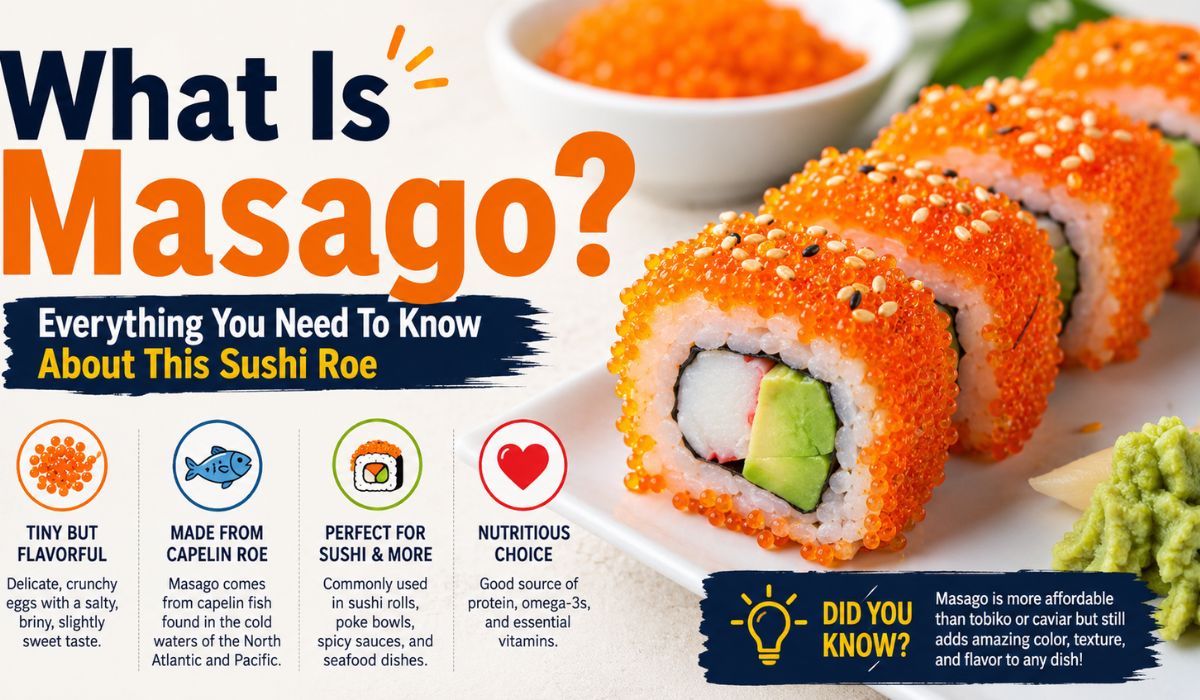
If you enjoy sushi, there is a good chance you have already eaten masago without realizing it. Those tiny orange eggs sprinkled over sushi rolls or mixed into spicy seafood sauces are often masago. This colorful ingredient is one of the most recognizable toppings in Japanese cuisine, yet many people still ask the same question: What Is Masago?
Masago is a type of fish roe that comes from capelin, a small fish found in the cold waters of the North Atlantic and North Pacific Oceans. It is widely used in sushi because of its mild salty flavor, delicate crunch, and bright appearance. Although masago is smaller and less expensive than some other fish roe, it still adds rich texture and umami flavor to many dishes.
Over the last few years, masago has become even more popular outside Japan. Sushi restaurants around the world now use it in sushi rolls, poke bowls, seafood salads, and spicy sauces. Home cooks are also discovering how easy it is to use masago to make everyday meals look and taste more exciting.
This guide explores everything you need to know about masago, including how it tastes, how it is made, how it compares to tobiko and caviar, whether it is healthy, and the best ways to enjoy it at home.
Quick Bio Information About Masago
| Topic | Information |
|---|---|
| Food Type | Fish Roe |
| Main Source | Capelin Fish |
| Origin | Japanese Cuisine |
| Typical Color | Orange |
| Texture | Crunchy And Delicate |
| Flavor | Salty, Briny, Mildly Sweet |
| Common Use | Sushi Topping |
| Popular In | Sushi Rolls And Poke Bowls |
| Storage Method | Refrigerated Or Frozen |
| Shelf Life | Several Months Frozen |
| Protein Content | Moderate |
| Omega-3 Content | Present |
| Main Nutrients | Protein, Selenium, Vitamin B12 |
| Gluten-Free | Usually Yes |
| Keto-Friendly | Yes |
| Common Variations | Wasabi, Black, Spicy |
| Similar Foods | Tobiko, Ikura, Caviar |
| Price Level | Affordable |
| Culinary Role | Garnish And Flavor Enhancer |
| Most Common Pairing | Sushi Rice And Seafood |
What Is Masago?
Masago is the roe, or eggs, of the capelin fish. Capelin are small fish from the smelt family that live in cold northern oceans. In Japanese cuisine, the word “masago” simply refers to these tiny edible fish eggs.
Masago is best known for its bright orange color and crunchy texture. The eggs are extremely small compared to salmon roe or caviar, but they still provide a satisfying pop when eaten. Sushi chefs often use masago as a topping because it adds color, flavor, and texture without overpowering other ingredients.
Most commercial masago is salted and lightly seasoned before being sold. Some varieties are also colored or flavored with ingredients such as wasabi, squid ink, or chili. While masago is closely connected with Japanese food, it is now commonly used in fusion cuisine and modern seafood dishes around the world.
What Does Masago Taste Like?
One reason masago is so popular is its balanced flavor. It has a light seafood taste that feels salty, briny, and slightly sweet at the same time. The flavor is not overly strong, which makes it easy to pair with sushi rice, avocado, seafood, and creamy sauces.
The texture is another important part of the experience. Masago has a delicate crunch that creates a gentle popping sensation when eaten. Unlike larger fish roe, it does not burst dramatically in the mouth. Instead, it adds a light crispness that improves the texture of sushi rolls and seafood dishes.
Compared to tobiko, masago tastes milder and softer. Compared to caviar, it is less buttery and far more affordable. Its subtle flavor is one of the reasons many sushi restaurants use masago so often.
How Is Masago Made?
The process of making masago begins with harvesting capelin fish during spawning season. The roe is carefully removed from the fish, cleaned, and separated into tiny eggs. After that, the eggs are salted to preserve freshness and improve flavor.
Many commercial producers also season the roe with soy-based ingredients or natural flavorings. Some masago is dyed bright orange to create the familiar appearance seen in sushi restaurants. Other versions may be colored black, green, or red depending on the flavor added.
After preparation, masago is packaged fresh or frozen for distribution. Because it freezes well, sushi restaurants can store it for long periods without losing much quality. This makes masago more practical and affordable than many premium types of fish roe.
How Is Masago Used In Sushi?
Masago is one of the most versatile ingredients in sushi preparation. Sushi chefs use it in several different ways because it improves both flavor and presentation.
One of the most common uses is as a coating on the outside of sushi rolls. The tiny eggs stick easily to rice and create a colorful finish that looks appealing on the plate. Masago is also mixed into spicy tuna fillings, seafood salads, and creamy sushi sauces.
In many modern sushi restaurants, masago appears in poke bowls, sushi bakes, hand rolls, and rice bowls. Its crunchy texture works especially well with soft ingredients like avocado, crab, and mayonnaise-based sauces.
Masago is also popular because it is less expensive than tobiko or caviar while still delivering a premium appearance.
Popular Sushi Rolls Made With Masago
Several famous sushi rolls commonly include masago. One of the best-known examples is the California roll, where masago is often spread across the outside of the rice for added crunch and color.
Spicy tuna rolls frequently contain masago mixed into the filling. The tiny eggs blend well with spicy mayo and fresh tuna, adding both texture and umami flavor.
Crunchy shrimp rolls also pair beautifully with masago because the eggs balance the crispy tempura shrimp with a delicate seafood taste. Volcano rolls, dragon rolls, and seafood-specialty rolls often use masago as a garnish as well.
Outside traditional sushi, masago is increasingly used in fusion dishes, including seafood pasta, sushi tacos, and spicy dipping sauces.
Masago Vs Tobiko
Masago and tobiko are often confused because they look similar, but they come from different fish. Masago comes from capelin, while tobiko comes from flying fish.
Tobiko eggs are larger and crunchier than masago. They also have a stronger flavor and a firmer texture. Masago is smaller, softer, and more delicate.
Another major difference is price. Tobiko is usually more expensive, which is why many restaurants use masago as a substitute. Most casual sushi diners cannot easily tell the difference between the two unless they compare them side by side.
Both ingredients are popular in sushi, but tobiko is generally considered slightly more premium.
Masago Vs Ikura Vs Caviar
Masago is only one type of fish roe. Other well-known roe products include ikura and caviar.
Ikura comes from salmon and contains much larger eggs. These eggs burst in the mouth with a rich salmon flavor and juicy texture. Ikura is often served on its own because of its bold taste.
Caviar traditionally comes from sturgeon fish and is considered a luxury food. It has a smooth, buttery flavor and a much softer texture than masago. True caviar is usually far more expensive.
Masago stands out because it is affordable, versatile, and easy to use in everyday dishes. While it may not have the prestige of caviar, it remains one of the most practical and popular fish roe products in modern cuisine.
Is Masago Healthy?
Masago can be part of a healthy diet when eaten in moderation. It contains protein, omega-3 fatty acids, vitamin B12, and selenium, all of which support overall health.
Omega-3 fatty acids are especially important because they help support heart and brain function. Masago is also relatively low in calories, making it attractive for low-carb and keto diets.
However, there are a few concerns to consider. Masago can contain high levels of sodium because it is salted during processing. Some flavored versions may also include food coloring or added preservatives.
People with seafood allergies should avoid masago, and individuals monitoring sodium intake should enjoy it in smaller portions.
Is Masago Raw Or Cooked?
Many people wonder whether masago is raw. In most cases, masago is not fully cooked, but it is usually cured, salted, frozen, or pasteurized before being served.
The curing process helps preserve freshness and reduce bacteria growth. Freezing is also commonly used to improve food safety during transportation and storage.
Because masago is processed before serving, it is generally considered safe when purchased from reliable suppliers. However, pregnant individuals and people with weakened immune systems should consult healthcare professionals before eating raw or lightly processed seafood products.
How To Store Masago Properly
Proper storage is very important because fish roe can spoil quickly if not handled correctly. Masago should always remain refrigerated or frozen until ready to use.
Fresh masago should be stored in an airtight container to prevent moisture and odors from affecting the flavor. Once opened, it is best used within a few days for maximum freshness.
Frozen masago can last for several months when kept at a stable temperature. After thawing, it should not be repeatedly refrozen because this can damage texture and quality.
If masago develops a strong sour smell or unusual appearance, it should be discarded immediately.
Where To Buy Masago
Masago is now easier to find than ever before. Many Asian grocery stores and Japanese seafood markets carry refrigerated or frozen masago.
Online seafood retailers also sell masago in different sizes and flavors. Some sushi-grade seafood suppliers offer premium varieties designed specifically for restaurants and home sushi preparation.
When buying masago, it is important to check freshness, packaging quality, and ingredient labels. Some products contain artificial coloring or extra preservatives, while others focus on more natural preparation methods.
Frozen masago is usually the best option for home cooks because it stays fresh longer and is easy to store.
Easy Ways To Use Masago At Home
Masago is surprisingly simple to use in home cooking. You do not need professional sushi skills to enjoy it.
One of the easiest methods is sprinkling masago over rice bowls or poke bowls for extra flavor and texture. It also works beautifully mixed into spicy mayonnaise for seafood sauces and sushi dips.
Some people use masago as a topping for deviled eggs, seafood pasta, avocado toast, or baked sushi casseroles. Because the eggs are small and flavorful, even a small amount can transform a dish visually and taste-wise.
Masago pairs especially well with salmon, tuna, shrimp, cucumber, cream cheese, and avocado.
Common Masago Colors And Flavors
Although traditional masago is orange, many restaurants now serve flavored and colored versions.
Black masago is often colored with squid ink and has a slightly richer seafood flavor. Green masago usually contains wasabi for extra heat, while red masago may include chili seasoning.
These variations are mostly designed to create visual variety and enhance presentation. The base ingredient remains capelin roe, but the flavor changes slightly depending on the seasonings used.
Colorful masago has become especially popular in modern fusion sushi and social media food photography because it creates eye-catching dishes.
Final Thoughts
Masago may be small, but it plays a big role in modern sushi culture. Its crunchy texture, mild seafood flavor, and bright appearance make it one of the most versatile ingredients in Japanese cuisine.
Whether you enjoy it on sushi rolls, mixed into spicy sauces, or sprinkled over rice bowls, masago adds flavor and visual appeal without overwhelming a dish. It is also more affordable and approachable than many other fish roe options, which explains why it has become so widely used around the world.
Understanding What Is Masago helps sushi lovers appreciate not only the ingredient itself but also the creativity behind modern Japanese cooking. As sushi continues to evolve globally in 2026, masago remains an essential ingredient that combines flavor, texture, and presentation in one tiny bite.
FAQs About What Is Masago
Is Masago The Same As Tobiko?
No, masago and tobiko come from different fish. Masago comes from capelin, while tobiko comes from flying fish. Tobiko is larger and crunchier, while masago is smaller and milder.
Does Masago Taste Fishy?
Masago has a light seafood flavor, but it is usually not strongly fishy. Most people describe it as salty, briny, and slightly sweet.
Can You Eat Masago By Itself?
Yes, masago can be eaten alone, although it is more commonly used as a topping or garnish in sushi and seafood dishes.
Is Masago Good For Keto Diets?
Masago is generally keto-friendly because it is low in carbohydrates and contains healthy fats and protein.
How Long Does Masago Last In The Fridge?
Opened masago usually stays fresh for a few days in the refrigerator if stored properly in an airtight container.
Is Masago Expensive?
Masago is considered one of the more affordable types of fish roe. It is much cheaper than caviar and usually less expensive than tobiko.
Can You Freeze Masago?
Yes, masago freezes very well. Many restaurants and home cooks store it frozen to extend shelf life and maintain freshness.
Is Masago Safe During Pregnancy?
Because masago is lightly processed seafood roe, pregnant individuals should speak with a healthcare professional before consuming it regularly.
Recommended For You: Where To Buy Masago: Best Places To Find Fresh And Frozen Fish Roe