
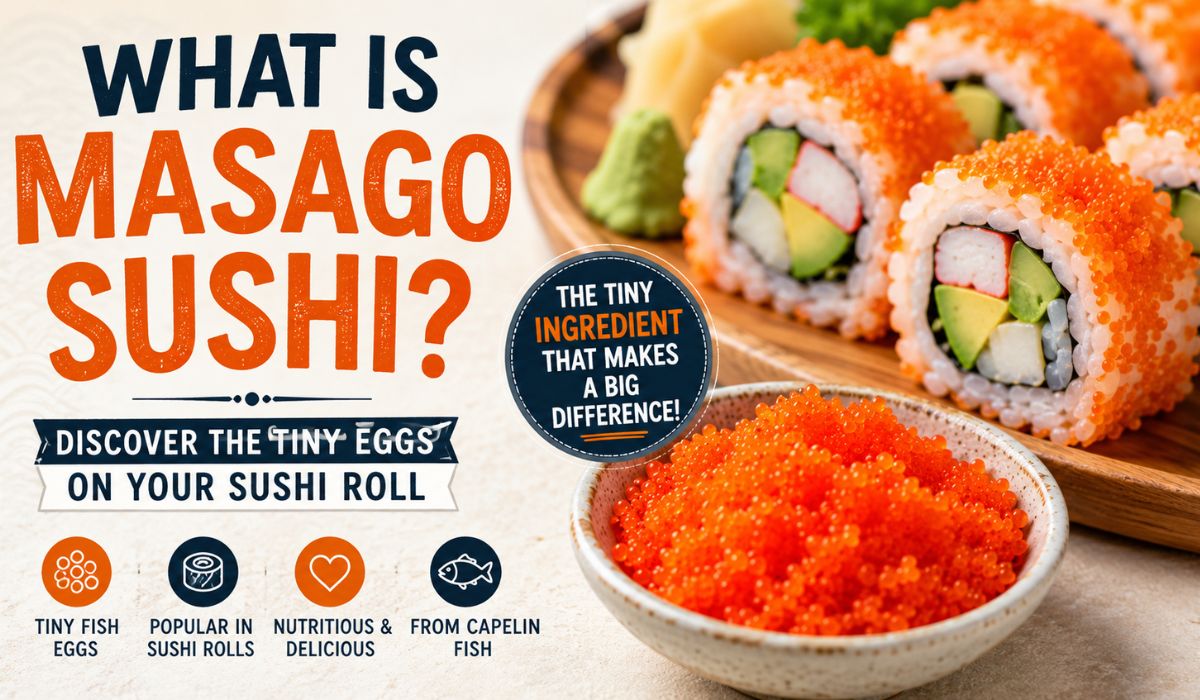
If you enjoy sushi, you have probably noticed the tiny colorful eggs sprinkled over sushi rolls, poke bowls, or spicy seafood dishes. Those tiny eggs are often masago, one of the most popular ingredients in Japanese-inspired cuisine. Many people love the bright color and delicate crunch of masago sushi, but few truly know what it is, where it comes from, or why it is used so often in sushi restaurants around the world.
What Is Masago Sushi? In simple terms, masago is the edible roe, or eggs, of the capelin fish. These tiny fish eggs are widely used as a topping, filling, or garnish in sushi because they add texture, color, and a slightly salty seafood flavor. Although masago may look fancy, it is actually one of the most approachable types of fish roe for beginners trying sushi for the first time.
Over the last decade, masago has become increasingly popular in modern sushi culture. You can now find it in sushi burritos, spicy mayo sauces, rice bowls, seafood appetizers, and fusion dishes across the globe. Along with its growing popularity, people are becoming more curious about its nutrition, sustainability, taste, and health benefits.
This complete guide explains everything you need to know about masago sushi in a clear and beginner-friendly way. From how masago tastes to how it compares with tobiko and caviar, this article covers every important detail in one place.
Quick Bio Information About Masago Sushi
| Topic | Information |
|---|---|
| Food Type | Fish Roe |
| Main Ingredient | Capelin Fish Eggs |
| Origin | Japanese Cuisine |
| Natural Color | Pale Yellow |
| Common Colors | Orange, Red, Green, Black |
| Texture | Tiny And Slightly Crunchy |
| Flavor | Mild, Salty, Slightly Sweet |
| Common Use | Sushi Rolls |
| Alternative Name | Capelin Roe |
| Often Compared To | Tobiko |
| Calories Per Tablespoon | About 40 Calories |
| Protein Content | High |
| Omega-3 Content | Present |
| Mercury Level | Relatively Low |
| Usually Served | Raw |
| Popular In | Sushi And Poke Bowls |
| Shelf Life | Short After Opening |
| Vegetarian Friendly | No |
| Gluten-Free | Usually Yes |
| Main Concern | High Sodium |
What Is Masago?
Masago is the roe of capelin fish, a small forage fish found mainly in the cold waters of the North Atlantic, North Pacific, and Arctic Oceans. Capelin belong to the smelt family and play an important role in the marine ecosystem because they are a major food source for whales, seabirds, seals, and larger fish.
The word “masago” comes from Japanese cuisine, where fish roe has long been appreciated for its flavor and texture. Capelin roe is collected from female fish before the spawning season begins. The eggs are then cleaned, salted, and sometimes flavored or colored before being sold to restaurants and grocery stores.
Natural masago has a pale yellow color, but most sushi restaurants serve dyed versions in orange, red, green, or black shades. These colors make sushi dishes look more vibrant and visually appealing.
One reason masago is so common in sushi restaurants is its affordability. Compared with premium fish roe like caviar or tobiko, masago is less expensive while still offering a similar appearance and texture. This makes it a practical ingredient for sushi chefs and an accessible option for customers.
What Does Masago Sushi Look Like?
Masago is very small compared with other fish roe. The eggs are tiny, delicate, and slightly grainy, almost like colorful sand. This unique appearance is one reason the ingredient stands out so much on sushi rolls.
In sushi restaurants, orange masago is the most common variety. However, chefs often flavor and color masago to create different styles. Green masago may contain wasabi flavoring, while black masago is often colored using squid ink. Red versions are also popular in fusion sushi dishes.
Masago is usually spread over the outside of sushi rolls or placed on top of seafood dishes. Because the eggs are tiny and shiny, they instantly add visual appeal to sushi plates.
Another interesting detail is the texture. Unlike larger fish roe that “pop” strongly when bitten, masago has a softer crunch. This lighter texture makes it enjoyable even for people who are trying fish roe for the first time.
What Does Masago Taste Like?
One of the biggest reasons people enjoy masago sushi is its unique flavor. Masago has a mild seafood taste that is slightly salty, slightly sweet, and gently briny. It is not overwhelmingly fishy, which makes it easier for beginners to enjoy compared with stronger seafood ingredients.
The flavor also has a subtle umami quality that pairs perfectly with rice, seaweed, avocado, cucumber, spicy mayo, and fresh seafood. Because the taste is relatively mild, masago works well as both a topping and a supporting ingredient.
Texture plays an important role in the eating experience as well. The tiny eggs create a delicate crunch that makes sushi rolls more interesting to eat. This combination of texture and flavor explains why masago has become so popular in modern sushi restaurants.
Many chefs also mix masago with spicy sauces, mayonnaise, or wasabi to create richer and bolder flavors. This versatility allows masago to fit into both traditional Japanese cuisine and modern fusion dishes.
Masago Vs Tobiko
Masago and tobiko are often confused because they look very similar. However, they come from different fish and have noticeable differences in texture, flavor, and price.
Tobiko comes from flying fish, while masago comes from capelin fish. Tobiko eggs are larger and crunchier than masago, creating a stronger popping sensation when eaten. Masago is softer and finer in texture.
Color is another difference. Tobiko naturally has a brighter orange-red color, while masago is usually pale before coloring is added. Restaurants often dye masago to imitate tobiko because it is more affordable.
Flavor differences are subtle but noticeable. Tobiko tends to have a smokier and slightly sweeter flavor, while masago is milder and saltier. Because tobiko costs more, some restaurants use masago as a substitute in sushi rolls.
For many casual sushi lovers, the differences are small enough that both ingredients provide a similar experience.
How Masago Is Used In Sushi
Masago appears in many different sushi dishes. One of the most common uses is as a coating on California rolls. The bright orange eggs stick to the outside of the rice and create a colorful finish.
Masago is also used inside spicy tuna rolls, dragon rolls, seafood hand rolls, and sushi burritos. In many modern restaurants, chefs add masago to spicy mayonnaise sauces to increase texture and seafood flavor.
Outside sushi, masago is popular in poke bowls, noodle dishes, seafood pasta, rice bowls, and appetizers. Some chefs even use it in creamy dips or seafood spreads because it blends well with rich ingredients.
The ingredient works especially well with avocado, cucumber, crab, shrimp, salmon, tuna, and cream cheese. Because masago adds texture without overpowering the dish, it complements many flavors beautifully.
Is Masago Healthy?
Masago may be small, but it contains several important nutrients. It is low in calories while providing protein, healthy fats, vitamins, and minerals.
One tablespoon of masago typically contains protein, omega-3 fatty acids, vitamin B12, selenium, magnesium, and phosphorus. Omega-3 fatty acids are especially valued because they may support heart health, brain function, and reduced inflammation.
Vitamin B12 helps support energy production and nervous system function. Selenium plays an important role in immune health and antioxidant protection. Masago also contains small amounts of vitamin D and iron.
Because serving sizes are usually small, masago can fit into a balanced diet quite easily. However, it should still be enjoyed in moderation due to its sodium content.
Are There Any Risks To Eating Masago?
Like most seafood products, masago comes with a few considerations. The biggest concern is sodium. Masago is naturally salty and often processed with additional salt or soy-based seasonings. People following a low-sodium diet may need to limit their intake.
Allergies are another important concern. Fish roe can trigger allergic reactions in some individuals, even if they do not normally react to seafood. Anyone trying masago for the first time should be cautious if they have food allergies.
Because masago is commonly served raw, proper storage and handling are important. Reputable sushi restaurants freeze and store seafood carefully to reduce food safety risks.
The good news is that capelin fish are relatively low in mercury compared with larger ocean fish such as swordfish or tuna. This makes masago lower in mercury than many other seafood choices.
Is Masago Sustainable?
Sustainability has become an increasingly important topic in seafood discussions, and masago is no exception. Capelin fish are an important part of ocean ecosystems because many marine animals depend on them for food.
Environmental organizations have expressed concerns about overfishing in some regions. Heavy harvesting of female capelin for roe production may affect future fish populations and marine biodiversity.
However, sustainability practices vary widely between fisheries. Some seafood suppliers follow stricter fishing rules and environmentally responsible harvesting methods.
Consumers who care about sustainability should look for responsibly sourced seafood and support suppliers that prioritize healthy fish populations and ocean conservation. Eating masago occasionally and in moderation is generally considered more environmentally manageable than consuming heavily overfished species.
How To Eat Masago At Home
Trying masago at home is easier than many people think. Japanese grocery stores and seafood markets often sell refrigerated or frozen masago in small containers.
One of the easiest ways to enjoy it is by adding it to homemade sushi rolls. Even simple cucumber or avocado rolls become more exciting with a spoonful of masago on top.
Masago also works well in rice bowls with salmon, crab, shrimp, or tofu. Some people stir it into spicy mayo for a flavorful sushi sauce. Others use it as a garnish for seafood pasta, noodles, or creamy appetizers.
Because masago has a naturally salty flavor, a little goes a long way. Small portions are usually enough to add both texture and visual appeal to a dish.
Where To Buy Masago
Masago is widely available in many cities today. Japanese grocery stores, Asian supermarkets, and seafood markets are usually the best places to find it.
Many online seafood retailers also sell frozen masago that can be delivered directly to your home. Frozen options are often convenient because they stay fresh longer and can be stored until needed.
When buying masago, check the label carefully. Some products contain artificial coloring, preservatives, or added flavorings. Quality brands usually provide information about sourcing and storage recommendations.
Fresh masago should smell clean and ocean-like rather than strongly fishy. Containers should always remain cold and properly sealed.
How To Store Masago Properly
Proper storage is essential for keeping masago safe and fresh. Once opened, masago should remain refrigerated and consumed within a few days.
If you buy frozen masago, thaw it slowly in the refrigerator rather than at room temperature. This helps maintain texture and reduces the risk of bacterial growth.
Always store masago in an airtight container to prevent odors and contamination. Because fish roe is delicate, exposure to air can quickly affect freshness.
Signs of spoilage include an unpleasant smell, discoloration, or unusual texture. If the product appears questionable, it is safest to discard it.
Why Masago Became So Popular Worldwide
Masago sushi has grown far beyond traditional Japanese cuisine. Social media, food photography, and modern sushi culture have helped introduce colorful fish roe to global audiences.
The bright appearance of masago makes sushi visually attractive, especially in photos and restaurant presentations. Many chefs use it to create dishes that look vibrant and premium without dramatically increasing costs.
Fusion cuisine has also contributed to masago’s popularity. Today, masago appears in spicy seafood bowls, sushi tacos, seafood pasta, and even trendy appetizers.
Another reason for its popularity is accessibility. Unlike expensive caviar, masago allows everyday diners to enjoy fish roe without paying luxury prices.
Masago In Modern Sushi Culture
Modern sushi culture continues to evolve, and masago remains an important ingredient in contemporary sushi restaurants. Chefs value its affordability, versatility, and ability to enhance texture.
Many sushi restaurants now experiment with flavored masago varieties that include chili, wasabi, yuzu, or squid ink. These creative combinations help restaurants develop signature dishes that stand out.
Masago has also become popular in home cooking because people are recreating sushi restaurant experiences in their own kitchens. Online cooking tutorials and social media recipes have introduced more people to sushi-making techniques and seafood ingredients.
In 2026, masago continues to bridge traditional Japanese food culture with modern international cuisine.
FAQs About What Is Masago Sushi
Is Masago Raw Or Cooked?
Masago is usually served raw, although it is often cured or lightly processed with salt before being sold.
Is Masago The Same As Caviar?
No. Caviar comes specifically from sturgeon fish, while masago comes from capelin fish.
Does Masago Taste Fishy?
Masago has a mild seafood flavor but is usually less fishy than many other seafood ingredients.
Can Pregnant Women Eat Masago?
Some health organizations consider low-mercury fish roe safer than larger seafood products, but pregnant individuals should always consult their doctor regarding raw seafood.
Why Is Masago Bright Orange?
Natural masago is pale yellow. Most commercial masago is colored to create a more attractive appearance in sushi dishes.
Is Masago Healthy For Weight Loss?
Masago is relatively low in calories and high in protein, making it suitable for balanced diets when eaten in moderation.
Can Vegetarians Eat Masago?
No. Masago is fish roe, so it is not vegetarian or vegan.
How Long Does Masago Last In The Refrigerator?
Opened masago generally stays fresh for several days when refrigerated properly in an airtight container.
Please Read Also: masago.site