
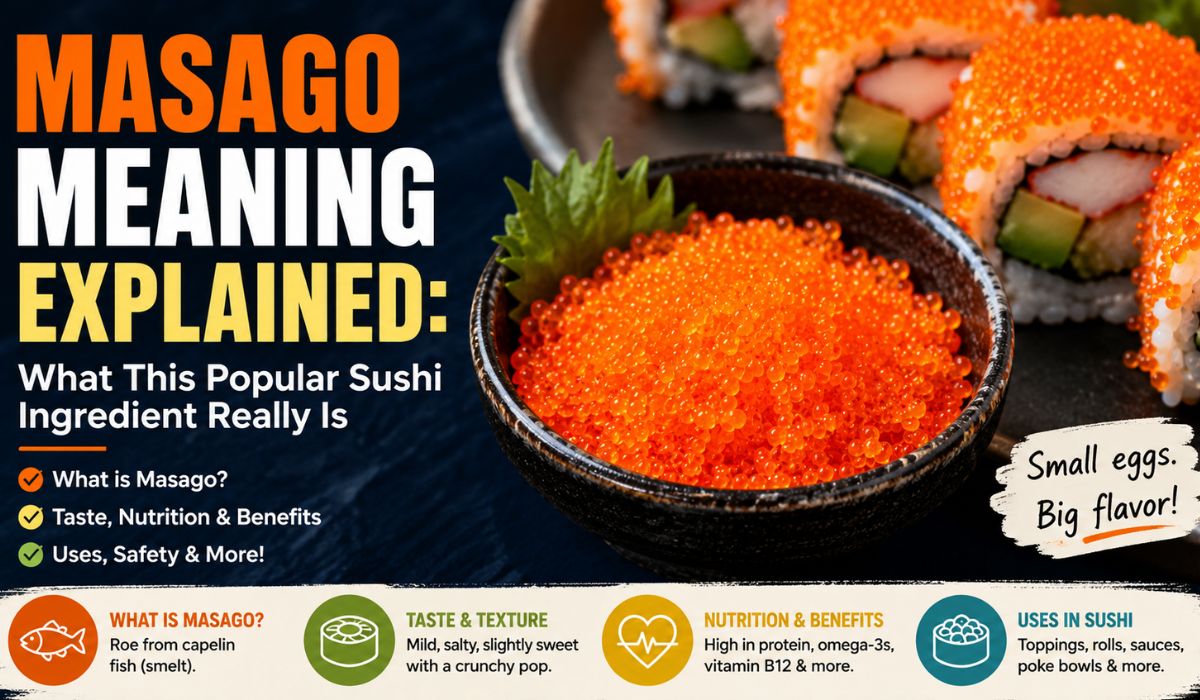
If you enjoy sushi, chances are you have seen tiny bright orange eggs sprinkled over rolls, rice bowls, or seafood dishes. Many people recognize the colorful appearance immediately, but fewer actually know the true Masago Meaning or where this popular ingredient comes from. In Japanese cuisine, masago has become one of the most recognizable sushi toppings because of its delicate crunch, salty flavor, and eye-catching texture.
Masago refers to the edible roe, or eggs, of the capelin fish, a small cold-water fish found mainly in the North Atlantic and Arctic oceans. Although these tiny fish eggs may look simple, they carry a surprising amount of flavor and nutrition. Sushi chefs use masago to add texture, color, and a mild seafood taste to many dishes.
Over the last few years, interest in Japanese food has continued to grow around the world, especially in 2026 as sushi becomes even more mainstream. Because of this, more readers are searching for terms like “What Is Masago,” “Masago Sushi,” and “Masago Meaning.” This guide explains everything in a clear and beginner-friendly way, from taste and nutrition to health benefits, risks, and culinary uses.
Quick Bio Information About Masago
| Topic | Details |
|---|---|
| Food Name | Masago |
| Meaning | Capelin Fish Roe |
| Origin | Japanese Cuisine |
| Fish Source | Capelin Fish |
| Scientific Name | Mallotus Villosus |
| Natural Color | Pale Yellow |
| Common Colors | Orange, Red, Green, Black |
| Flavor | Mild, Salty, Slightly Sweet |
| Texture | Tiny And Crunchy |
| Main Use | Sushi And Seafood Dishes |
| Protein Level | High |
| Carb Level | Very Low |
| Omega-3 Content | Present |
| Vitamin B12 | High |
| Mercury Level | Low |
| Popular In | Sushi Restaurants Worldwide |
| Often Compared To | Tobiko |
| Diet Friendly | Keto And Low-Carb |
| Common Additives | Salt, Wasabi, Soy Sauce |
| Best Served With | Sushi, Rice, Seafood |
What Does Masago Mean?
The word “masago” comes from Japanese cuisine and refers specifically to capelin roe. Roe simply means fish eggs. In restaurants and sushi menus, masago is commonly used as a topping, garnish, or filling ingredient.
The capelin fish belongs to the smelt family and lives in cold northern waters. While the fish itself is edible, it is mostly valued for its roe. Female capelin produce thousands of tiny eggs, which are harvested before spawning. These eggs are cleaned, flavored, and packaged for culinary use.
Masago has become popular because it delivers a seafood flavor without being overpowering. Unlike stronger fish roe, masago tastes mild, slightly salty, and lightly sweet. This balance makes it appealing even to people who are new to sushi.
In Japanese food culture, fish roe represents freshness, texture, and visual beauty. That is one reason masago appears so often in modern sushi dishes.
What Is Masago Made Of?
Masago is made from the roe of capelin fish, scientifically known as Mallotus villosus. These small fish are considered forage fish, meaning they are an important food source for larger marine animals like cod, whales, and seabirds.
The eggs are naturally pale yellow, but many sushi restaurants dye them bright orange, green, black, or red to make dishes more visually attractive. Food coloring does not usually change the taste, but it helps masago stand out on sushi rolls and rice dishes.
After harvesting, masago is lightly salted and sometimes mixed with ingredients such as soy sauce, wasabi, ginger, or squid ink. This gives different varieties their unique flavor profiles.
Because masago eggs are tiny and soft, they create a pleasant semi-crunchy texture that sushi lovers enjoy.
What Does Masago Taste Like?
One reason people become curious about the Masago Meaning is its unusual texture and flavor. Masago tastes mildly salty with a gentle seafood flavor that is not too fishy. Some people notice a slightly sweet aftertaste as well.
The texture is one of its most attractive qualities. The eggs are very small and create a light popping sensation when eaten. Compared to larger fish roe like salmon eggs, masago feels more delicate and subtle.
This mild flavor makes masago extremely versatile. It works well with rice, seaweed, creamy sauces, seafood, vegetables, and spicy ingredients. Even people who normally avoid strong seafood flavors often enjoy masago because it tastes balanced rather than overwhelming.
Masago Vs Tobiko
Many sushi fans confuse masago with tobiko because they look similar at first glance. However, there are important differences between the two.
Tobiko comes from flying fish roe, while masago comes from capelin fish. Tobiko eggs are larger, crunchier, and naturally brighter in color. They also tend to cost more because flying fish roe is considered more premium.
Masago, on the other hand, is smaller and softer. Its natural color is dull yellow, so restaurants often dye it bright orange or red. Because it is more affordable, many sushi restaurants use masago as a substitute for tobiko.
Flavor-wise, both are salty and slightly sweet, but tobiko has a stronger crunch. Masago delivers a gentler texture and a lighter seafood taste.
Is Masago Healthy?
Masago may be tiny, but it contains several valuable nutrients. It is low in calories while offering protein, omega-3 fatty acids, vitamins, and minerals.
A small serving provides a good amount of protein, which supports muscle repair and helps people feel full longer. Protein-rich foods are often useful for balanced eating habits and weight management.
Masago is also rich in Vitamin B12, an essential nutrient that supports nerve health, red blood cell production, and energy metabolism. Since the body cannot naturally produce Vitamin B12, foods like seafood and fish roe become important dietary sources.
Omega-3 fatty acids are another major benefit. These healthy fats support heart health, brain function, and inflammation control. Because capelin fish are small, masago also tends to contain less mercury than larger seafood species.
Masago Nutrition Facts
A one-ounce serving of masago contains relatively few calories while delivering concentrated nutrition. It includes protein, healthy fats, selenium, phosphorus, and several B vitamins.
Selenium is especially important because it acts as an antioxidant in the body. It supports immune function and helps protect cells from oxidative stress.
Masago also contains Vitamin E and riboflavin, which support skin health and energy production. Since it contains almost no carbohydrates, masago fits well into low-carb and keto-friendly eating styles.
However, sodium content can be high because masago is usually salted during processing. People managing blood pressure or sodium intake should consume it in moderation.
Potential Downsides Of Eating Masago
Although masago offers nutritional benefits, there are also some concerns readers should understand.
The biggest issue is sodium. Since masago is cured with salt, frequent consumption may increase sodium intake significantly. People with high blood pressure or heart concerns should be careful with portion sizes.
Seafood allergies are another important factor. Anyone allergic to fish or shellfish should avoid masago because allergic reactions can sometimes become serious.
Some commercially prepared masago products contain artificial coloring, flavor enhancers, or additives such as MSG. While many people tolerate these ingredients well, others prefer more natural seafood products.
Environmental concerns also exist around capelin fishing. Since capelin are important in marine ecosystems, some conservation groups monitor fishing practices carefully to prevent overharvesting.
How Masago Is Used In Sushi
Masago plays several important roles in sushi preparation. Sometimes it acts as a topping, while other times it becomes part of sauces or fillings.
One of the most common uses is on California rolls and spicy seafood rolls. Sushi chefs sprinkle masago over the outside to create texture and visual appeal. The bright orange eggs immediately make sushi look more exciting.
Masago is also mixed into spicy mayonnaise sauces for added flavor and crunch. In poke bowls, chefs often place a spoonful of masago on top of rice and seafood combinations.
Because the flavor is mild, it blends easily with tuna, crab, salmon, shrimp, avocado, cucumber, and seaweed.
Popular Sushi Rolls With Masago
Many popular sushi dishes include masago because it adds color and texture without overpowering the main ingredients.
California rolls often use masago on the outer layer for a crunchy finish. Dragon rolls and spicy tuna rolls may also feature masago as a topping.
Some sushi restaurants serve gunkan-style sushi, where seaweed wraps around rice and holds a generous scoop of masago on top. This style allows diners to experience the flavor more directly.
Modern sushi chefs also use masago creatively in seafood pasta, rice bowls, fusion appetizers, and sushi-inspired sauces.
Can You Eat Masago Raw?
Many people wonder whether masago is raw or cooked. In most cases, masago is processed, cured, and salted before serving. While it may not be traditionally cooked with heat, it is prepared for safe consumption.
Restaurants typically keep masago refrigerated to maintain freshness. High-quality seafood suppliers follow food safety standards to reduce contamination risks.
Consumers should always buy masago from trusted seafood markets or reputable grocery stores. Proper refrigeration is important because fish roe can spoil if stored incorrectly.
Pregnant women or people with weakened immune systems may want to consult healthcare professionals before consuming raw or cured seafood products.
Where To Buy Masago
Masago has become easier to find as Japanese cuisine grows more popular globally. Many Asian grocery stores now carry refrigerated or frozen masago products.
Seafood markets and online seafood retailers also offer various types of masago, including flavored versions like wasabi masago or squid ink masago.
When buying masago, freshness matters. High-quality masago should smell mild and ocean-like, not overly fishy or sour. Packaging should remain cold and properly sealed.
Frozen masago is common because it helps preserve texture and flavor during transportation.
How To Store Masago Properly
Proper storage is important for maintaining freshness and safety. Refrigerated masago should stay cold at all times and be consumed relatively quickly after opening.
Most unopened packages last longer when refrigerated correctly, while frozen masago can remain usable for several months.
Once opened, exposure to air gradually affects texture and flavor. Keeping masago sealed tightly helps prevent drying out.
Signs of spoiled masago include unpleasant odors, discoloration, or unusual texture changes. Fresh masago should smell clean and mildly salty.
Is Masago Keto-Friendly?
Masago works very well for keto and low-carb diets because it contains very few carbohydrates while providing protein and healthy fats.
People following keto eating plans often use masago in sushi bowls without rice, seafood salads, or cucumber wraps. Since the eggs add flavor naturally, they help create satisfying meals without relying heavily on sugary sauces.
The omega-3 fatty acids and protein content also fit well into balanced low-carb nutrition goals. However, sodium levels should still be monitored carefully.
Why Masago Became So Popular Worldwide
The global popularity of sushi has helped masago become a familiar ingredient far beyond Japan. Social media food trends, fusion cuisine, and growing interest in seafood have all contributed to its rise.
Masago also appeals to restaurant chefs because it is affordable, versatile, visually attractive, and easy to pair with many dishes. Its bright appearance photographs well, making it popular in food marketing and online restaurant menus.
In 2026, consumers continue searching for foods that combine flavor, texture, and nutritional value. Masago fits all three categories while adding a unique culinary experience.
Final Thoughts
Understanding the Masago Meaning helps people appreciate one of the most recognizable ingredients in modern sushi culture. These tiny capelin fish eggs may look simple, but they deliver flavor, texture, nutrition, and visual beauty all at once.
Masago has earned its place in Japanese cuisine because it combines mild seafood flavor with versatility and affordability. Whether added to sushi rolls, rice bowls, sauces, or seafood appetizers, it creates a unique dining experience that many people enjoy worldwide.
Like many seafood products, moderation is important. Masago offers protein, omega-3 fatty acids, Vitamin B12, and important minerals, but it can also contain high sodium levels and additives depending on preparation methods.
For sushi lovers and curious food readers alike, masago remains one of the most fascinating and flavorful seafood ingredients to explore in 2026.
FAQs About Masago Meaning
Is Masago Real Fish Eggs?
Yes. Masago is the roe, or eggs, of the capelin fish. These tiny eggs are harvested and commonly used in sushi and Japanese seafood dishes.
Does Masago Taste Fishy?
Masago has a mild seafood flavor, but it is not strongly fishy. Most people describe it as lightly salty with a gentle ocean taste.
Is Masago The Same As Caviar?
No. Traditional caviar comes from sturgeon fish, while masago comes from capelin fish. Masago is more affordable and has a lighter flavor.
Why Is Masago Bright Orange?
Natural masago is pale yellow, but restaurants often dye it orange or red to make sushi dishes look more colorful and appealing.
Is Masago Safe During Pregnancy?
Pregnant women should speak with a healthcare professional before eating cured or raw seafood products, including masago.
Does Masago Have Mercury?
Masago is generally low in mercury because capelin are small fish lower on the food chain.
Can Masago Be Frozen?
Yes. Frozen masago is common and helps preserve freshness during shipping and storage.
Is Masago Healthy For Weight Loss?
Masago can support weight-conscious diets because it is low in calories and high in protein. However, portion control matters due to sodium levels.
Recommended For You: Masago Restaurant Guide: Popular Sushi Dishes And Menu Ideas