
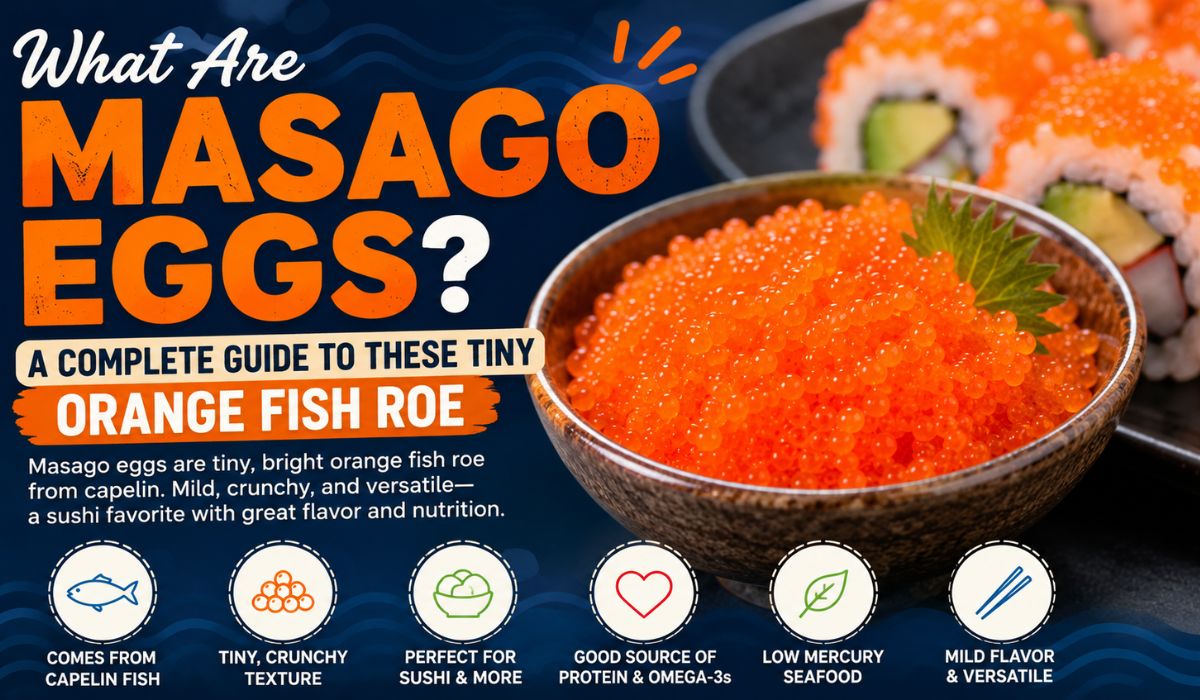
If you enjoy sushi, there is a good chance you have seen tiny orange eggs sprinkled on top of rolls or tucked inside your favorite creations. These colorful little pearls are known as Masago Eggs, one of the most popular fish roe ingredients used in Japanese-inspired cuisine around the world.
Despite their small size, Masago Eggs contribute a surprising amount of flavor, texture, and visual appeal to a dish. They add a gentle crunch, a mild salty taste, and a vibrant splash of color that makes sushi look even more inviting. While many people recognize them from California rolls and spicy seafood rolls, few know exactly what they are, where they come from, or why chefs use them so often.
Masago has become a staple ingredient in sushi restaurants, poke shops, and Asian fusion kitchens because it delivers a premium dining experience without the high cost associated with luxury fish roe. Beyond appearance and taste, it also contains valuable nutrients such as protein, omega-3 fatty acids, vitamin B12, and selenium.
In this complete guide, you will learn everything you need to know about Masago Eggs, including their origin, nutritional value, health benefits, culinary uses, sustainability considerations, and how they compare to other popular fish roe varieties.
Quick Bio About Masago Eggs
| Information | Details |
|---|---|
| Common Name | Masago Eggs |
| Type | Fish Roe |
| Source Fish | Capelin Fish |
| Scientific Name | Mallotus Villosus |
| Family | Smelt Family |
| Natural Color | Pale Yellow |
| Common Commercial Color | Bright Orange |
| Other Colors | Red, Green, Black |
| Flavor | Mild, Briny, Slightly Sweet |
| Texture | Fine Crunch |
| Main Use | Sushi And Japanese Cuisine |
| Protein Content | High |
| Omega-3 Content | Present |
| Vitamin B12 | Excellent Source |
| Selenium | Good Source |
| Mercury Level | Generally Low |
| Common Alternative | Tobiko |
| Typical Serving Size | 1 Tablespoon |
| Storage Method | Refrigerated Or Frozen |
| Popular Dishes | Sushi Rolls, Poke Bowls, Rice Bowls |
What Are Masago Eggs?
Masago Eggs are the edible roe of the capelin fish, a small cold-water fish found throughout the North Atlantic, North Pacific, and Arctic Oceans. Capelin belong to the smelt family and play an important role in marine ecosystems because they serve as food for larger fish, whales, seals, and seabirds.
The roe is collected from female capelin before spawning occurs. Once harvested, the eggs are cleaned, lightly salted, and prepared for commercial use. Although the natural color of Masago Eggs is a pale yellow, the product sold in restaurants is often dyed bright orange to create a more attractive presentation.
Because Masago is affordable, versatile, and visually appealing, it has become one of the most widely used fish roes in sushi restaurants throughout North America, Europe, and Asia. It offers a simple way to add flavor and texture without overwhelming other ingredients.
Where Do Masago Eggs Come From?
The journey of Masago Eggs begins in some of the coldest waters on Earth. Capelin fish thrive in northern ocean environments where temperatures remain low throughout much of the year. These small fish typically grow only a few inches long and spend much of their lives swimming in large schools.
Female capelin produce thousands of eggs during spawning season. Fisheries harvest the roe before spawning takes place, ensuring the eggs remain intact and suitable for culinary use. After collection, the roe is separated, washed, salted, and packaged under carefully controlled conditions.
Many sushi suppliers source Masago from fisheries located in regions of Iceland, Norway, Canada, and other northern coastal areas. Proper harvesting and cold-chain storage help preserve freshness and maintain the delicate texture that makes Masago desirable in food preparation.
What Do Masago Eggs Look Like?
One of the reasons Masago Eggs are so recognizable is their appearance. Each egg measures roughly 0.5 to 1 millimeter in diameter, making them noticeably smaller than many other types of fish roe.
Their tiny size creates a delicate texture rather than the dramatic popping sensation associated with larger roe varieties. Under normal conditions, capelin roe appears pale yellow. However, most commercial Masago is colored bright orange to increase visual appeal.
Restaurants may also offer red, black, or green Masago. These variations are often created using natural flavorings and colorings such as squid ink, wasabi, or other seasonings. The different colors help chefs create attractive presentations while maintaining the same basic texture and flavor profile.
What Do Masago Eggs Taste Like?
Masago Eggs are known for having a mild and approachable flavor. Unlike stronger seafood ingredients, they do not dominate a dish. Instead, they complement surrounding flavors while adding complexity.
Most people describe the taste as lightly salty, slightly sweet, and gently briny. There is a subtle ocean flavor, but it is much milder than salmon roe or certain shellfish products. This balance makes Masago appealing even to people who are relatively new to sushi.
The texture is equally important. Rather than delivering a large burst of liquid, Masago provides a delicate crunch that enhances the overall eating experience. When paired with creamy ingredients such as avocado, spicy mayonnaise, or crab, the contrast becomes especially enjoyable.
Nutritional Value Of Masago Eggs
Although Masago Eggs are often used in small amounts, they contain an impressive collection of nutrients. A modest serving delivers protein, healthy fats, vitamins, and minerals without contributing many calories.
Protein is one of Masago’s most valuable nutritional components. Fish roe contains complete protein, meaning it provides all nine essential amino acids required by the human body. These amino acids support muscle maintenance, tissue repair, and numerous biological functions.
Masago also contains omega-3 fatty acids, which are widely recognized for their role in heart health, brain function, and inflammation management. In addition, the roe supplies vitamin B12, selenium, phosphorus, vitamin E, and small amounts of other essential nutrients.
Because the serving size is typically small, Masago works best as part of a balanced diet rather than as a major source of nutrition. Even so, it can contribute meaningful nutritional benefits when enjoyed regularly in moderation.
Health Benefits Of Masago Eggs
The nutrient profile of Masago Eggs contributes to several potential health benefits. One of the most notable advantages is their protein content. Protein helps support muscle recovery, healthy metabolism, and long-lasting feelings of fullness after meals.
Vitamin B12 is another standout nutrient. This vitamin plays an essential role in nerve function, red blood cell production, and energy metabolism. Many people struggle to consume enough B12, making seafood products like Masago valuable dietary additions.
The selenium found in Masago acts as an antioxidant, helping protect cells from oxidative stress while supporting immune system function and thyroid health. Meanwhile, omega-3 fatty acids may contribute to cardiovascular wellness and healthy brain activity.
Another often-overlooked benefit is mercury content. Because capelin are small forage fish that occupy a lower position in the marine food chain, Masago generally contains less mercury than larger predatory fish species.
Are Masago Eggs Healthy For Everyone?
For most healthy adults, Masago Eggs can be a nutritious addition to meals. However, there are several considerations worth understanding before making them a regular part of your diet.
The primary concern is sodium content. Roe products are typically cured with salt, and additional seasoning may increase sodium levels even further. Individuals who follow low-sodium diets or manage high blood pressure should monitor portion sizes carefully.
Seafood allergies are another important consideration. People with allergies to fish or fish roe should avoid Masago entirely. In some cases, fish eggs can trigger allergic reactions even in individuals who tolerate certain seafood products.
Commercial Masago products may also contain food coloring, flavor enhancers, preservatives, or ingredients such as MSG. Reading product labels can help consumers choose options that align with their dietary preferences and health goals.
Masago Vs Tobiko: What Is The Difference?
Many sushi lovers confuse Masago Eggs with tobiko because the two ingredients look similar at first glance. However, they come from different fish and provide slightly different dining experiences.
Masago comes from capelin fish, while tobiko comes from flying fish. Tobiko eggs are larger, brighter, and create a more noticeable popping texture when eaten. They also tend to have a slightly sweeter and smokier flavor. Because flying fish roe is generally more expensive to produce, tobiko often costs more than Masago.
Masago, on the other hand, offers a finer crunch and a milder taste. Its affordability makes it a practical choice for sushi restaurants that serve large volumes of rolls. For many diners, the difference is subtle, but experienced sushi enthusiasts can often distinguish between the two based on texture alone.
Masago Vs Ikura And Caviar
Masago Eggs are also frequently compared with ikura and caviar, two other well-known types of fish roe. While all three are fish eggs, they differ greatly in appearance, flavor, texture, and price.
Ikura is salmon roe. The eggs are much larger than Masago and contain liquid centers that burst when bitten. Their flavor is richer, saltier, and more intense. Many sushi lovers enjoy ikura because of its dramatic texture and bold seafood character.
Caviar traditionally refers to roe harvested from sturgeon. It is often considered a luxury food and can command exceptionally high prices. Caviar is known for its smooth texture, buttery flavor, and delicate complexity.
Masago occupies a different space. It is affordable, approachable, and versatile. Rather than serving as the centerpiece of a dish, it works as an enhancement that adds texture, color, and subtle flavor.
How Masago Eggs Are Used In Sushi And Japanese Cuisine
One reason Masago Eggs have become so popular is their versatility. Sushi chefs use them in a wide variety of dishes because they pair well with many ingredients.
Masago often appears on the outside of sushi rolls, creating a colorful coating that immediately catches the eye. It is also mixed into fillings, particularly spicy seafood mixtures that benefit from additional texture. California rolls, spicy tuna rolls, shrimp rolls, and specialty house rolls commonly feature Masago.
Beyond sushi, Masago is increasingly used in poke bowls, rice bowls, seafood salads, and fusion dishes. Some chefs blend it into sauces or spicy mayonnaise to create a richer flavor profile. Others use it as a garnish for seafood appetizers, noodles, or rice dishes.
Its ability to enhance both flavor and presentation explains why it remains a favorite ingredient in modern Asian cuisine.
How Masago Eggs Travel From Ocean To Plate
The journey from ocean to restaurant involves several carefully controlled steps designed to maintain quality and food safety.
The process begins when capelin fish are harvested during spawning season. Female fish containing mature roe are selected, and the eggs are carefully removed. The roe is then cleaned to eliminate impurities while preserving its delicate structure.
After cleaning, the eggs are lightly salted to improve flavor and extend shelf life. Depending on the product, natural colorings or seasonings may be added. The roe is then packaged and kept under refrigerated conditions throughout transportation.
Restaurants receive the product frozen or chilled and store it at carefully regulated temperatures until use. Proper handling is essential because fish roe is highly perishable. When maintained correctly, Masago retains its fresh flavor, attractive appearance, and signature crunch.
Can You Buy And Use Masago Eggs At Home?
Many people assume Masago is only available in restaurants, but it can also be purchased for home cooking. As interest in sushi-making continues to grow, Masago has become increasingly accessible through seafood suppliers and specialty food retailers.
Asian grocery stores often stock refrigerated or frozen Masago, while online seafood vendors provide shipping options to many regions. Consumers should purchase from reputable suppliers that follow strict food safety standards.
At home, Masago can be used in homemade sushi rolls, poke bowls, seafood salads, rice dishes, and appetizers. Even a small spoonful can add color and texture to a meal.
Proper storage is important. Refrigerated Masago should be consumed within the recommended period provided by the manufacturer, while frozen products can often be stored for several months before use. Once opened, freshness should be monitored carefully.
Sustainability And Environmental Considerations
As consumers become more aware of seafood sourcing, sustainability has become an important discussion surrounding Masago Eggs. Capelin are considered forage fish, meaning they occupy a critical position within marine ecosystems.
Many larger species depend on capelin as a food source. Because of this ecological importance, responsible fisheries management is essential. Scientists and conservation organizations continue monitoring capelin populations to help ensure long-term sustainability.
Not all fisheries operate under identical standards. Responsible suppliers typically follow harvesting guidelines designed to maintain healthy fish populations and minimize environmental impact. Consumers who prioritize sustainability may wish to research sourcing practices or choose products certified through recognized seafood programs.
Supporting responsible fisheries helps protect marine ecosystems while ensuring future generations can continue enjoying seafood products like Masago.
Why Masago Eggs Remain Popular In 2026
Food trends continue to evolve, yet Masago Eggs remain a favorite ingredient in sushi restaurants worldwide. Their lasting popularity comes from a combination of practicality, flavor, affordability, and visual appeal.
Modern diners increasingly seek foods that provide both taste and nutritional value. Masago delivers protein, omega-3 fatty acids, vitamin B12, and selenium while adding excitement to everyday meals. Its bright appearance also aligns with the growing influence of food photography and social media sharing.
At the same time, chefs appreciate Masago because it enhances dishes without overwhelming them. Whether used in traditional sushi or contemporary fusion creations, it continues to offer a reliable way to add texture and complexity.
As culinary innovation continues, Masago is likely to remain a staple ingredient in both restaurant kitchens and home cooking projects.
Final Thoughts
Masago Eggs may be tiny, but they have earned an important place in modern seafood cuisine. Harvested from capelin fish found in cold northern oceans, these small orange fish roe are valued for their mild flavor, delicate crunch, and vibrant appearance.
Beyond their visual appeal, Masago Eggs provide nutritional benefits that include protein, omega-3 fatty acids, vitamin B12, selenium, and other essential nutrients. Their relatively low mercury levels and versatility make them an attractive option for many seafood lovers.
Whether you encounter them in a California roll, a poke bowl, a seafood salad, or a homemade sushi creation, Masago adds a unique combination of texture and flavor that enhances the overall dining experience. Understanding where it comes from, how it is processed, and how it compares with other fish roe varieties allows you to appreciate this ingredient even more.
For anyone interested in exploring Japanese cuisine or expanding their seafood knowledge, Masago Eggs offer an accessible and enjoyable place to start.
FAQs About Masago Eggs
Are Masago Eggs Raw?
Masago Eggs are generally served without cooking, but they are usually cured with salt before reaching restaurants and consumers. This curing process helps preserve freshness and improve flavor while maintaining the delicate texture of the roe.
Are Masago Eggs Safe To Eat?
When sourced from reputable suppliers and handled properly, Masago Eggs are considered safe for most healthy adults. Proper refrigeration and food safety practices are important because fish roe is a perishable seafood product.
What Do Masago Eggs Taste Like?
Masago has a mild, slightly salty, and gently sweet flavor with subtle ocean notes. Its taste is much less intense than salmon roe, making it approachable for people who are new to fish roe.
Are Masago Eggs Good For You?
Masago contains high-quality protein, omega-3 fatty acids, vitamin B12, selenium, and several other nutrients. While it offers nutritional benefits, moderation is recommended because it can contain significant amounts of sodium.
Do Masago Eggs Contain Mercury?
Like all seafood, Masago contains trace amounts of mercury. However, capelin are small forage fish that generally accumulate less mercury than larger predatory fish, making Masago a relatively low-mercury seafood choice.
What Is The Difference Between Masago And Tobiko?
Masago comes from capelin fish and has a fine crunch with a mild flavor. Tobiko comes from flying fish and features larger eggs, a stronger crunch, brighter color, and a slightly sweeter taste.
Can Pregnant Women Eat Masago Eggs?
Pregnant women should consult their healthcare provider before consuming fish roe. Recommendations may vary depending on individual circumstances, preparation methods, and food safety considerations.
How Long Does Masago Last After Opening?
Shelf life depends on the manufacturer and storage conditions. Once opened, Masago should remain refrigerated and consumed within the recommended timeframe listed on the packaging to maintain quality and safety.
Recommended For You: Masago What Is It? A Complete Guide To This Popular Sushi Roe