
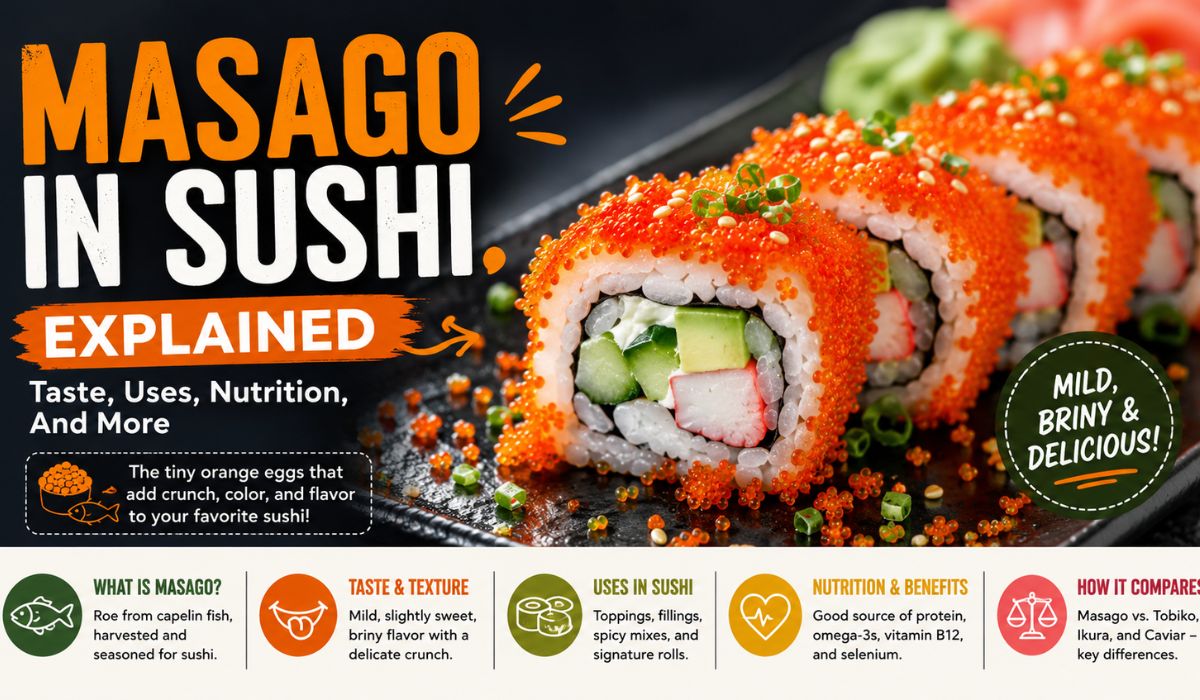
If you have ever ordered a sushi roll topped with tiny bright orange eggs, you have probably enjoyed Masago In Sushi without even realizing it. These colorful fish eggs are one of the most common ingredients found in sushi restaurants around the world. While they may look small and simple, masago adds flavor, texture, color, and visual appeal to many popular sushi dishes.
Masago has become a staple ingredient in modern sushi because it offers a pleasant crunch, a mild ocean flavor, and an attractive appearance. From California rolls to spicy seafood creations, masago helps transform ordinary sushi into something more exciting.
Whether you are new to sushi or already a fan of Japanese cuisine, understanding masago can help you appreciate why chefs use it so often. In this guide, you will learn what masago is, where it comes from, how it tastes, how it compares to other fish roe, its nutritional benefits, and the many ways it is used in sushi and beyond.
Quick Bio About Masago In Sushi
| Fact | Information |
|---|---|
| Common Name | Masago |
| Source | Capelin Fish Roe |
| Japanese Name | Masago |
| Pronunciation | Mah-SAH-Go |
| Natural Color | Pale Yellow |
| Common Color | Bright Orange |
| Egg Size | 0.5–1 Millimeter |
| Texture | Fine Crunch |
| Flavor | Mild And Briny |
| Fishiness | Very Mild |
| Main Use | Sushi Topping |
| Popular Roll | California Masago Roll |
| Protein Source | Yes |
| Omega-3 Content | Present |
| Vitamin B12 | Rich Source |
| Selenium | Present |
| Carb Content | Very Low |
| Sodium Content | Moderate To High |
| Storage Method | Refrigerated Or Frozen |
| Cuisine Type | Japanese And Fusion Cuisine |
What Is Masago In Sushi?
Masago is the edible roe, or eggs, of the capelin fish. Capelin are small cold-water fish that belong to the smelt family and are commonly found in the North Atlantic and North Pacific Oceans. The word “masago” comes from Japanese and traditionally refers to tiny grains of sand, a fitting description for these very small eggs.
The eggs are harvested from female capelin before spawning. After collection, they are cleaned, lightly salted, and often seasoned before being packaged and distributed to restaurants and seafood suppliers.
Masago is not considered a luxury ingredient like caviar, but it is highly valued for its versatility. Sushi chefs appreciate its ability to add texture and visual appeal without overwhelming other ingredients. This balance has helped make masago one of the most widely used fish roes in sushi bars throughout the world.
What Does Masago Look Like?
One of the reasons Masago In Sushi stands out is its appearance. The eggs are extremely small, usually measuring less than one millimeter in diameter. Because of their tiny size, they create a fine crunchy texture rather than the large popping sensation associated with larger fish roe.
Natural masago is actually pale yellow. However, the version most diners encounter is bright orange. Food-safe coloring is often added to make the roe more visually appealing and easier to notice on sushi rolls.
Some varieties are colored red, green, or black. Green masago is often flavored with wasabi, while black masago may contain squid ink. These variations help chefs create visually striking dishes while introducing subtle flavor differences.
What Does Masago Taste Like?
Many first-time sushi eaters wonder whether masago has a strong seafood flavor. Fortunately, masago is known for being mild and approachable.
The taste can best be described as lightly briny, slightly salty, and gently sweet. It also contains a subtle umami flavor that enhances other ingredients without dominating them.
Texture is one of masago’s biggest strengths. Each tiny egg provides a delicate crunch that contrasts beautifully with soft sushi rice, creamy avocado, and tender seafood.
Unlike some types of roe, masago does not have a strong fishy taste. This makes it appealing even to people who are new to sushi and seafood.
Why Is Masago So Popular In Sushi?
Sushi is all about balance. Chefs carefully combine flavors, colors, and textures to create a satisfying experience. Masago contributes to all three.
The bright orange color immediately makes sushi more visually attractive. The crunchy texture adds contrast to soft ingredients. The mild flavor provides extra depth without overpowering the dish.
Another reason for its popularity is affordability. Compared to premium fish roe such as tobiko or caviar, masago is less expensive and more widely available. This allows restaurants to create attractive and flavorful dishes while keeping menu prices reasonable.
As sushi continues to grow in popularity worldwide, masago remains one of the most practical and versatile ingredients available to chefs.
How Is Masago Used In Sushi?
Masago appears in many different forms throughout sushi menus. One of the most common uses is as a topping sprinkled over rolls. The tiny eggs create a colorful layer that immediately catches the eye.
Many chefs also incorporate masago directly into roll fillings. It is often mixed with seafood, vegetables, or spicy sauces to add texture and flavor.
Masago can also be blended into spicy mayonnaise, creating a creamy sauce with additional crunch. This mixture is frequently used in spicy tuna rolls, spicy salmon rolls, and specialty creations.
Because of its versatility, masago works well with both traditional and modern sushi styles.
The California Roll With Masago
One of the most popular ways to enjoy Masago In Sushi is through a California roll with masago.
A traditional California roll typically includes sushi rice, nori, imitation crab, avocado, and cucumber. Adding masago introduces a crunchy texture and a subtle salty finish that complements the creamy avocado and mild crab flavors.
Many restaurants coat the outside of the roll with masago, creating a bright and colorful appearance that attracts customers. This variation is often called a California Masago Roll and has become a favorite among both beginners and experienced sushi lovers.
Masago Vs Tobiko
Masago and tobiko are often confused because they look similar. However, there are several important differences.
Tobiko comes from flying fish, while masago comes from capelin. Tobiko eggs are larger and produce a more noticeable popping sensation when eaten.
Flavor also differs slightly. Tobiko tends to have a sweeter and somewhat smokier taste, while masago remains milder and more delicate.
Price is another key distinction. Tobiko is generally more expensive, which is why many restaurants choose masago as a practical alternative. Despite these differences, both ingredients serve a similar role in sushi by adding texture, flavor, and visual appeal.
Masago Vs Ikura And Caviar
Masago is frequently compared to other popular fish roe products.
Ikura refers to salmon roe. The eggs are much larger, softer, and filled with liquid. When bitten, they release a burst of rich flavor. Ikura offers a stronger seafood taste and is often enjoyed as a featured ingredient rather than a garnish.
Caviar comes from sturgeon and is widely regarded as a luxury food. It has a smooth texture, complex flavor, and significantly higher price.
Masago serves a different purpose. It is subtle, affordable, and versatile. Rather than becoming the center of attention, it enhances the overall dining experience.
Is Masago Healthy?
Masago may be small, but it contains a surprising amount of nutrition.
The roe provides protein, healthy fats, vitamins, and minerals in a relatively small serving. It is especially known for containing omega-3 fatty acids, which support heart health and brain function.
Masago also contains vitamin B12, which plays an important role in energy production and nervous system health. Selenium found in masago contributes to immune function and antioxidant protection.
Because capelin are low on the marine food chain, they generally contain lower mercury levels than many larger fish species.
Nutrition Facts Of Masago
A typical tablespoon of masago contains relatively few calories while delivering useful nutrients. Most servings provide protein, healthy fats, and essential micronutrients without contributing excessive calories.
Masago is especially popular among people following low-carbohydrate or keto-style diets because it contains very few carbohydrates.
One consideration is sodium content. Since masago is typically cured with salt, it can contain a significant amount of sodium. People monitoring their salt intake should enjoy it in moderation.
For most healthy individuals, masago can be a flavorful addition to a balanced diet.
How Masago Is Harvested And Processed
The journey from ocean to sushi bar begins during the capelin spawning season. Fisheries carefully harvest capelin and collect the roe from mature female fish.
The eggs are then separated, rinsed, and cleaned. After cleaning, they are lightly salted and sometimes seasoned with additional ingredients.
Some producers add coloring to enhance visual appeal. Once processed, the roe is refrigerated or frozen to maintain freshness during transportation.
Proper temperature control is critical because fish roe is highly perishable. Responsible suppliers follow strict food safety standards to ensure quality and freshness.
Is Masago Sustainable?
Sustainability has become an important topic in seafood consumption. Capelin play a significant role in marine ecosystems because they serve as food for larger fish, seabirds, and marine mammals.
As a result, responsible fisheries management is essential. Sustainable harvesting practices help maintain healthy capelin populations while protecting the broader ecosystem.
Consumers interested in sustainability can look for restaurants and suppliers that prioritize responsibly sourced seafood. Many modern sushi establishments are increasingly transparent about their sourcing practices.
Can You Eat Masago Beyond Sushi?
Although sushi remains its most famous use, masago works well in many other dishes.
Many chefs add masago to poke bowls, seafood salads, and rice bowls. It can also be used as a garnish for seafood pasta, deviled eggs, and creamy seafood dips.
Home cooks often use masago to elevate simple dishes by adding texture and color. Even a small spoonful can make a meal feel more sophisticated.
As global cuisine continues to evolve, creative chefs are finding new ways to incorporate masago into modern recipes.
How To Store Masago Properly
Freshness is essential when handling fish roe. Unopened masago should remain refrigerated according to manufacturer recommendations.
Once opened, it is generally best consumed within a few days. Exposure to air can affect both flavor and texture.
Masago can also be frozen for longer-term storage. When frozen properly, it may maintain quality for several months. Thawing should occur gradually in the refrigerator rather than at room temperature.
Proper storage helps preserve the texture, flavor, and safety of the product.
Who Should Avoid Masago?
While masago is safe for most people, there are situations where caution is appropriate.
Individuals with fish or seafood allergies should avoid masago. Those following low-sodium diets may also need to limit consumption because of its salt content.
Pregnant individuals should consult healthcare professionals regarding the consumption of raw seafood products. Food safety recommendations can vary depending on individual circumstances and local guidelines.
For most people, however, masago can be enjoyed safely as part of a balanced diet.
Why Masago Remains Important In Modern Sushi Culture
Masago represents the way sushi has adapted and evolved around the world. It combines affordability, visual appeal, and versatility in a single ingredient.
Its popularity in California rolls, specialty rolls, poke bowls, and fusion dishes demonstrates how traditional Japanese ingredients can thrive in modern culinary settings.
Whether served in a high-end sushi restaurant or a busy food hall, masago continues to play an important role in making sushi more enjoyable, approachable, and visually exciting.
Final Thoughts
Masago In Sushi may be tiny, but its impact on the sushi experience is significant. These small capelin eggs bring color, texture, and subtle flavor to countless dishes enjoyed around the world. Their mild taste makes them approachable for beginners, while their versatility keeps them popular among experienced sushi lovers.
From California rolls and spicy seafood creations to poke bowls and modern fusion cuisine, masago continues to prove its value. It offers nutritional benefits, visual appeal, and culinary flexibility without the high cost associated with luxury roe products.
Understanding what masago is and how it is used can help you appreciate the craftsmanship behind your favorite sushi dishes. The next time you see those bright orange eggs on a sushi roll, you will know they are much more than a decoration—they are an ingredient that enhances every bite.
FAQs About Masago In Sushi
What Is Masago In Sushi Made From?
Masago comes from the roe of the capelin fish, a small cold-water species found in the North Atlantic and North Pacific Oceans. The eggs are harvested, cleaned, salted, and prepared for culinary use.
Is Masago Raw Or Cooked?
Masago is usually cured with salt and served without cooking. While it is technically not cooked, it undergoes processing that helps preserve freshness and flavor.
Why Is Masago Orange?
Natural masago is pale yellow. Many producers add food-safe coloring to create the bright orange appearance commonly seen in sushi restaurants.
What Does Masago Taste Like?
Masago has a mild briny flavor with gentle saltiness, subtle sweetness, and light umami notes. Its tiny eggs provide a pleasant crunchy texture.
Is Masago Healthy?
Masago contains protein, omega-3 fatty acids, vitamin B12, and selenium. It can be part of a balanced diet, although it should be enjoyed in moderation due to its sodium content.
What Is The Difference Between Masago And Tobiko?
Masago comes from capelin fish and has smaller eggs with a mild flavor. Tobiko comes from flying fish and has larger eggs, a stronger crunch, and a slightly sweeter taste.
Can You Freeze Masago?
Yes. Properly sealed masago can be frozen for several months while maintaining quality. It should be thawed slowly in the refrigerator before use.
Which Sushi Rolls Usually Contain Masago?
Masago is commonly found in California rolls, spicy tuna rolls, spicy shrimp rolls, seafood rolls, and many specialty sushi creations where texture and color are desired.
Recommended For You: Masago Japanese Cuisine Morristown NJ: Fresh Sushi, Great Prices, And Local Favorites